
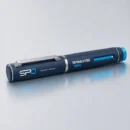
In stock
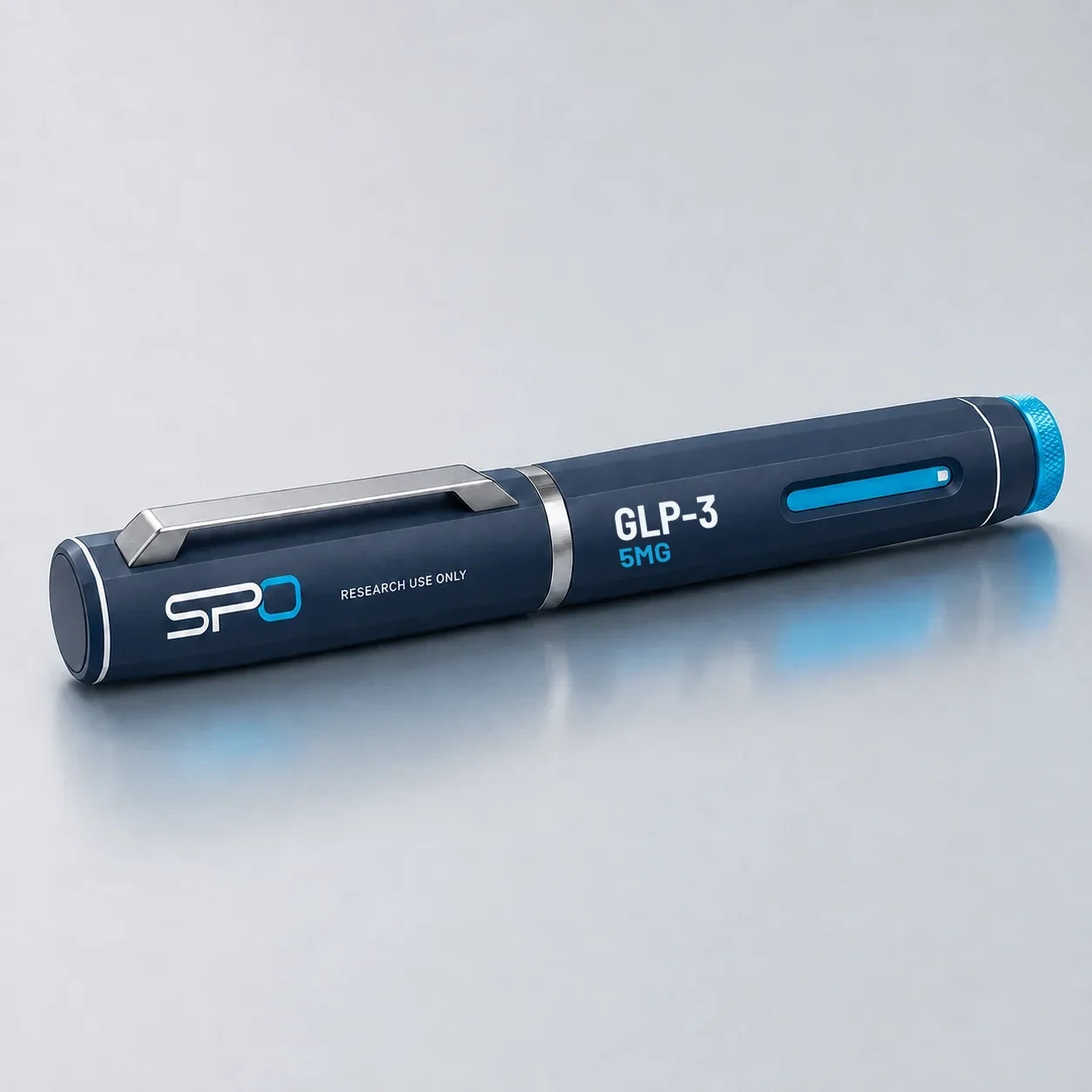
GLP-3 5mg & 60mg (Pen)
Price range: $122.99 through $549.99
GLP-3 (retatrutide) research peptide in pen format (5mg or 60mg options), supplied for laboratory research only. Retatrutide (LY3437943) is a 39-residue synthetic triple agonist of the GIP, GLP-1 and glucagon receptors; investigational, not approved anywhere. No batch COA is posted for the pen — see the COA library. Priced in CAD and shipped within Canada by Canada Post. Not for human or animal use.

Estimated delivery: 1–3 business days

Free shipping: On orders over $300
Guarantee Safe Checkout:

Description
GLP-3 (retatrutide) research pen — Canada
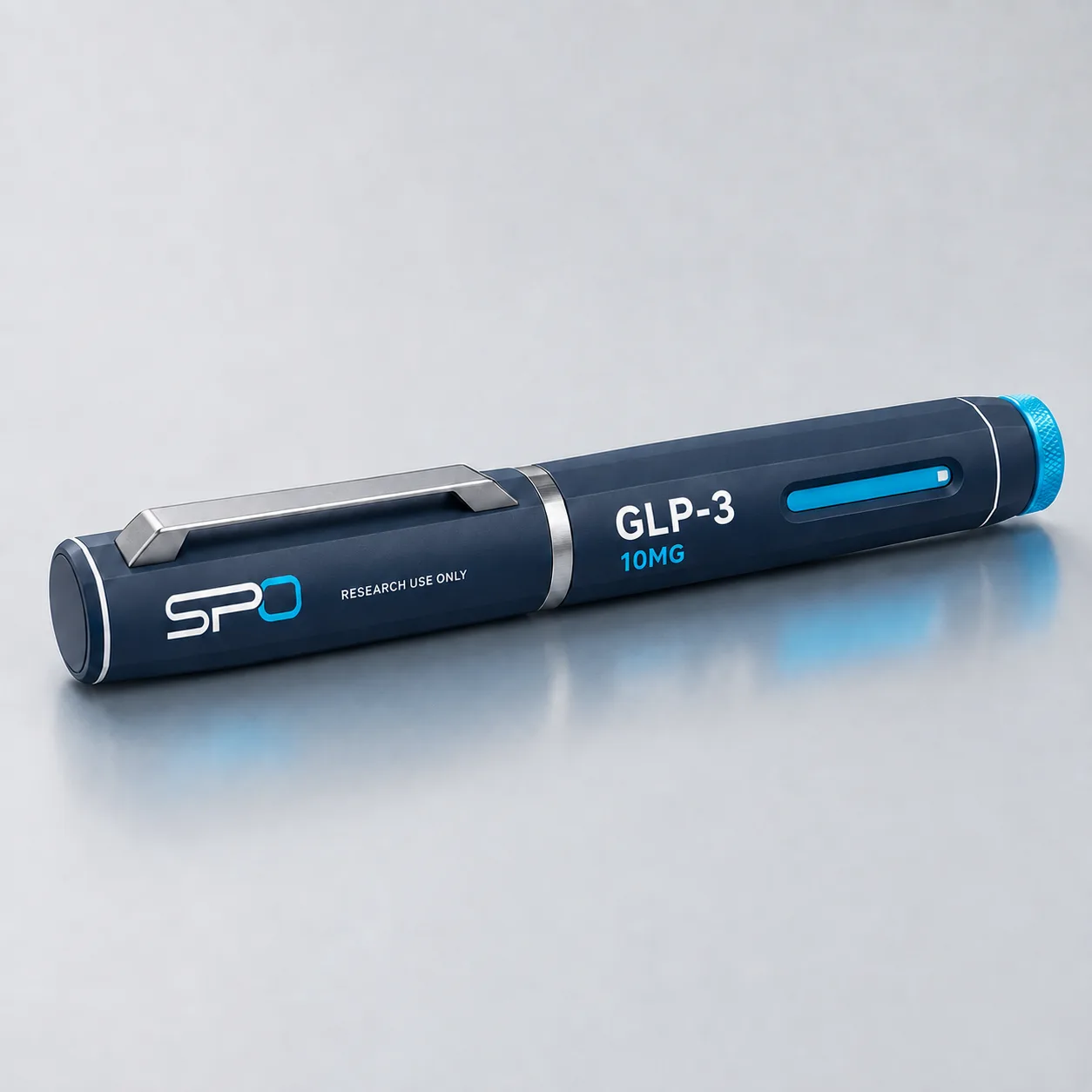
This listing is GLP-3 (retatrutide) in pen format (5mg or 60mg fill) — the same research material as our GLP-3 (retatrutide) vials, supplied in a pre-formatted research pen for laboratories that prefer logged, repeatable handling over loose vials. “GLP-3” is a catalogue label, not a hormone: the material is retatrutide (LY3437943), a single 39-residue peptide that Eli Lilly engineered to switch on the GIP, GLP-1 and glucagon receptors at once[1]. It is an investigational drug in late-stage trials and has no approval in any country[6]. Laboratory research only; the pen is a handling format, not an instruction.
Full research overview, study table & references → GLP-3 (retatrutide) in Canada: research guide
Identity at a glance
| Compound | Retatrutide (INN); LY3437943; catalogue name “GLP-3 (RT)” |
| Structure | 39-residue single-chain peptide with a C20 fatty-diacid side chain at Lys17 and Aib at positions 2 and 20; C-terminal amide (FDA GSRS) |
| Formula / MW | C221H342N46O68 / 4731 g/mol (PubChem CID 171390338) |
| CAS | 2381089-83-2 |
| Receptors studied | GIP, GLP-1 and glucagon receptors — one molecule, three targets[1] |
| Status | Investigational (Eli Lilly); not approved anywhere[6] |
| Format | Pre-formatted research pen; declared content (5mg or 60mg) on the label, no measured value on file |
Batch documentation: a batch-specific COA for the GLP-3 (retatrutide) pen has not been posted yet — see the COA library. Reports for the vial listings, where posted, are on those pages.
What researchers have looked at
- Design and receptor balance (2022): in vitro the molecule shows balanced glucagon- and GLP-1-receptor activity with stronger GIP-receptor activity; in obese mice, weight fell and glycaemic control improved, with the glucagon-receptor component adding energy expenditure[1].
- Structure (2024): a structural study of how one peptide engages GLP-1R, GIPR and GCGR — the basis for the “triple agonist” description[2].
- Phase 1b (2022, 72 adults with type 2 diabetes, 12 weeks): safety and tolerability were the primary outcome; gastrointestinal disorders were the most frequent adverse events, and 29 participants left the study early[3].
- Gastric emptying (2023): a clinical pharmacology study reported that retatrutide delays gastric emptying[4].
- Products sold online (2026): an Australian analysis examined the composition and labelling accuracy of products sold as “retatrutide”[5] — one reason a lot-specific report matters more than a product name.
These are findings about Lilly’s investigational compound in the models and trials named. They are not properties of this pen, and no benefit is claimed for the material sold here.
Storage and handling
- Follow the label: keep the pen cool, dry and out of light, and do not subject it to repeated freeze–thaw.
- Log the batch number and dates of receipt and first use, as with any research material. No protocol or administration information is provided here.
Vial strengths: GLP-3 (RT) 5MG · GLP-3 60MG. Other pens are on the peptide pens page; the whole range is on our buy peptides online in Canada page. Canada Post from inside Canada (shipping policy).
Frequently asked questions
What is the GLP-3 (retatrutide) pen?
The same synthetic GLP-3 (retatrutide) supplied in a pre-formatted research pen rather than a loose vial, for laboratories that want repeatable, logged handling. It is a research format only; no administration guidance of any kind is given.
Is there a batch report for the GLP-3 (retatrutide) pen?
Not yet. No batch-specific report for the pen is posted in the COA library. The page will state the report when one exists.
Is GLP-3 the same as retatrutide?
Yes — GLP-3 (RT) is this shop’s catalogue name for retatrutide, LY3437943. There is no natural hormone called GLP-3. The molecule is a synthetic 39-residue peptide designed to act on the GIP, GLP-1 and glucagon receptors together (PMID 35985340).
Is the GLP-3 (retatrutide) pen for human use?
No. The pen is supplied for laboratory research only and is not for human or animal use. No dosing, administration or protocol information is provided.
References
- Coskun T, Urva S et al. (2022). LY3437943, a novel triple glucagon, GIP, and GLP-1 receptor agonist for glycemic control and weight loss: From discovery to clinical proof of concept. Cell Metab. PMID 35985340
- Li W, Zhou Q et al. (2024). Structural insights into the triple agonism at GLP-1R, GIPR and GCGR manifested by retatrutide. Cell Discov. PMID 39019866
- Urva S, Coskun T et al. (2022). LY3437943, a novel triple GIP, GLP-1, and glucagon receptor agonist in people with type 2 diabetes: a phase 1b, multicentre, double-blind, placebo-controlled, randomised, multiple-ascending dose trial. Lancet. PMID 36354040
- Urva S, O'Farrell L et al. (2023). The novel GIP, GLP-1 and glucagon receptor agonist retatrutide delays gastric emptying. Diabetes Obes Metab. PMID 37311727
- Piatkowski T, Craven A et al. (2026). Composition and Labelling Accuracy of Products Sold as Retatrutide in Australia. Drug Alcohol Rev. PMID 42559975
- Panou T, Gouveri E et al. (2026). Retatrutide in type 2 diabetes mellitus and obesity: an overview. Expert Rev Clin Pharmacol. PMID 41785010
For laboratory research use only. Not for human or animal consumption. This description identifies the material and summarises published literature on the compound; it makes no claim of efficacy or safety for the material sold.
Additional information
| Amount | 5mg, 60mg |
|---|
Related products
-
Tirzepatide (Pen)
Price range: $115.99 through $298.99 -
 Hot
MOTS-C (Pen)
Price range: $100.99 through $290.99 -
Semaglutide (Pen)
Price range: $115.99 through $265.99 -
 Hot
GLP-3 (Pen)
Price range: $159.99 through $237.99