
In stock
Semaglutide (Pen)
Price range: $115.99 through $265.99
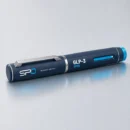
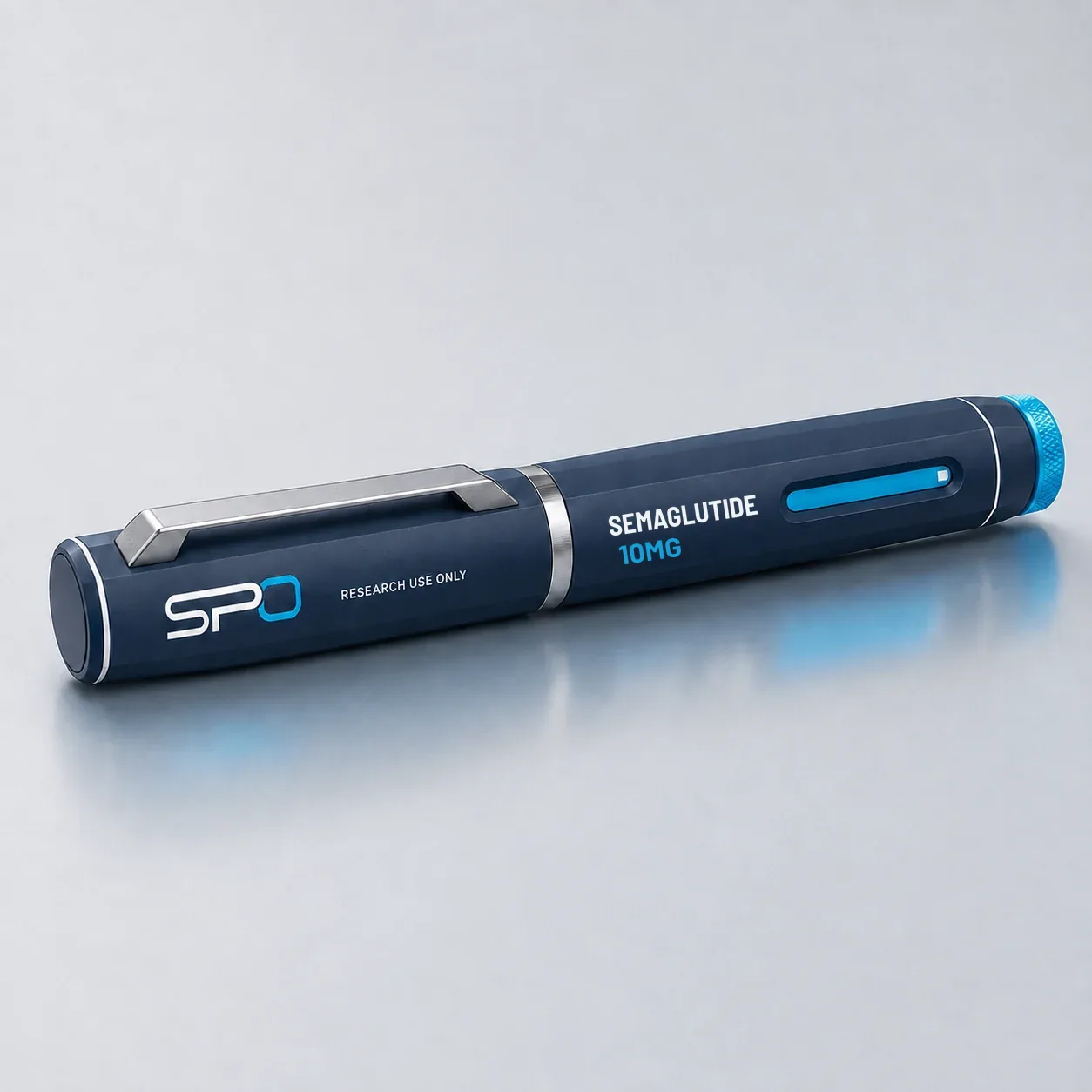
Semaglutide research peptide in pen format (10mg or 50mg options), supplied for laboratory research only. Semaglutide is a 31-amino-acid synthetic GLP-1 analogue engineered to act on the GLP-1 receptor with a long half-life. No batch COA is posted for the pen — see the COA library. Priced in CAD and shipped within Canada by Canada Post. Not for human or animal use.

Estimated delivery: 1–3 business days

Free shipping: On orders over $300
Guarantee Safe Checkout:

Description
Semaglutide research pen — Canada
This listing is Semaglutide in pen format (10mg or 50mg fill) — the same research material as our Semaglutide vials, supplied in a pre-formatted research pen for laboratories that prefer logged, repeatable handling over loose vials. Semaglutide (NN9535) is a synthetic, fatty-acid-modified analogue of human GLP-1 built to act on the GLP-1 receptor with a long circulating half-life[1]. Laboratory research only; the pen is a handling format, not an instruction.
Identity at a glance
| Name | Semaglutide (NN9535) |
| Formula / MW | C187H291N45O59 · 4114 g/mol (PubChem) |
| CAS | 910463-68-2 |
| PubChem CID | 56843331 |
| ChEMBL | CHEMBL2108724 |
| Brand names (medicine) | Ozempic, Wegovy, Rybelsus — not this product |
| Format | Pre-formatted research pen; declared content (10mg or 50mg) on the label, no measured value on file |
Batch documentation: a batch-specific COA for the Semaglutide pen has not been posted yet — see the COA library. Reports for the vial listings, where posted, are on those pages.
What researchers have looked at
- Origin (2015): Novo Nordisk’s discovery paper describes three changes to the GLP-1 backbone — an Aib residue at position 8, an arginine at position 34 and a C18 fatty diacid attached through a spacer at lysine 26 — chosen to resist DPP-4 cleavage and bind albumin tightly[1].
- Development history (2019): a review from the same group traces the route from liraglutide to semaglutide and the half-life extension that made once-weekly dosing possible in trials[2].
- Rodent work (2020): in mice and rats, semaglutide reached the brainstem, septal nucleus and hypothalamus and lowered body weight through several neural pathways, without broadly crossing the blood–brain barrier[3].
- Safety data in trials: in a 68-week phase 3 study of adults with overweight or obesity, gastrointestinal events — chiefly nausea and diarrhoea — were the most frequent adverse events[4].
Regulatory status: as the medicines Ozempic and Wegovy, semaglutide is approved for type 2 diabetes and for chronic weight management in the USA, EU and elsewhere; a 2016 cardiovascular-outcomes trial in type 2 diabetes is part of that record[5], and Health Canada lists Ozempic, Rybelsus and Wegovy as prescription drugs. Those approvals cover Novo Nordisk’s licensed products, not research-grade powder.
Storage and handling
- Follow the label: keep the pen cool, dry and out of light, and do not subject it to repeated freeze–thaw.
- Log the batch number and dates of receipt and first use, as with any research material. No protocol or administration information is provided here.
Vial strengths: SEMAGLUTIDE 10MG · SEMAGLUTIDE 50MG. Other pens are on the peptide pens page; the whole range is on our buy peptides online in Canada page. Canada Post from inside Canada (shipping policy).
Frequently asked questions
What is the Semaglutide pen?
The same synthetic Semaglutide supplied in a pre-formatted research pen rather than a loose vial, for laboratories that want repeatable, logged handling. It is a research format only; no administration guidance of any kind is given.
Is there a batch report for the Semaglutide pen?
Not yet. No batch-specific report for the pen is posted in the COA library. The page will state the report when one exists.
How is semaglutide different from tirzepatide?
Semaglutide acts on one receptor, GLP-1R, and is built on the human GLP-1 sequence (PMID 26308095); tirzepatide is a separate 39-amino-acid peptide that engages both GIPR and GLP-1R. They are listed as different compounds here — see TIRZEPATIDE 20MG.
Is the Semaglutide pen for human use?
No. The pen is supplied for laboratory research only and is not for human or animal use. No dosing, administration or protocol information is provided.
Cited
- Lau et al. (2015), Journal of medicinal chemistry — PMID 26308095
- Knudsen & Lau (2019), Frontiers in endocrinology — PMID 31031702
- Gabery et al. (2020), JCI insight — PMID 32213703
- Wilding et al. (2021), The New England journal of medicine — PMID 33567185
- Marso et al. (2016), The New England journal of medicine — PMID 27633186
For laboratory research use only. Not for human or animal consumption. No dosing, administration or protocol information is provided, and nothing here is a claim of efficacy or safety in humans.
Additional information
| Amount | 10mg, 50mg |
|---|
Related products
-
 Hot
MOTS-C (Pen)
Price range: $100.99 through $290.99 -
 Hot
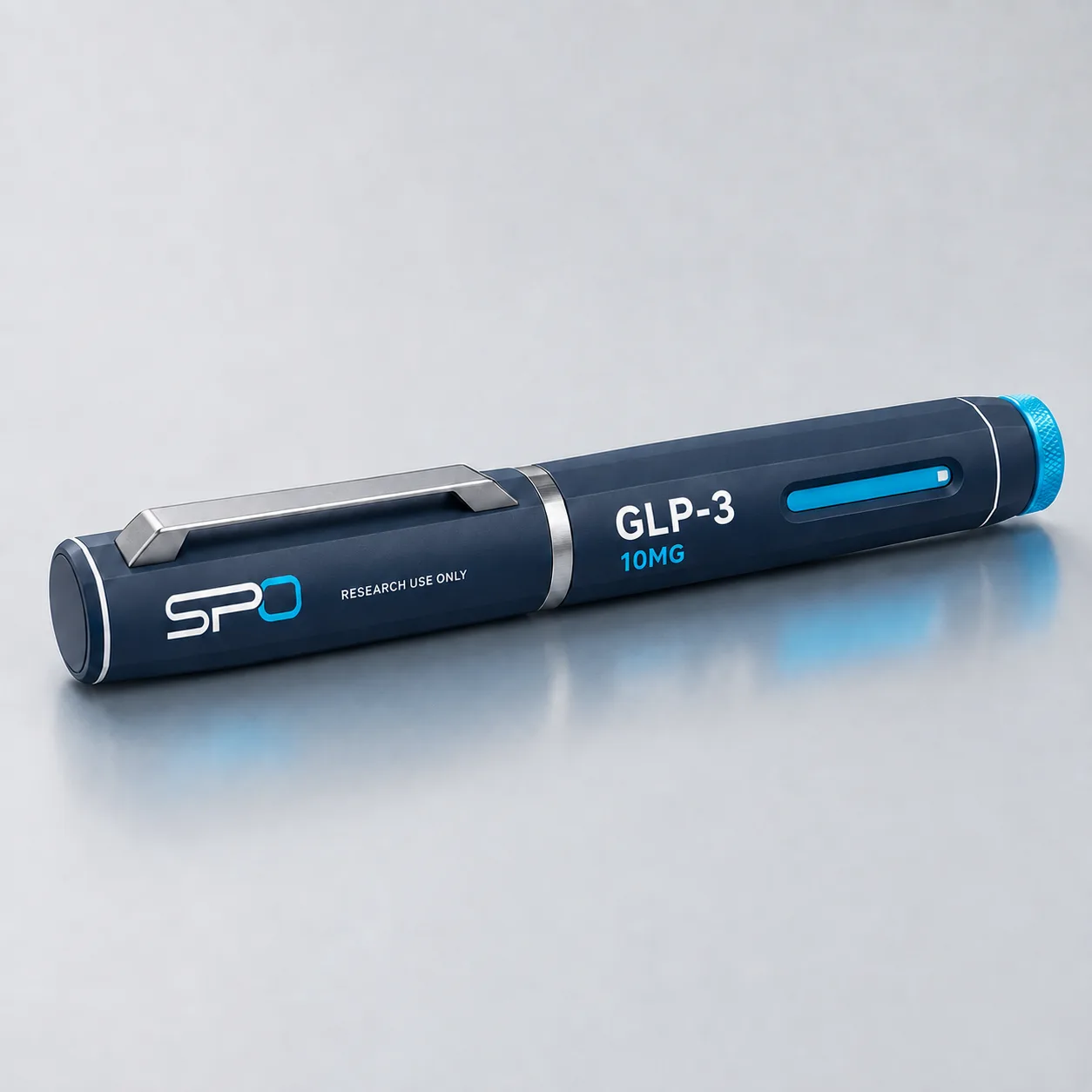
GLP-3 (Pen)
Price range: $159.99 through $237.99 -
Tirzepatide (Pen)
Price range: $115.99 through $298.99 -
GLP-3 5mg & 60mg (Pen)
Price range: $122.99 through $549.99