
In stock
Semax (Pen)
$124.99
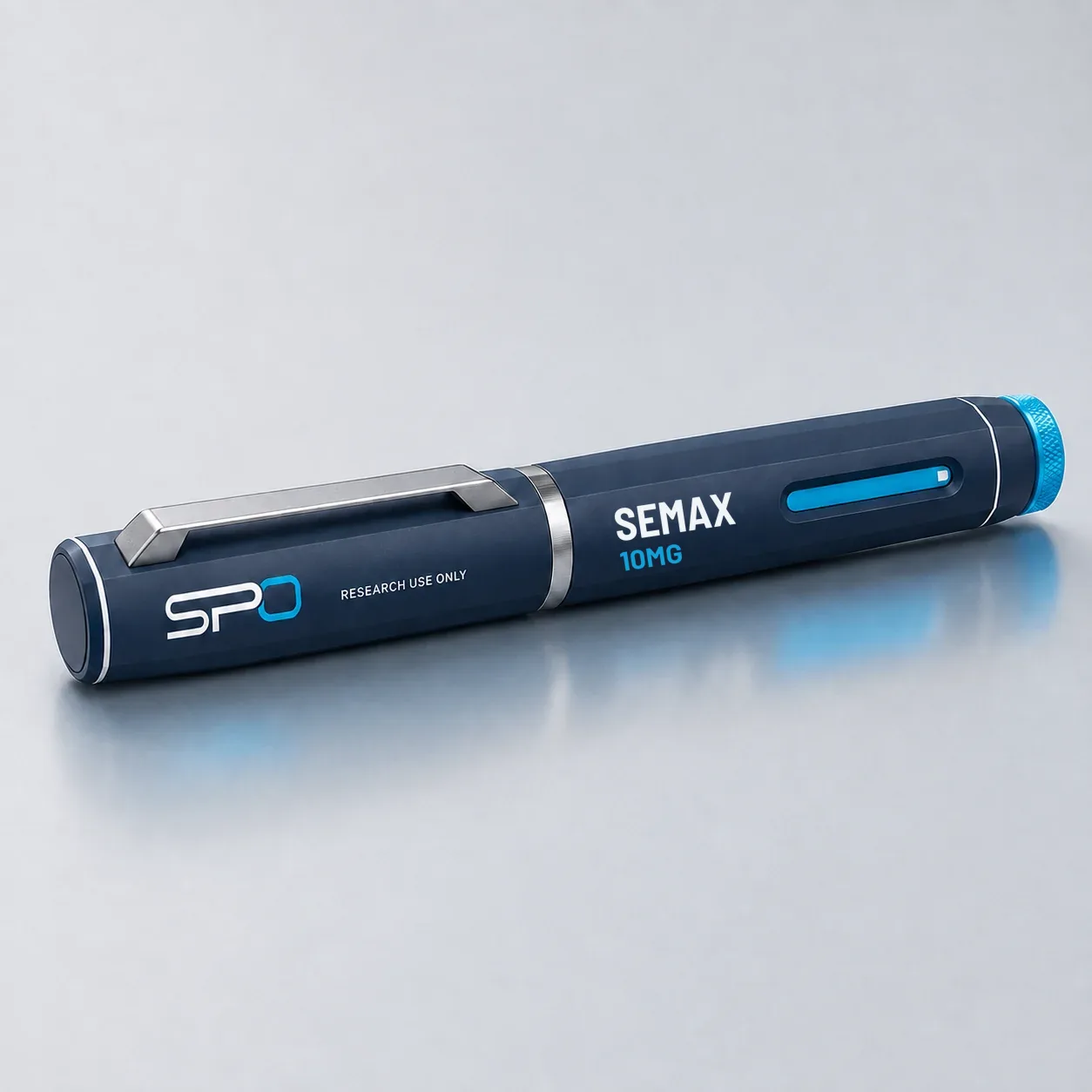
Semax research peptide in pen format (10mg fill), supplied for laboratory research only. Semax is a synthetic seven-residue peptide (MEHFPGP) built from the ACTH(4-7) fragment with a Pro-Gly-Pro extension. No batch COA is posted for the pen — see the COA library. Priced in CAD and shipped within Canada by Canada Post. Not for human or animal use.

Estimated delivery: 1–3 business days

Free shipping: On orders over $300
Guarantee Safe Checkout:

Description
Semax research pen — Canada
This listing is Semax in pen format (10mg fill) — the same research material as our Semax vials, supplied in a pre-formatted research pen for laboratories that prefer logged, repeatable handling over loose vials. Semax is a synthetic seven-residue peptide, Met-Glu-His-Phe-Pro-Gly-Pro (MEHFPGP), made by joining residues 4–7 of adrenocorticotropic hormone (ACTH) to a C-terminal Pro-Gly-Pro tripeptide[1]. It was designed and studied in Russia as an analogue of the ACTH(4-10) fragment, and Russian authors report that it progressed from basic research to clinical use there[2]. We found no Health Canada, FDA or EMA approval. Because Shop Peptides Online has no separate Semax research guide, the science overview is on this page. Laboratory research only; the pen is a handling format, not an instruction.
Identity
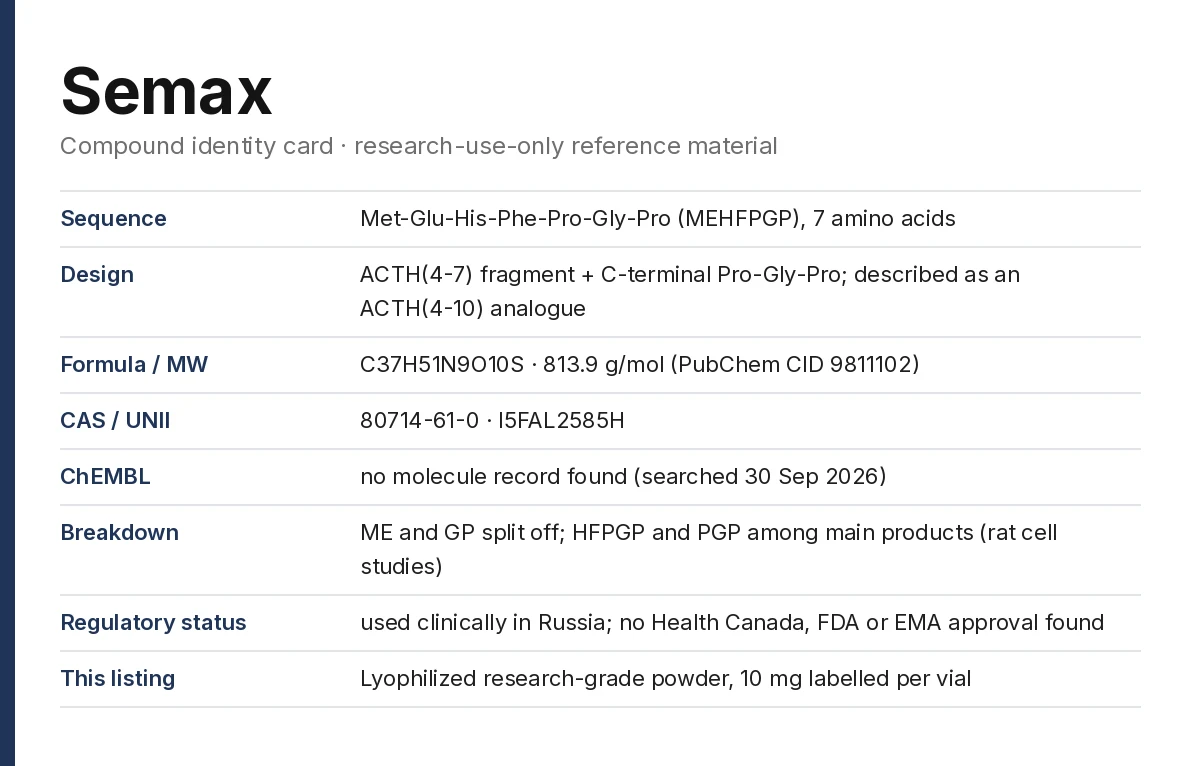
| Name | Semax (ACTH(4-7)-Pro-Gly-Pro) |
| Sequence | MEHFPGP (7 aa) |
| Formula / MW | C37H51N9O10S · 813.9 g/mol (PubChem computed) |
| CAS / UNII | 80714-61-0 / I5FAL2585H |
| PubChem CID | 9811102 |
| ChEMBL | No molecule record found (search run 30 September 2026) |
| Format | Pre-formatted research pen; declared content (10mg) on the label, no measured value on file |
Batch documentation: a batch-specific COA for the Semax pen has not been posted yet — see the COA library. Reports for the vial listings, where posted, are on those pages.
Design and stability
Degradation studies show how the molecule is processed. With isotope-labelled Semax incubated with plasma membranes and with glial and neuronal cultures from rat basal forebrain, the main events were removal of the Met-Glu and Gly-Pro ends and formation of pentapeptides[3]. A tritium-label study in nerve-cell preparations named the pentapeptide HFPGP and the tripeptide PGP as major products, and found that Semax strongly inhibited plasma enkephalinases through an effect on aminopeptidases[4]. Semax also binds copper(II), and acetylating its N-terminus changes the complexes it forms[1].
What has been studied, by model
Cell culture. In primary cultures from rat basal forebrain, Semax increased the survival of cholinergic neurons about 1.5–1.7-fold and raised choline acetyltransferase activity, without changing GABA-ergic neuron numbers or glial proliferation; the authors left the relevance to Alzheimer’s disease open[8].
Neurotrophins in rats. After a single administration, hippocampal BDNF protein rose about 1.4-fold and trkB phosphorylation 1.6-fold, with higher exon III BDNF and trkB mRNA, alongside more conditioned avoidance responses[6]. A later study followed Bdnf and Ngf gene expression over time in the hippocampus and frontal cortex[7].
Monoamines in rodents. Semax raised striatal 5-HIAA, a serotonin metabolite, but did not change dopamine or its metabolites on its own; given before D-amphetamine, it strongly enhanced amphetamine’s effect on extracellular dopamine[5]. In rats with MPTP-induced dopamine-system damage it reduced the associated behavioural disturbances[9], and in rats exposed to the antidepressant fluvoxamine as newborns it reduced later anxiety-like behaviour and improved maze learning[12].
Rat stroke model. In transient middle cerebral artery occlusion, 394 genes differed between Semax- and saline-treated brains at 24 hours: inflammation-related genes were suppressed and neurotransmission genes activated, the reverse of the ischaemia pattern[10]. The matching protein study reported more active CREB and less MMP-9, c-Fos and active JNK[11].
Chronic stress in rats. A 2024 study compared Semax with the related ACTH(4-10) analogue melanotan II in a chronic unpredictable stress model and found that both attenuated stress-induced anhedonia, adrenal enlargement and the fall in hippocampal BDNF, with no effect in the forced swim test[13].
Human studies, stated plainly
Russian clinical papers have studied Semax in ischaemic stroke: an early study in the acute period of hemispheric stroke[14] and a 2018 study relating it to plasma BDNF and rehabilitation timing[15]. They were run in Russia, reported in Russian, and have not been replicated in large independent trials. They are listed to show what has been investigated, not as evidence for any use of this pen.
Study summary
| Year | Model | What was investigated | PMID |
|---|---|---|---|
| 2002 | Rat, MPTP model | Behaviour after dopamine-system damage | PMID 12587264 |
| 2005 | Rodent striatum, 0.15 mg/kg i.p. | Dopamine and serotonin metabolites; interaction with D-amphetamine | PMID 16362768 |
| 2006 | Rat brain cell cultures, plasma membranes | Degradation pathway of isotope-labelled Semax | PMID 16773243 |
| 2006 | Rat hippocampus, 50 µg/kg | BDNF protein, trkB phosphorylation, avoidance learning | PMID 16996037 |
| 2008 | Rat basal forebrain cultures | Cholinergic neuron survival, choline acetyltransferase | PMID 18431004 |
| 2008 | Rat hippocampus, frontal cortex | Time course of Bdnf and Ngf gene expression | PMID 18756821 |
| 2016 | In vitro chemistry | Copper(II) and zinc binding; effect of N-acetylation | PMID 27586814 |
| 2020 | Rat, tMCAO stroke model | Brain transcriptome at 24 h | PMID 32580520 |
| 2021 | Rat, tMCAO stroke model | CREB, MMP-9, c-Fos, JNK protein levels | PMID 34201112 |
| 2021 | Rat, neonatal fluvoxamine exposure | Anxiety-like behaviour, learning, brain monoamines | PMID 33418449 |
| 2024 | Rat, chronic unpredictable stress, 60 nmol/kg | Anhedonia, adrenal weight, hippocampal BDNF (vs melanotan II) | PMID 39442746 |
| 1997, 2018 | Human, Russia | Ischaemic stroke: neurological recovery; plasma BDNF | PMID 11517472, PMID 29798983 |
What the evidence does not show
- No large, independent, placebo-controlled trial of Semax has been published outside Russia.
- Most animal studies come from a small group of Russian laboratories.
- Semax is quickly cut into smaller peptides[3, 4], so effects in animals cannot all be assigned to the intact heptapeptide.
- No study of any SPO batch exists, and no batch COA for this strength is posted yet.
Storage and handling
- Follow the label: keep the pen cool, dry and out of light, and do not subject it to repeated freeze–thaw.
- Log the batch number and dates of receipt and first use, as with any research material. No protocol or administration information is provided here.
Vial strength: Semax 10MG. Other pens are on the peptide pens page; the whole range is on our buy peptides online in Canada page. Canada Post from inside Canada (shipping policy).
Frequently asked questions
What is the Semax pen?
The same synthetic Semax supplied in a pre-formatted research pen rather than a loose vial, for laboratories that want repeatable, logged handling. It is a research format only; no administration guidance of any kind is given.
Is there a batch report for the Semax pen?
Not yet. No batch-specific report for the pen is posted in the COA library. The page will state the report when one exists.
How is Semax related to ACTH?
Semax contains residues 4–7 of adrenocorticotropic hormone (Met-Glu-His-Phe) followed by an added Pro-Gly-Pro (PMID 27586814). The literature calls it an ACTH(4-10) analogue; it is a separate synthetic peptide, not ACTH.
Is the Semax pen for human use?
No. The pen is supplied for laboratory research only and is not for human or animal use. No dosing, administration or protocol information is provided.
References
- Magrì A, Tabbì G, Giuffrida A et al. (2016). Influence of the N-terminus acetylation of Semax, a synthetic analog of ACTH(4-10), on copper(II) and zinc(II) coordination and biological properties. Journal of inorganic biochemistry 164:59-69. doi:10.1016/j.jinorgbio.2016.08.013. PMID 27586814
- Asmarin IP, Nezavibat'ko VN, Miasoedov NF et al. (1997). [A nootropic adrenocorticotropin analog 4-10-semax (l5 years experience in its design and study)]. Zhurnal vysshei nervnoi deiatelnosti imeni I P Pavlova 47(2):420-30. PMID 9173745
- Zolotarev YA, Dolotov OV, Inozemtseva LS et al. (2006). Degradation of the ACTH(4-10) analog Semax in the presence of rat basal forebrain cell cultures and plasma membranes. Amino acids 30(4):403-8. doi:10.1007/s00726-006-0328-8. PMID 16773243
- Zolotarev IuA, Dadaian AK, Dolotov OV et al. (2006). [Evenly tritium-labeled peptides and their in vivo and in vitro biodegradation]. Bioorganicheskaia khimiia 32(2):183-91. PMID 16637290
- Eremin KO, Kudrin VS, Saransaari P et al. (2005). Semax, an ACTH(4-10) analogue with nootropic properties, activates dopaminergic and serotoninergic brain systems in rodents. Neurochemical research 30(12):1493-500. doi:10.1007/s11064-005-8826-8. PMID 16362768
- Dolotov OV, Karpenko EA, Inozemtseva LS et al. (2006). Semax, an analog of ACTH(4-10) with cognitive effects, regulates BDNF and trkB expression in the rat hippocampus. Brain research 1117(1):54-60. doi:10.1016/j.brainres.2006.07.108. PMID 16996037
- Agapova TIu, Agniullin IaV, Silachev DN et al. (2008). [Effect of semax on the temporary dynamics of brain-derived neurotrophic factor and nerve growth factor gene expression in the rat hippocampus and frontal cortex]. Molekuliarnaia genetika, mikrobiologiia i virusologiia (3):28-32. PMID 18756821
- Grivennikov IA, Dolotov OV, Zolotarev YA et al. (2008). Effects of behaviorally active ACTH (4-10) analogue – Semax on rat basal forebrain cholinergic neurons. Restorative neurology and neuroscience 26(1):35-43. PMID 18431004
- Levitskaia NG, Sebentsova EA, Andreeva LA et al. (2002). [Neuroprotective effects of semax in MPTP-induced disturbances of brain dopamine system]. Rossiiskii fiziologicheskii zhurnal imeni I.M. Sechenova 88(11):1369-77. PMID 12587264
- Filippenkov IB, Stavchansky VV, Denisova AE et al. (2020). Novel Insights into the Protective Properties of ACTH(4-7)PGP (Semax) Peptide at the Transcriptome Level Following Cerebral Ischaemia-Reperfusion in Rats. Genes 11(6). doi:10.3390/genes11060681. PMID 32580520
- Sudarkina OY, Filippenkov IB, Stavchansky VV et al. (2021). Brain Protein Expression Profile Confirms the Protective Effect of the ACTH(4-7)PGP Peptide (Semax) in a Rat Model of Cerebral Ischemia-Reperfusion. International journal of molecular sciences 22(12). doi:10.3390/ijms22126179. PMID 34201112
- Glazova NY, Manchenko DM, Volodina MA et al. (2021). Semax, synthetic ACTH(4-10) analogue, attenuates behavioural and neurochemical alterations following early-life fluvoxamine exposure in white rats. Neuropeptides 86:102114. doi:10.1016/j.npep.2020.102114. PMID 33418449
- Inozemtseva LS, Yatsenko KA, Glazova NY et al. (2024). Antidepressant-like and antistress effects of the ACTH(4-10) synthetic analogs Semax and Melanotan II on male rats in a model of chronic unpredictable stress. European journal of pharmacology 984:177068. doi:10.1016/j.ejphar.2024.177068. PMID 39442746
- Gusev EI, Skvortsova VI, Miasoedov NF et al. (1997). [Effectiveness of semax in acute period of hemispheric ischemic stroke (a clinical and electrophysiological study)]. Zhurnal nevrologii i psikhiatrii imeni S.S. Korsakova 97(6):26-34. PMID 11517472
- Gusev EI, Martynov MY, Kostenko EV et al. (2018). [The efficacy of semax in the tretament of patients at different stages of ischemic stroke]. Zhurnal nevrologii i psikhiatrii imeni S.S. Korsakova 118(3. Vyp. 2):61-68. doi:10.17116/jnevro20181183261-68. PMID 29798983
For laboratory research use only. Not for human or animal consumption. No dosing, administration or protocol information is provided, and nothing here is a claim of efficacy or safety in humans.
Additional information
| Amount | 10mg |
|---|
Related products
-
DSIP (Pen)
$140.99 -
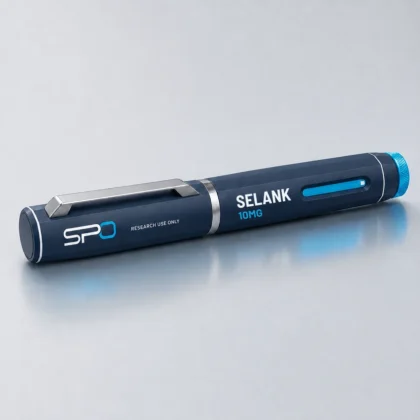
Selank (Pen)
$104.99 -
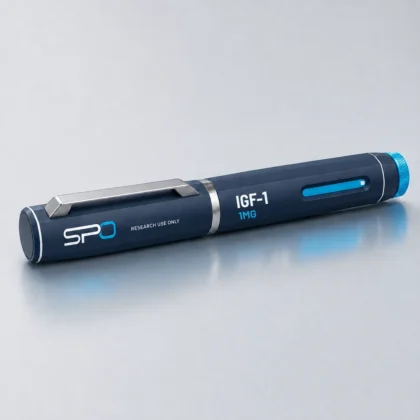
IGF-1 (Pen)
$134.99 -
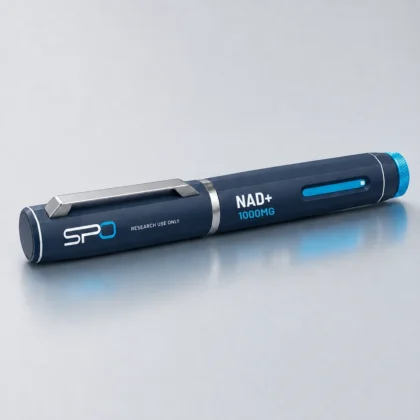
NAD+ (Pen)
$204.99