
In stock
NAD+ (Pen)
$204.99
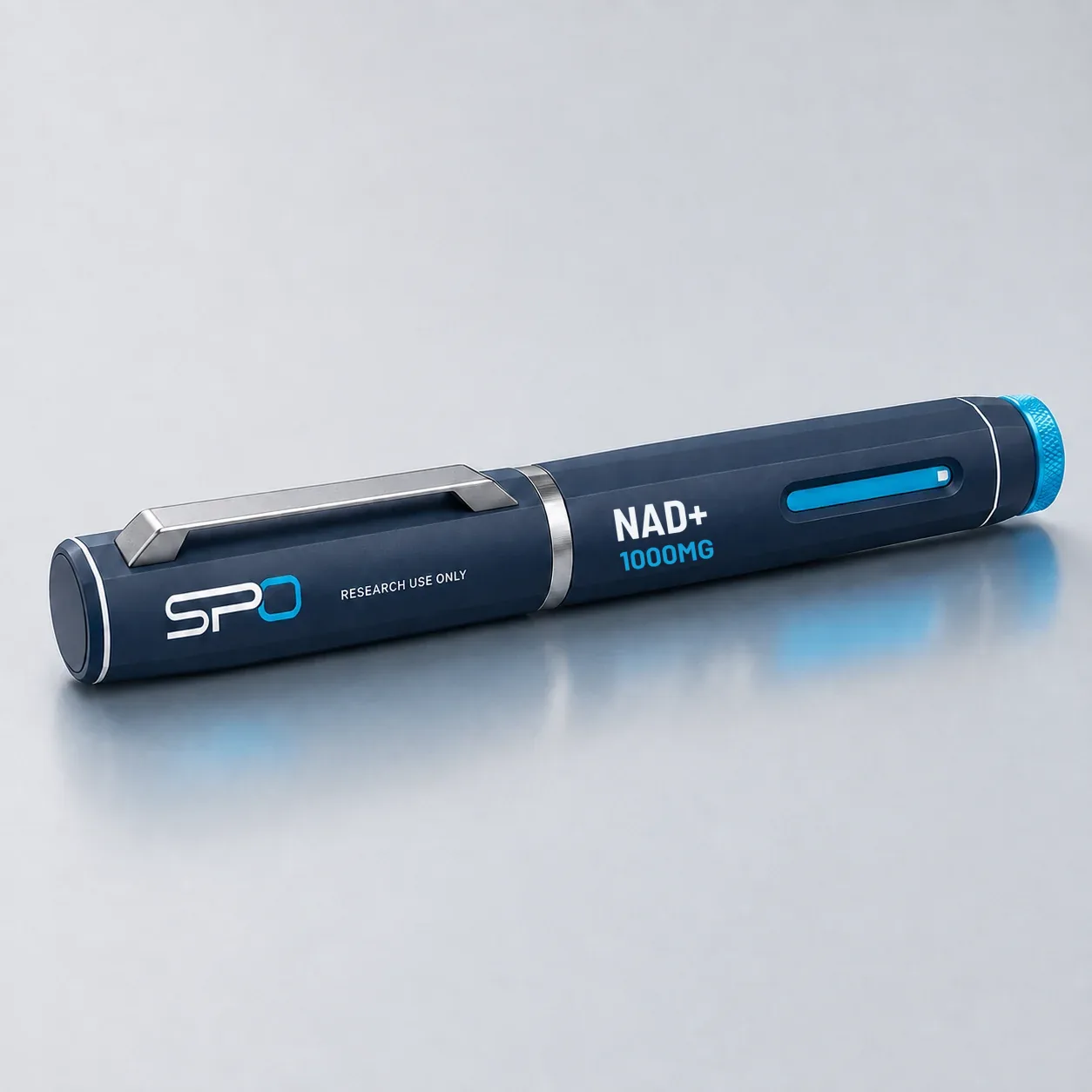
NAD+ research compound in pen format (1000mg fill), supplied for laboratory research only. NAD+ (nicotinamide adenine dinucleotide) is a coenzyme central to cellular redox reactions rather than a peptide. No batch COA is posted for the pen — see the COA library. Priced in CAD and shipped within Canada by Canada Post. Not for human or animal use.

Estimated delivery: 1–3 business days

Free shipping: On orders over $300
Guarantee Safe Checkout:

Description
NAD+ research pen — Canada
This listing is NAD+ in pen format (1000mg fill) — the same research material as our NAD+ vials, supplied in a pre-formatted research pen for laboratories that prefer logged, repeatable handling over loose vials. NAD+ (nicotinamide adenine dinucleotide) is the coenzyme that shuttles electrons in cellular metabolism and is used up by NAD-consuming enzymes such as sirtuins, PARP-1 and CD38[1]. It is a dinucleotide, not a peptide. Laboratory research only; the pen is a handling format, not an instruction.
Full research overview, study table & references → NAD+ in Canada: research guide
Identity at a glance
| Name | NAD+ (nadide; β-NAD; coenzyme I) |
| Formula / MW | C21H27N7O14P2 · 663.4 g/mol |
| CAS | 53-84-9 |
| PubChem CID | 5892 |
| ChEMBL | CHEMBL1234613 |
| Format | Pre-formatted research pen; declared content (1000mg) on the label, no measured value on file |
Batch documentation: a batch-specific COA for the NAD+ pen has not been posted yet — see the COA library. Reports for the vial listings, where posted, are on those pages.
What researchers have looked at
- Supply and demand in muscle (2022 review): under normal conditions the NAMPT salvage pathway replaces what enzymes consume, but ageing and muscle contraction increase NAD+ use[1].
- CD38 in ageing mice (2016): the NADase CD38 became more abundant and active with age and was needed for the age-linked fall in NAD, acting partly through SIRT3[2].
- Added NAD+ in cell culture (2021): when HeLa cells were flooded with extracellular NAD+, a SIRT1-driven response brought internal levels back down by reducing uptake of its breakdown products[3].
- Human skin (2012): in 49 tissue samples, NAD+ content fell with donor age while PARP activity rose, most clearly in males[4].
These are cell, mouse and tissue findings. For people, a 2026 systematic review judged the clinical effect of raising NAD+ inconclusive[5]; nothing here is a claim of benefit.
Storage and handling
- Follow the label: keep the pen cool, dry and out of light, and do not subject it to repeated freeze–thaw.
- Log the batch number and dates of receipt and first use, as with any research material. No protocol or administration information is provided here.
Vial strength: NAD+ 1000MG. Other pens are on the peptide pens page; the whole range is on our buy peptides online in Canada page. Canada Post from inside Canada (shipping policy).
Frequently asked questions
What is the NAD+ pen?
The same synthetic NAD+ supplied in a pre-formatted research pen rather than a loose vial, for laboratories that want repeatable, logged handling. It is a research format only; no administration guidance of any kind is given.
Is there a batch report for the NAD+ pen?
Not yet. No batch-specific report for the pen is posted in the COA library. The page will state the report when one exists.
Is the NAD+ pen for human use?
No. The pen is supplied for laboratory research only and is not for human or animal use. No dosing, administration or protocol information is provided.
Cited
- Ji et al. (2022), Cells — PMID 35203360
- Camacho-Pereira et al. (2016), Cell metabolism — PMID 27304511
- Buonvicino et al. (2021), The Journal of biological chemistry — PMID 34097876
- Massudi et al. (2012), PloS one — PMID 22848760
- Gallagher et al. (2026), Ageing research reviews — PMID 41655607
For laboratory research use only. Not for human or animal consumption. No dosing, administration or protocol information is provided, and nothing here is a claim of efficacy or safety in humans.
Additional information
| Amount | 1000mg |
|---|
Related products
-
DSIP (Pen)
$140.99 -
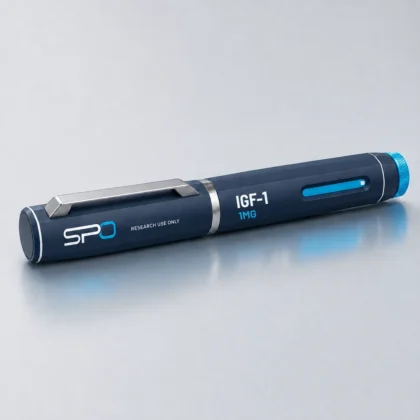
IGF-1 (Pen)
$134.99 -
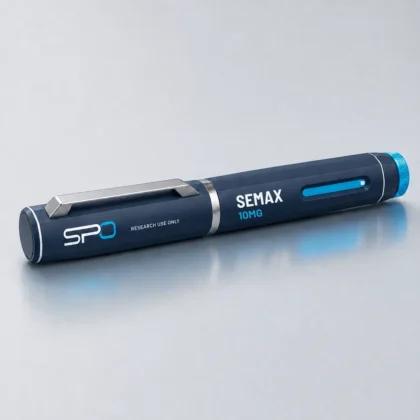
Semax (Pen)
$124.99 -
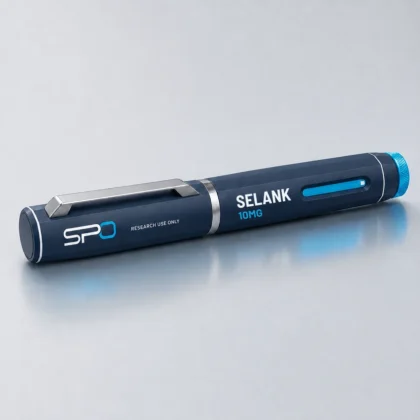
Selank (Pen)
$104.99