
Your cart is currently empty!.
You may check out all the available products and buy some in the shop.
Continue ShoppingCompare BPC-157 research peptide listings by strength, current price, stock and batch documentation — then read what the peptide is, where it came from and what the published preclinical literature has actually studied, with references. Shop Peptides Online carries BPC-157 in Canada in 5mg and 10mg vials and in BPC-157/TB-500 blends, shipped from inside Canada.
For laboratory research use only. Not for human consumption. Shop Peptides Online does not provide dosing or administration guidance.
Single-compound BPC-157 in 5mg and 10mg vials.


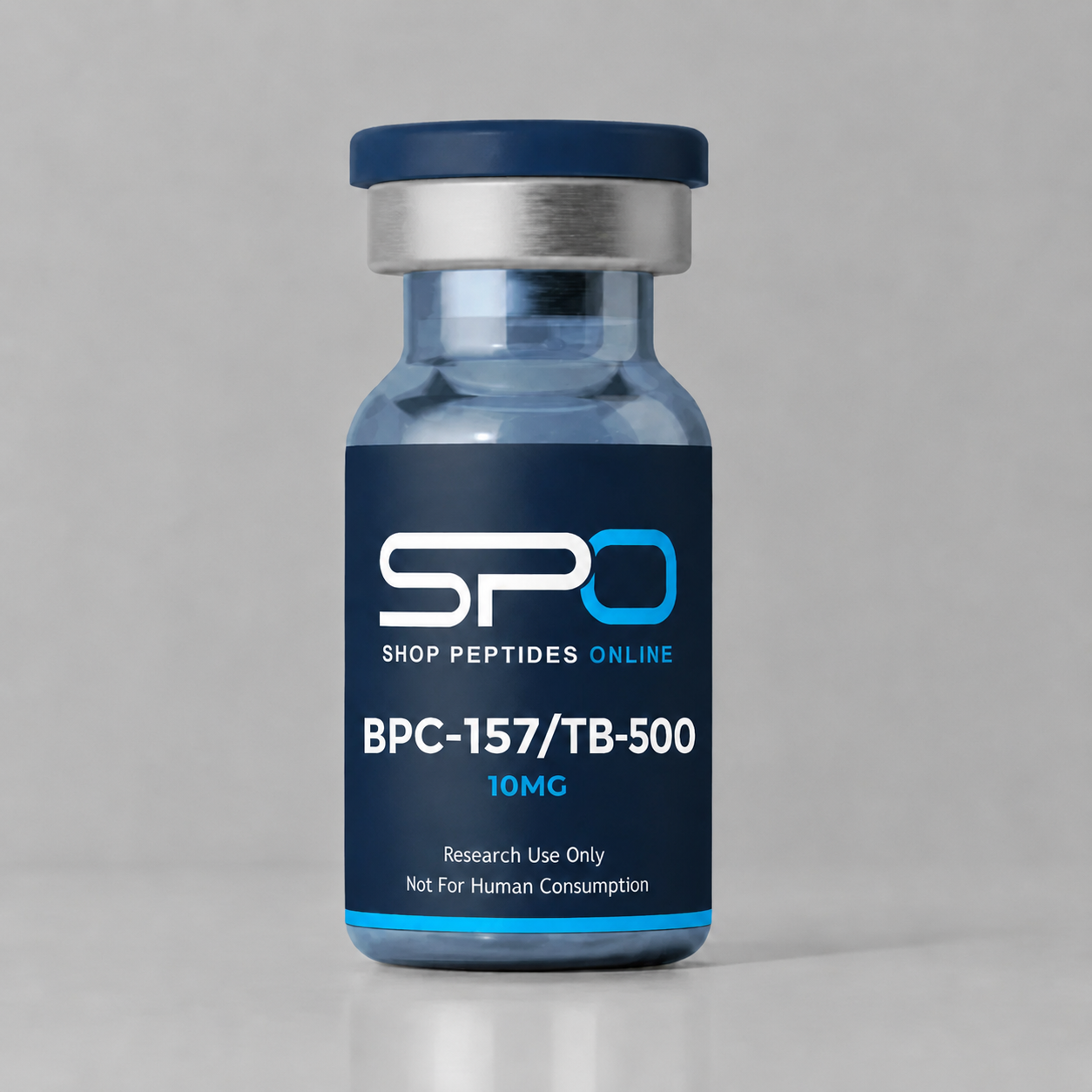
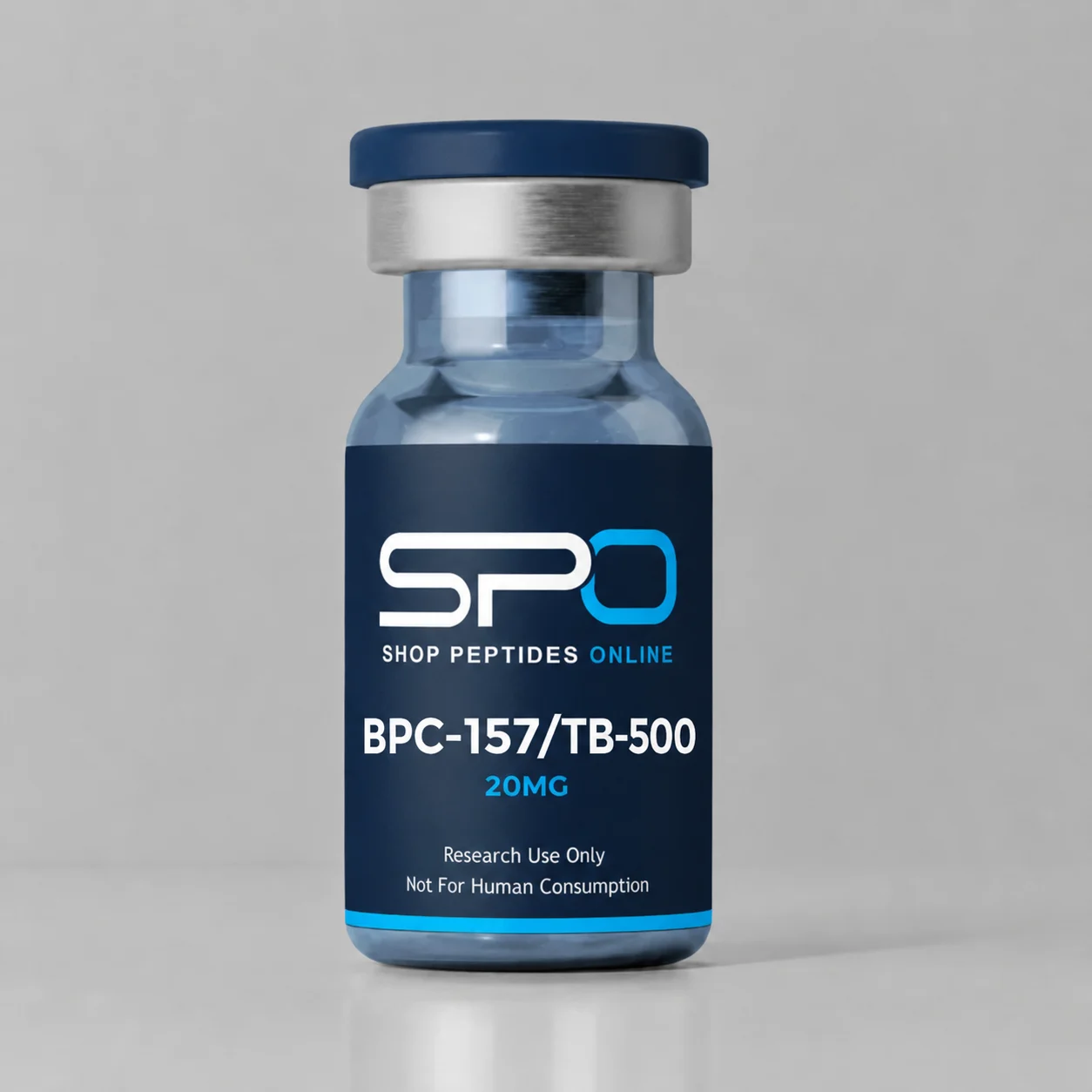
Combined BPC-157 and TB-500 vials in 10mg and 20mg. See the TB-500 page for single-compound TB-500.
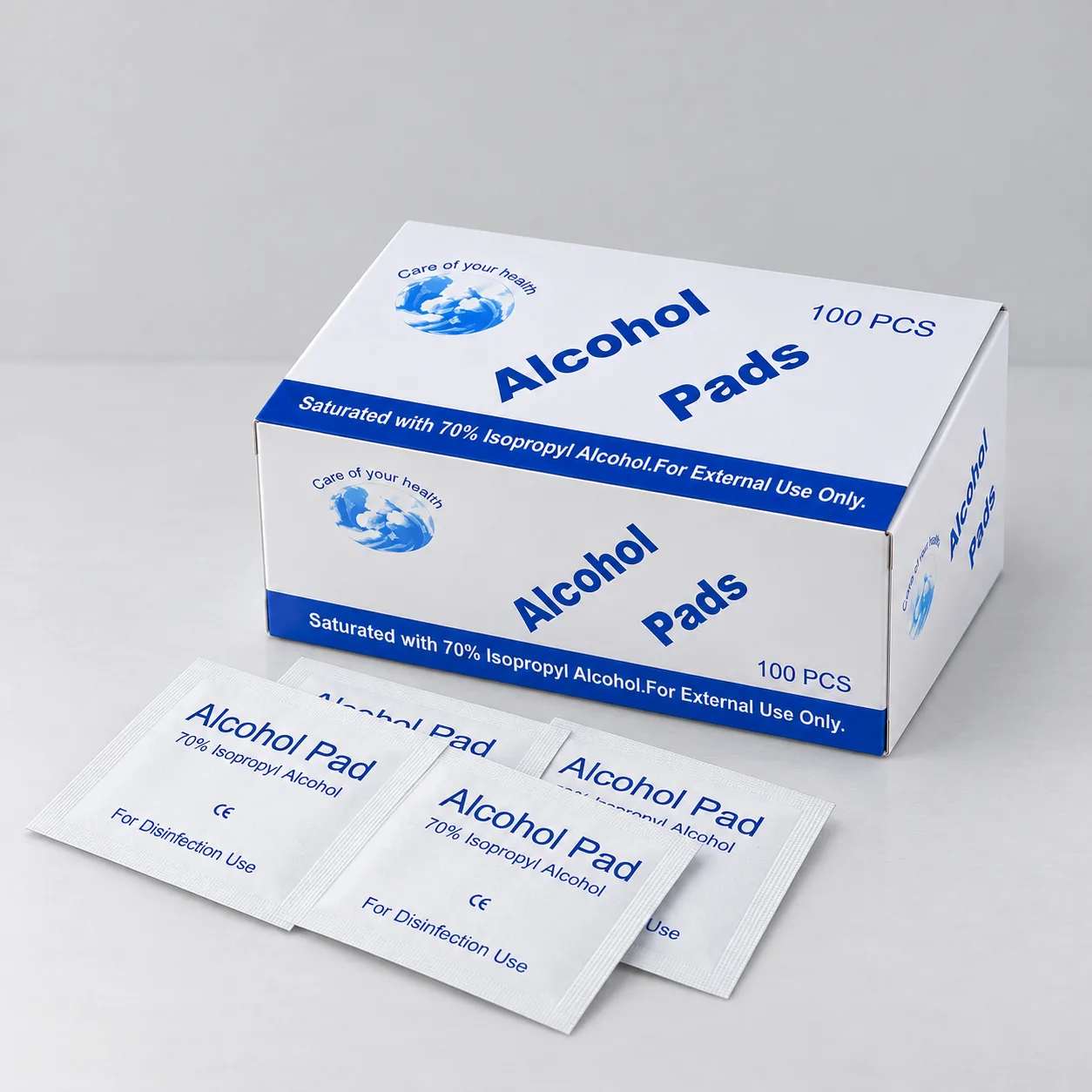
Bacteriostatic water and alcohol pads, listed separately.
Pick the strength you need, then check the current price, stock status and COA shown on that listing. The single-compound vials and the blends are separate products, so confirm the exact item in your cart before checkout.
Every BPC-157 Canada listing on this page is matched to its own batch documentation. The current BPC-157 5mg batch was tested by Janoshik, an independent laboratory: test report #172065, analysis date 18 June 2026, HPLC purity 99.582% and measured content 5.42 mg. The report is posted on the 5mg product page.
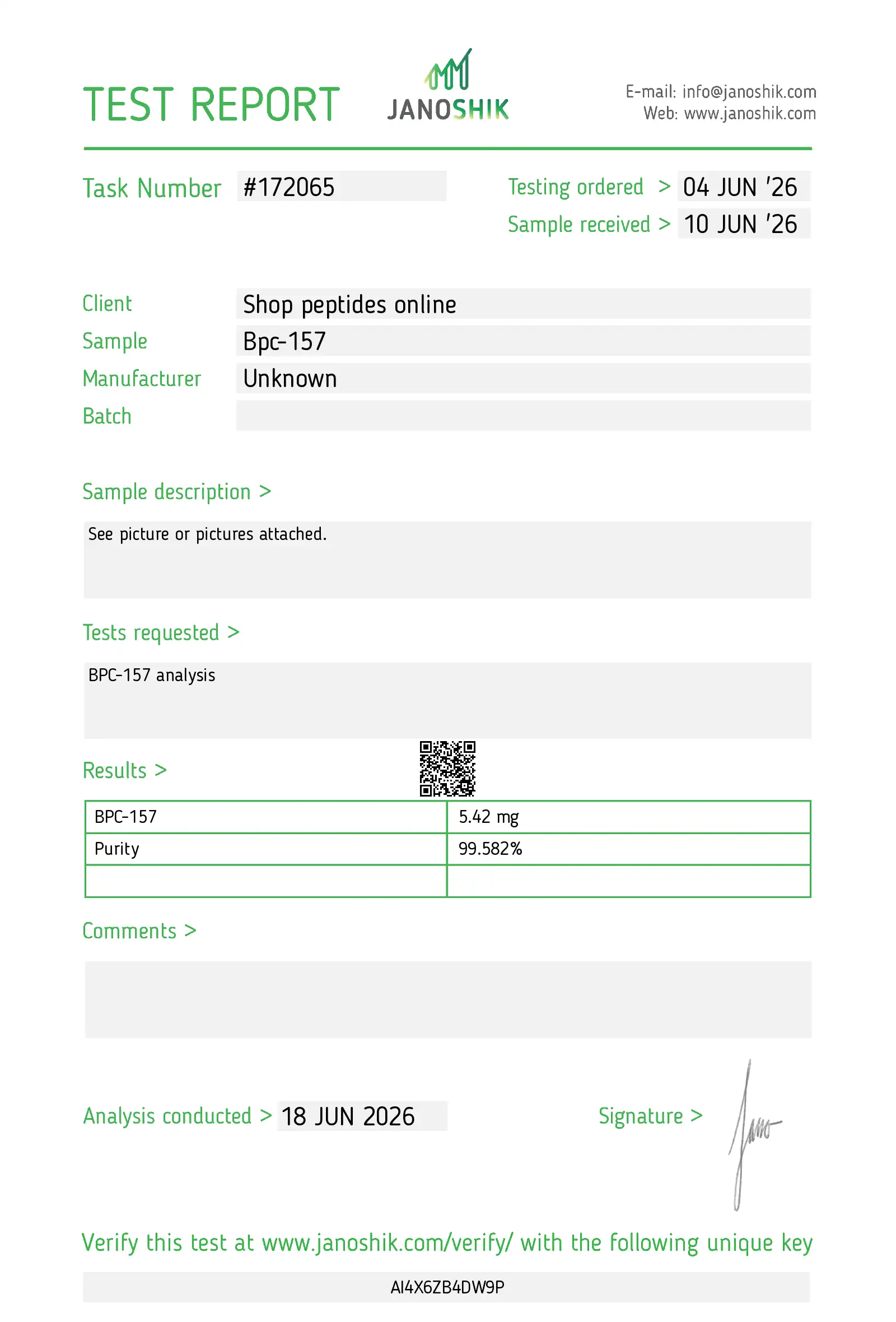
The BPC-157/TB-500 10mg blend has its own report in the COA library. A report specific to the BPC-157 10mg vial is not posted yet, and we don’t borrow the 5mg result for it. Purity (HPLC) and identity (mass spectrometry) answer different questions, so read both lines on any report (why). Match the product name, strength and batch to the document before relying on it.
BPC-157 orders ship from inside Canada, so research vials do not cross a border or clear customs on the way to your lab. Per our shipping policy, orders are typically processed within 1–2 business days of payment (orders placed before 12 PM usually ship the same day), estimated delivery is 1–3 business days depending on location and carrier, tracking is emailed when the parcel ships, and shipping is free on orders over $300.
Labs in Toronto, Ottawa, Hamilton, London and Waterloo order BPC-157 in Canada the same way as everywhere else: one domestic parcel with tracking, and no customs step.
Vancouver, Victoria and Kelowna research groups receive the same domestic shipment. Delivery time depends on location and carrier, and the tracking email shows progress.
Orders to Calgary, Edmonton and the rest of Alberta ship domestically with tracking, inside the policy’s 1–3 business-day estimate depending on location.
Montreal, Quebec City, Sherbrooke and Gatineau labs get the same domestic shipping, tracking and batch documentation as every other province.
Saskatchewan, Manitoba, New Brunswick, Nova Scotia, Prince Edward Island and Newfoundland and Labrador are served by the same domestic shipping. Smaller and more remote communities can sit at the longer end of the delivery estimate.
The single-compound vials (BPC-157 5mg and BPC-157 10mg) contain one peptide, BPC157, the 15-amino-acid sequence GEPPPGKPADDAGLV described in the references below. The blends (BPC-157/TB-500 10mg and BPC-157/TB-500 20mg) combine BPC-157 and TB-500 in one vial. TB-500 is a different synthetic peptide, related to thymosin beta-4; see Thymosin Beta-4 vs TB-500 and the TB-500 page.
The published BPC-157 literature studied the single peptide, not a blend. A study design that needs to attribute an observation to BPC-157 alone uses the single-compound vial. A blend COA has to show each component separately (how to check each component). For a side-by-side of the two peptides, read BPC-157 vs TB-500.
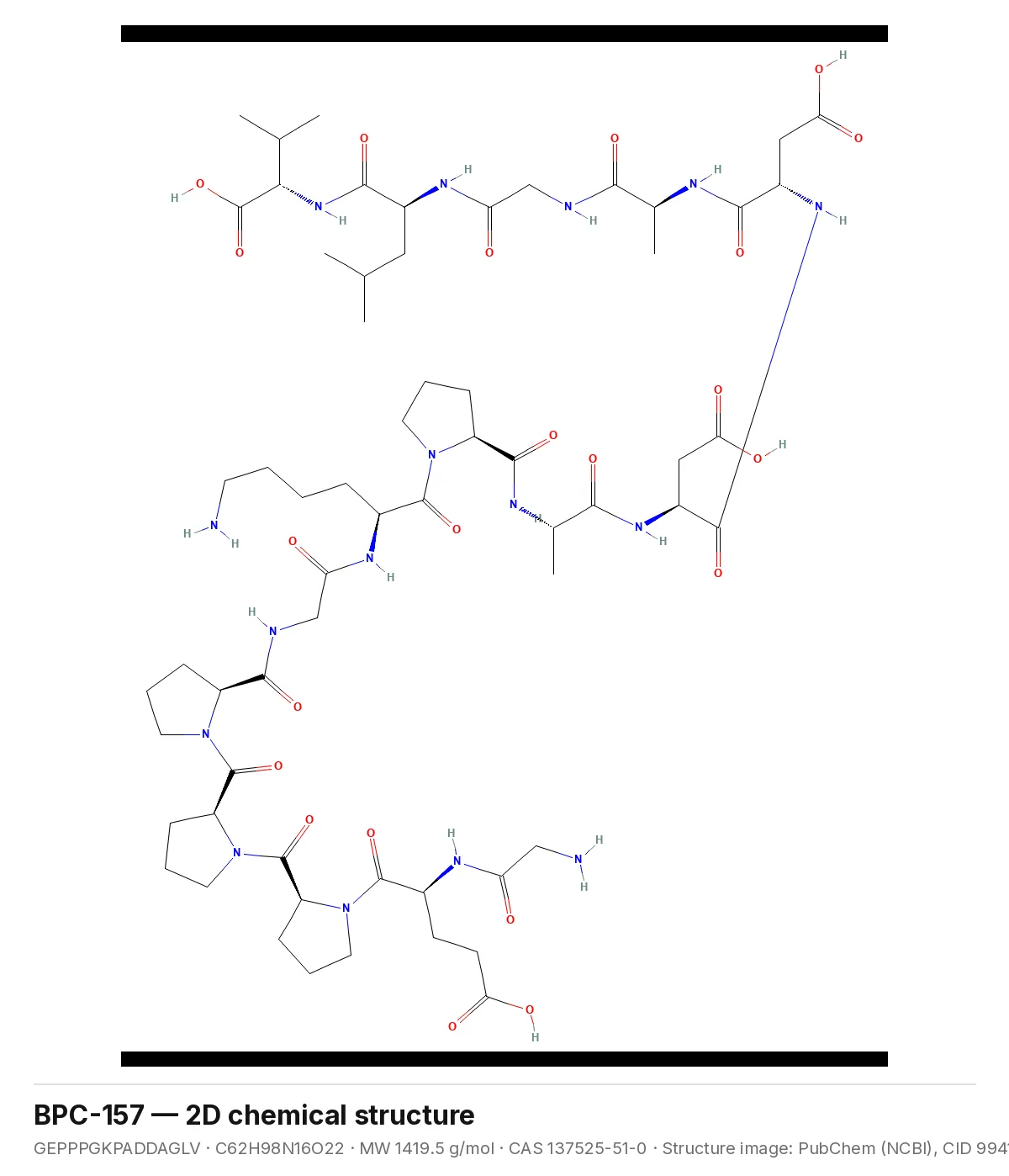
BPC-157 (Body Protection Compound 157) is a synthetic 15-amino-acid peptide with the sequence Gly-Glu-Pro-Pro-Pro-Gly-Lys-Pro-Ala-Asp-Asp-Ala-Gly-Leu-Val (GEPPPGKPADDAGLV). It is a fragment of a larger protein (BPC, about 40 kDa) that was isolated from gastric juice, and the fragment was first characterized in 1993 by Sikirić and colleagues[1, 2]. Since then it has been studied almost entirely in rodent and cell-culture models of tissue injury, blood-vessel biology and the nitric oxide system[9, 11]. It has no approved formulation for any use[12]. The vials listed on this page are supplied as lyophilized powder for in-vitro and preclinical laboratory research only.
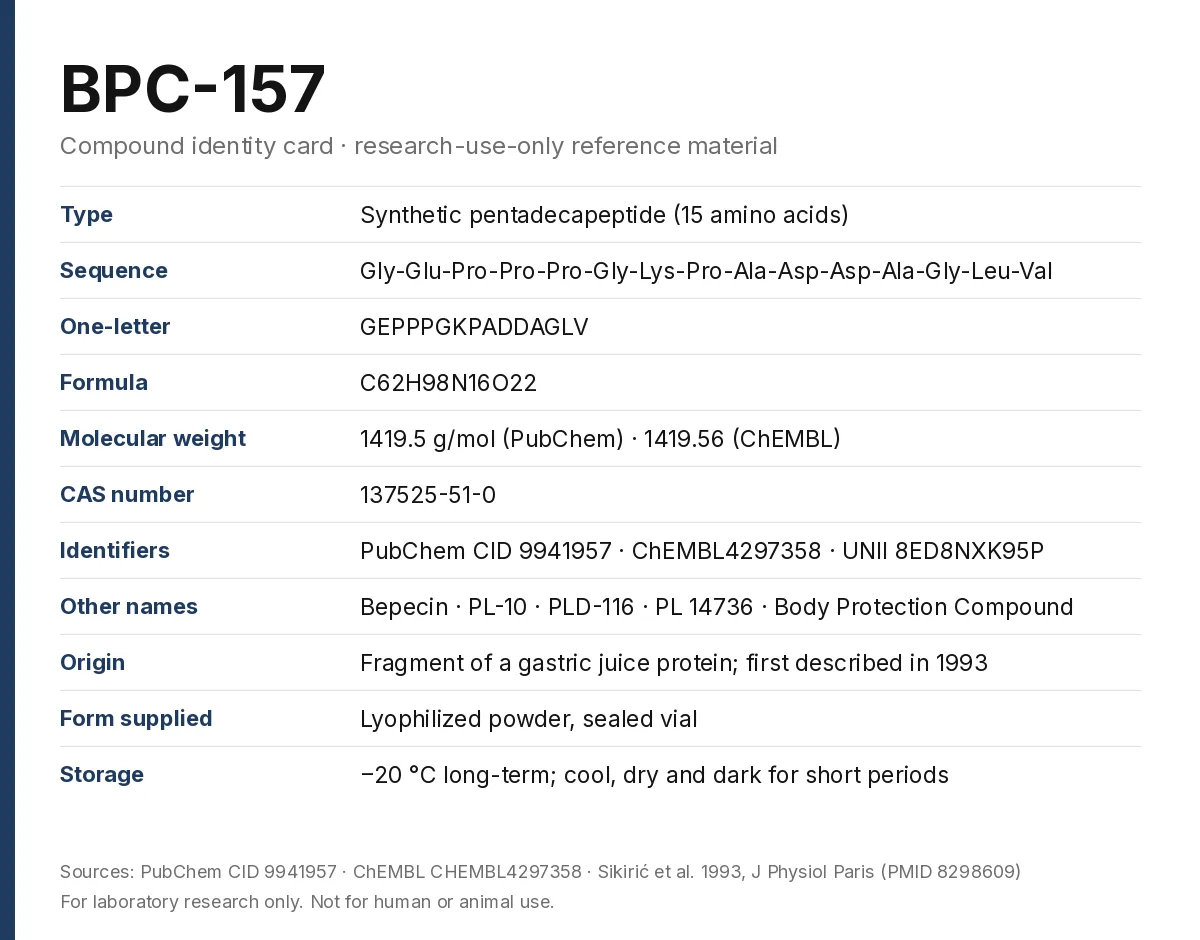
In 1993 Sikirić and co-workers reported the isolation of a gastric juice protein with a relative molecular mass of about 40,000, which they named BPC, and described a 15-amino-acid fragment — BPC 157 — that they considered essential for its activity. The same paper proposed the “stomach-stress-organoprotection” hypothesis: that the stomach, as a large neuroendocrine organ, mounts a protective counter-response to stress, and that BPC might be one of its mediators[1]. A companion study the same year compared the synthetic fragment with bromocriptine, amantadine and somatostatin in rat models of liver injury (bile-duct plus hepatic-artery ligation, restraint stress, carbon tetrachloride)[2]. Later papers describe the peptide as being formed constitutively in the gastric mucosa and as stable in human gastric juice[6, 12] — the property behind the recurring phrase “stable gastric pentadecapeptide” in the literature.
In the early 2000s the compound was taken into clinical development for inflammatory bowel disease by the Croatian company Pliva under the codes PL-10, PLD-116 and PL 14736[3, 10]. No approved product resulted; a 2026 biopharmaceutical review notes that available human data come from fewer than 30 subjects across three uncontrolled pilot studies[12].
| Property | Value | Source |
|---|---|---|
| Full name | Glycyl-L-α-glutamyl-L-prolyl-L-prolyl-L-prolylglycyl-L-lysyl-L-prolyl-L-alanyl-L-α-aspartyl-L-α-aspartyl-L-alanylglycyl-L-leucyl-L-valine | PubChem synonyms, CID 9941957 |
| One-letter sequence | GEPPPGKPADDAGLV (H-Gly-Glu-Pro-Pro-Pro-Gly-Lys-Pro-Ala-Asp-Asp-Ala-Gly-Leu-Val-OH) | PubChem; Staresinic et al. 2003[3] |
| Molecular formula | C62H98N16O22 | PubChem; ChEMBL |
| Molecular weight | 1419.5 g/mol (PubChem) · 1419.56 (ChEMBL) | PubChem; ChEMBL |
| CAS registry number | 137525-51-0 | PubChem synonyms |
| PubChem CID | 9941957 | PubChem |
| ChEMBL ID | CHEMBL4297358 (molecule type: protein; natural-product flag set) | ChEMBL |
| UNII | 8ED8NXK95P | PubChem synonyms |
| Synonyms | Bepecin; BPC 157; Bpc-157; PL-10; PLD-116; PL 14736; Body Protection Compound 157 | PubChem; ChEMBL |
| Salt form commonly supplied | Free base or trifluoroacetate salt (both listed as synonyms in PubChem); check the batch report for the form tested | PubChem synonyms |
The published work is preclinical: rats, mice, chick embryos and cultured cells. The statements below describe what those studies reported in their models, not effects in people.
In 2003 Staresinic and colleagues transected the right Achilles tendon of rats and gave BPC 157 intraperitoneally once daily, dissolved in saline with no carrier. Compared with saline controls, treated animals showed higher load to failure and Young’s modulus at biomechanical testing, higher Achilles functional index scores, and on microscopy more fibroblasts, reticulin and collagen with fewer granulocytes. In the same paper, the peptide had no effect on the growth of cultured tendocytes on its own but opposed the growth-inhibiting effect of 4-hydroxynonenal[3].
Chang and colleagues (2011) cultured tendon explants and fibroblasts from rat Achilles tendon. BPC 157 accelerated the outgrowth of fibroblasts from explants, did not change proliferation in an MTT assay, increased cell survival under hydrogen-peroxide stress, and dose-dependently increased migration and spreading, with increased phosphorylation of FAK and paxillin[4]. A 2014 follow-up from the same group used a cDNA microarray on rat tendon fibroblasts and found growth hormone receptor among the most up-regulated genes; the increase was dose- and time-dependent at both mRNA and protein level, and adding growth hormone to treated cells increased proliferation and activated JAK2[5].
A 2026 rat study compared BPC-157, TB-500 and their combination after Achilles transection and repair (eight rats per group, four weeks). Both peptides were associated with improved histopathology scores; the biomechanical difference reached statistical significance only in the TB-500 group, and the combination gave no additional benefit. The authors describe the work as exploratory and call for dose-optimisation and longer studies[13].
Hsieh and colleagues (2017) reported that BPC 157 increased vessel density in the chick chorioallantoic membrane assay and in an endothelial tube-formation assay, and accelerated blood-flow recovery (laser Doppler) in a rat hind-limb ischaemia model. In cultured human vascular endothelial cells the peptide increased VEGFR2 mRNA and protein — but not VEGF-A — promoted VEGFR2 internalisation, and activated the VEGFR2–Akt–eNOS pathway; the endocytosis inhibitor dynasore blocked these effects[8]. A 2014 review from the Zagreb group summarises the vascular literature and lists NO, VEGF and FAK among the pathways proposed[7].
A 2014 review examined the relationship between BPC 157 and the NO system in rat models: the peptide is reported to interact with both the NOS inhibitor L-NAME and the substrate L-arginine, in settings that include alcohol-induced gastric lesions, blood-pressure regulation, cardiovascular disturbance models and fistula healing. The authors state that how this might translate to clinical performance “remains to be determined”[6].
The earliest work used rat models of gastric, hepatic and other organ lesions[1, 2]. A 2006 review describes experiments in the fully distended rat stomach after absolute-alcohol instillation, in which BPC 157 was associated with preserved serosal blood-vessel presentation and reduced gastric, oesophageal and duodenal lesions compared with atropine, ranitidine and omeprazole[10]. A 2021 review covers skin-wound models (incisional and excisional wounds, burns, alkali burns, diabetic ulcers) and fistula models in rats[9].
Reviews from the originating group repeatedly note that an LD1 was not reached in animal toxicity testing[6, 9]. A 2025 systematic review in orthopaedic sports medicine (36 included studies, 35 of them preclinical) reports a plasma half-life under 30 minutes, hepatic metabolism and renal clearance, and states that no clinical safety data were found[11]. A 2026 biopharmaceutical review confirms the sub-30-minute half-life in a two-species preclinical ADME study, with intramuscular bioavailability of 14–51% depending on species, and contrasts this with biological effects reported to last hours to days — a disconnect the authors flag as unresolved[12].
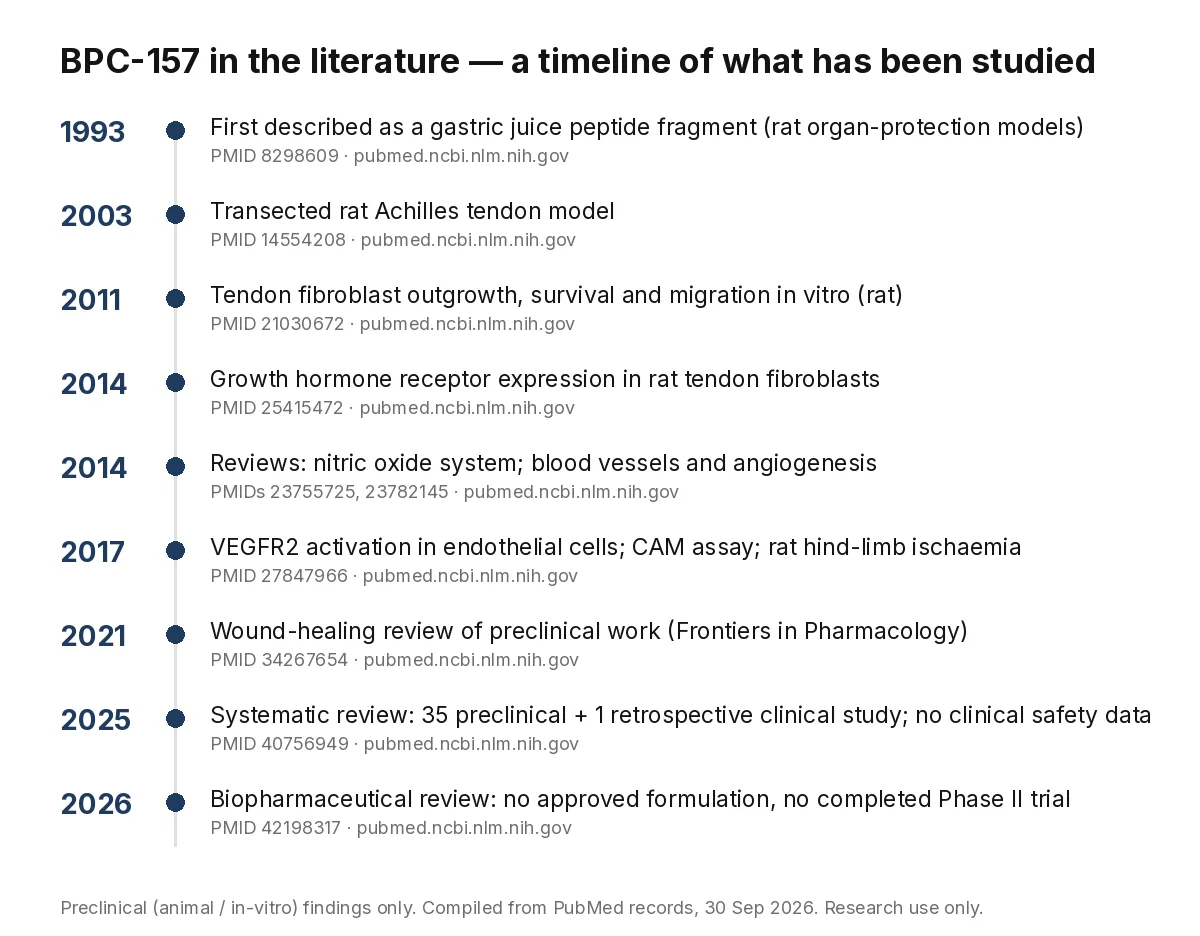
| Year | Model | What was investigated | Reference |
|---|---|---|---|
| 1993 | Rat (multiple organ-lesion models) | Characterisation of the 15-residue fragment; organoprotection hypothesis | PMID 8298609 |
| 1993 | Rat liver-injury models | Comparison with bromocriptine, amantadine, somatostatin | PMID 7901724 |
| 2003 | Rat Achilles transection; cultured tendocytes | Biomechanics, functional index, histology; HNE antagonism in vitro | PMID 14554208 |
| 2011 | Rat tendon explants and fibroblasts (in vitro) | Outgrowth, survival under H2O2, migration; FAK–paxillin phosphorylation | PMID 21030672 |
| 2014 | Rat tendon fibroblasts (in vitro) | Growth hormone receptor expression; JAK2 activation | PMID 25415472 |
| 2014 | Review (rat models) | NO-system relationship; L-NAME and L-arginine interactions | PMID 23755725 |
| 2014 | Review (rat models) | Blood-vessel responses to injury; NO, VEGF, FAK pathways | PMID 23782145 |
| 2017 | Chick CAM; rat hind-limb ischaemia; human endothelial cells | Vessel density, blood-flow recovery; VEGFR2 expression and internalisation; Akt–eNOS | PMID 27847966 |
| 2021 | Review (rat wound models) | Skin wounds, burns, fistulas; gene-expression changes | PMID 34267654 |
| 2025 | Systematic review (35 preclinical + 1 clinical) | Musculoskeletal outcomes, metabolism, safety; no clinical safety data | PMID 40756949 |
| 2026 | Narrative review | Pharmacokinetics, formulation, regulatory status; no completed Phase II | PMID 42198317 |
| 2026 | Rat Achilles repair (n=32) | BPC-157 vs TB-500 vs combination; histology and load to failure | PMID 42542926 |
Almost all of the data above come from rats or cell culture. The one clinical report in the 2025 systematic review is a retrospective series of 12 patients, and that review found no clinical safety data[11]. Human pharmacokinetics are described as “critically undercharacterized”, and no pharmaceutical-grade formulation has been validated[12]. BPC-157 is not approved by Health Canada, the FDA or the EMA, and its use is prohibited in professional sport[11]. Nothing on this page describes or implies an effect in humans, and no dosing or administration information is given here or anywhere on this site.
Every batch is tested by an independent laboratory and the report is filed in the COA library under the batch number printed on the label; the site’s policy is HPLC for purity and mass spectrometry for identity, read separately (why). At the time of this review a report is posted for the BPC-157 5 mg batch on its product page — Janoshik test report #172065, analysis date 18 June 2026, measured content 5.42 mg, purity 99.582% (view) — and the library holds one for the BPC-157/TB-500 10 mg blend. A report specific to the 10 mg single-compound vial is not yet posted; that page says so rather than borrowing the 5 mg result.
All references were retrieved from PubMed (NCBI) on 30 September 2026; identity data from PubChem and ChEMBL (EMBL-EBI) on the same date. Where two sources gave slightly different molecular weights, both are shown.
Shop Peptides Online lists BPC-157 in 5mg and 10mg vials and in BPC-157/TB-500 blends on this page. Orders ship from inside Canada, so there is no customs clearance; the free-shipping threshold and delivery estimates are in the shipping policy and shown at checkout.
Yes. BPC-157 Canada orders ship domestically to every province, including Ontario, British Columbia, Alberta, Quebec, the Prairies and Atlantic Canada. The shipping policy estimates 1–3 business days depending on location and carrier, and tracking is emailed when the order ships.
Yes, per batch. The BPC-157 5mg product page carries an independent Janoshik report (#172065, 18 June 2026) showing 99.582% HPLC purity and 5.42 mg measured content, and the COA library holds a report for the BPC-157/TB-500 10mg blend. A report for the 10mg single-compound vial is not posted yet.
A synthetic 15-amino-acid peptide, sequence GEPPPGKPADDAGLV, formula C62H98N16O22, molecular weight 1419.5 (PubChem CID 9941957, CAS 137525-51-0). It is a fragment of a protein first isolated from gastric juice and described in 1993 (PMID 8298609).
The single-compound vials contain only BPC-157. The blends combine BPC-157 with TB-500, a separate synthetic peptide related to thymosin beta-4, in one vial. The published BPC-157 studies used the single peptide, so a study that needs to attribute a result to BPC-157 alone uses the single-compound vial.
BPC-157 is supplied as lyophilized powder. Store the sealed vial at −20 °C for long-term storage, keep it dry and out of direct light, and avoid repeated temperature cycling. Solutions are less stable than the dry powder.
No. All products are sold strictly for laboratory research use and are not for human or animal consumption. BPC-157 has no approved formulation anywhere, a 2025 systematic review found no clinical safety data (PMID 40756949), and Shop Peptides Online provides no dosing or administration guidance.
For laboratory research use only. Not for human or animal consumption. This page identifies the material, its documentation and the published preclinical literature, and makes no claim of efficacy or safety in humans.