Peptides are chains of amino acids joined by peptide bonds. Researchers study different peptide sequences in fields such as chemistry, biochemistry and molecular biology. This guide explains the basic terms and what to check when comparing research-use materials. It does not recommend any peptide for a health or performance outcome.
For laboratory research use only. Not for human or animal consumption. The products discussed here are not presented as medicines, supplements or personal-use products. This page offers no dosing or administration guidance.
Peptides and proteins
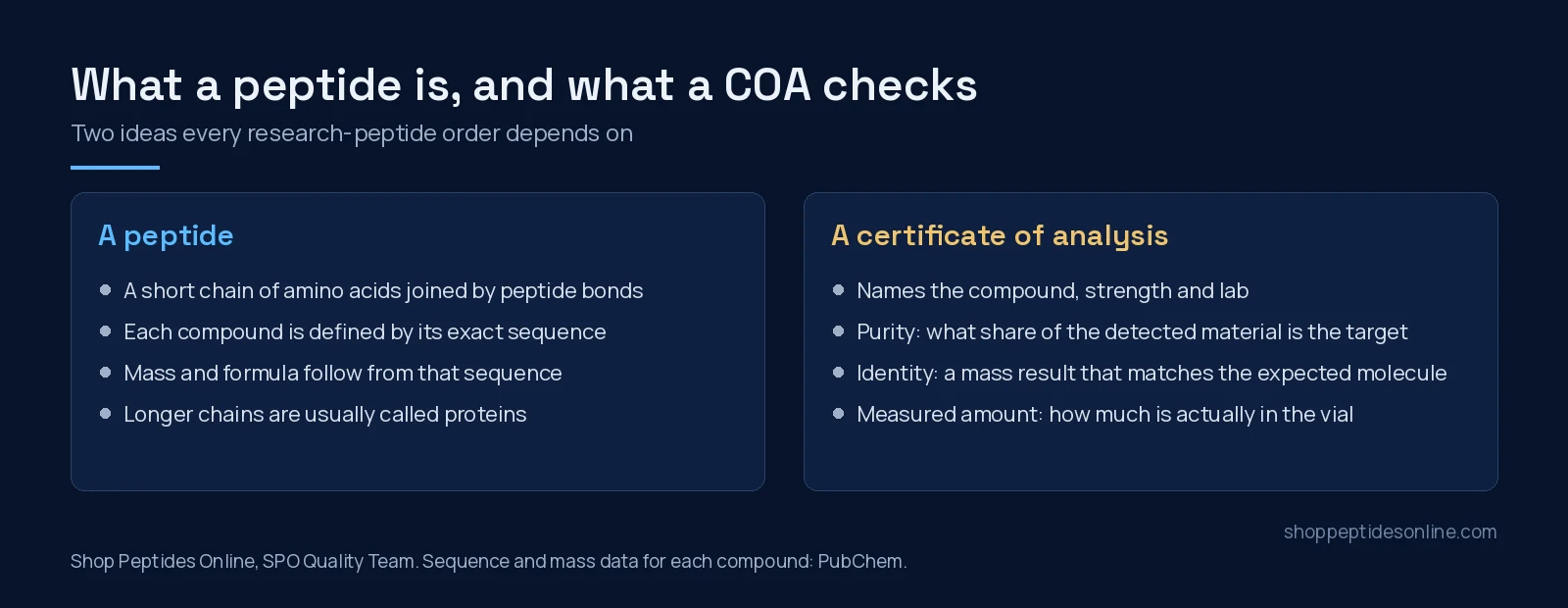
Both peptides and proteins are made from amino acids. “Peptide” commonly refers to a shorter chain, but there is no single length cutoff that every scientific field uses. A sequence and its chemical modifications matter more than a broad label when identifying a research material.
Why sequence and form matter
Changing the order of amino acids, adding a chemical group or changing the product form can change what material a laboratory receives. Researchers should match the exact compound name, listed amount and format to their study design. A similarly named product is not necessarily a substitute.
Research categories
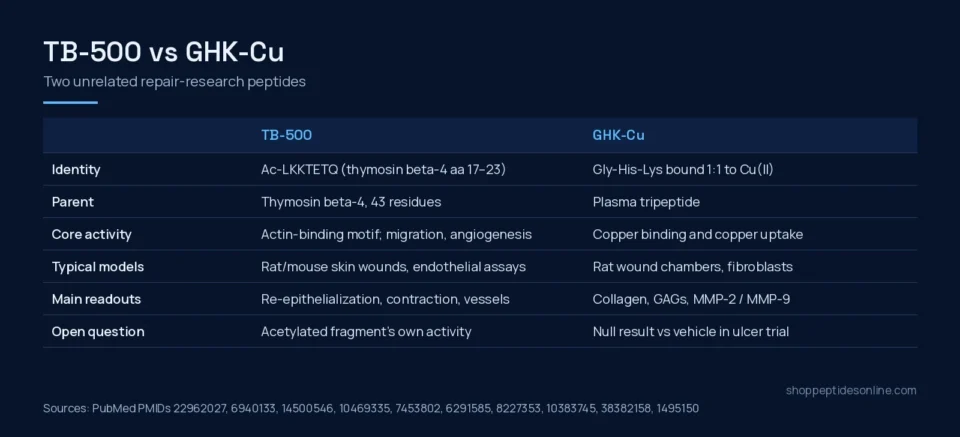
Catalog categories are browsing aids, not statements that a product treats a condition or produces a benefit. Shop Peptides Online lists materials including BPC-157, TB-500, GHK-Cu, CJC-1295 and Ipamorelin. Each has its own product identity and available documentation. Browse the research peptide catalog for current listings.
What a Certificate of Analysis can show
A Certificate of Analysis (COA) may report a batch identifier, test date, analytical method, result and lab reference. Check whether the document is for the same batch as the item offered; a general purity claim without a matching report is less useful. Review the available COA library, and ask the seller when a product or batch match is unclear.
Questions before ordering for research
- Does the product name and amount match the material in the study plan?
- Is there batch documentation for the specific listing or lot?
- What do the available test record and product page actually say about identity and purity?
- Are current stock, shipping terms and storage details clear?
In short
Identify the exact research material first, then check its live listing and batch records. Avoid treating a broad category name or marketing claim as evidence of a specific result. These materials are for laboratory research only.