
Your cart is currently empty!.
You may check out all the available products and buy some in the shop.
Continue ShoppingCANADA · RESEARCH MATERIALS · SPECIFICATION CHECKS
Start with the Kisspeptin-10 10MG listing, then read what this decapeptide is, where it came from, and what thirty years of cell, rodent, sheep, primate and small human studies have and have not shown — with 25 references and a plain statement of what is not documented.
The current KISSPEPTIN 10MG product page describes the material as Kisspeptin-10 in vial format. Use that live page for availability, pricing and the seller’s current specification. Preserve both the listing title and the more detailed named form when recording the order.
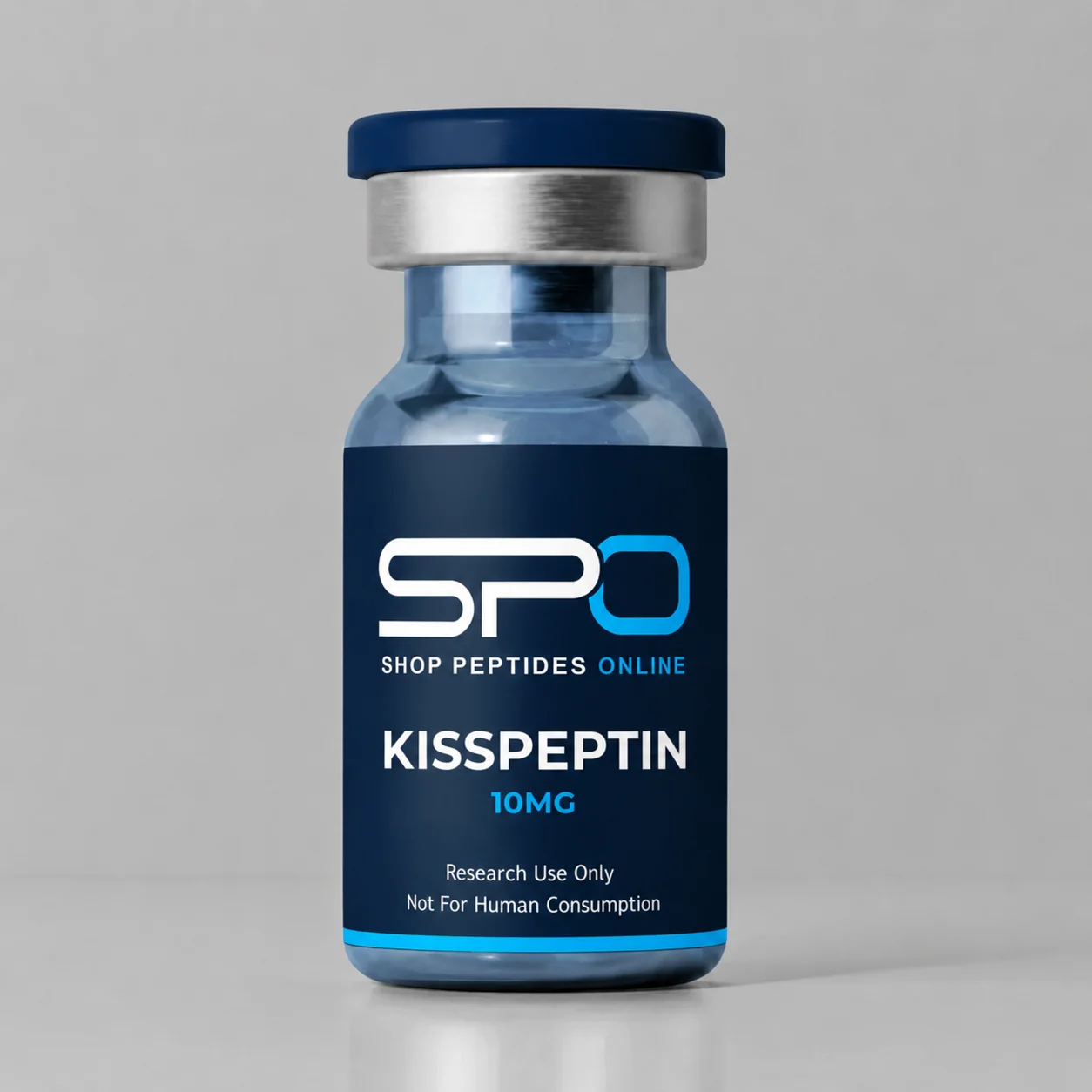
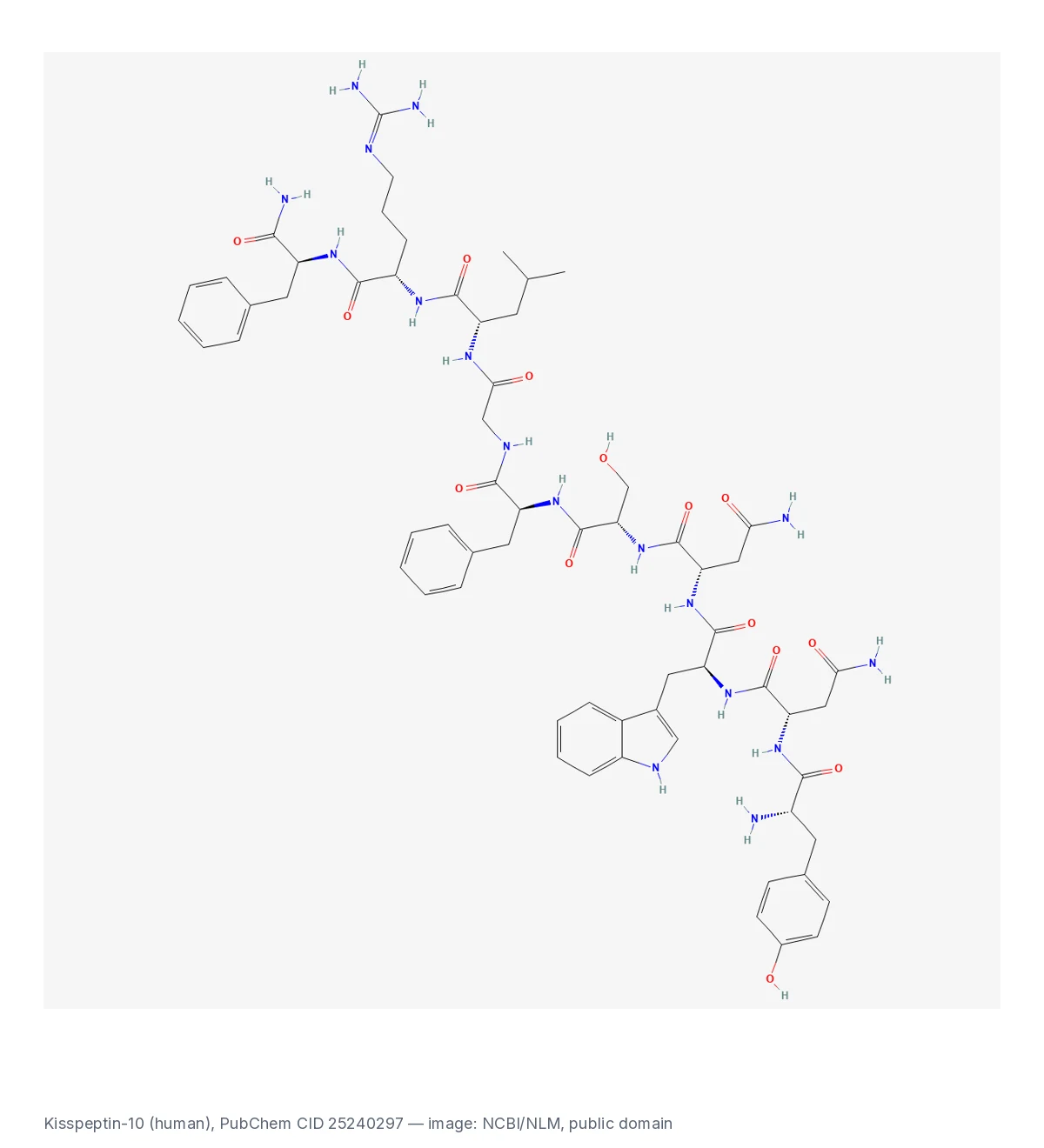
Kisspeptin-10 is the ten-residue C-terminal fragment (Tyr-Asn-Trp-Asn-Ser-Phe-Gly-Leu-Arg-Phe-NH2) of the peptides encoded by the human KISS1 gene — a gene cloned in 1996 from melanoma cells that had lost the ability to metastasise[1], and whose products were shown in 2001 to be the natural ligands of the orphan receptor GPR54, now called KISS1R[2, 3]. Two years later, families in which puberty never started were found to carry loss-of-function mutations in that receptor[4, 5], and kisspeptin moved from cancer biology to the centre of reproductive neuroendocrinology. The decapeptide is the shortest fragment with full receptor activity[15, 12], which is why it is the form most laboratories use as a reference agonist. Kisspeptin peptides have been studied in mice, rats, sheep, monkeys and — unusually for peptides sold for research — in a series of small controlled human studies. None of that makes the vial on this page a medicine: it is lyophilized research-grade material for laboratory use only.
The name is a pun on Hershey, Pennsylvania. Lee and colleagues at the Hershey Medical Center were looking for the gene on chromosome 6 that stopped human melanoma cells metastasising; subtractive hybridisation gave them a cDNA expressed only in the non-metastatic hybrids, encoding a 164-residue hydrophilic protein with its strongest expression in placenta, which they called KiSS-1[1]. Five years later two groups working on orphan G-protein-coupled receptors converged on the same gene: Ohtaki’s group purified a 54-residue C-terminally amidated peptide from human placenta as the ligand of receptor hOT7T175 and named it metastin, showing it blocked chemotaxis and invasion of receptor-transfected cells and reduced lung metastases of transfected melanoma in mice[2]; Kotani’s group isolated 54-, 14- and 13-residue RF-amide peptides from placenta, named them kisspeptins, and showed they bound rat and human GPR54 at low nanomolar affinity, mobilised calcium and activated MAP kinases while inhibiting cell proliferation[3].
The reproductive role arrived through genetics. In 2003 de Roux’s group mapped isolated hypogonadotropic hypogonadism in a consanguineous family to a homozygous 155-nucleotide deletion in GPR54[4], and Seminara’s group reported the L148S and compound R331X/X399R mutations in other pedigrees, showed the mutant receptors accumulated less inositol phosphate in COS-7 cells, and created Gpr54-deficient mice with small testes, delayed vaginal opening and no follicular maturation yet normal hypothalamic GnRH content[5]. The 2012 description of an inactivating KISS1 mutation with the same phenotype completed the picture: both the ligand and its receptor are required for puberty in humans[17].
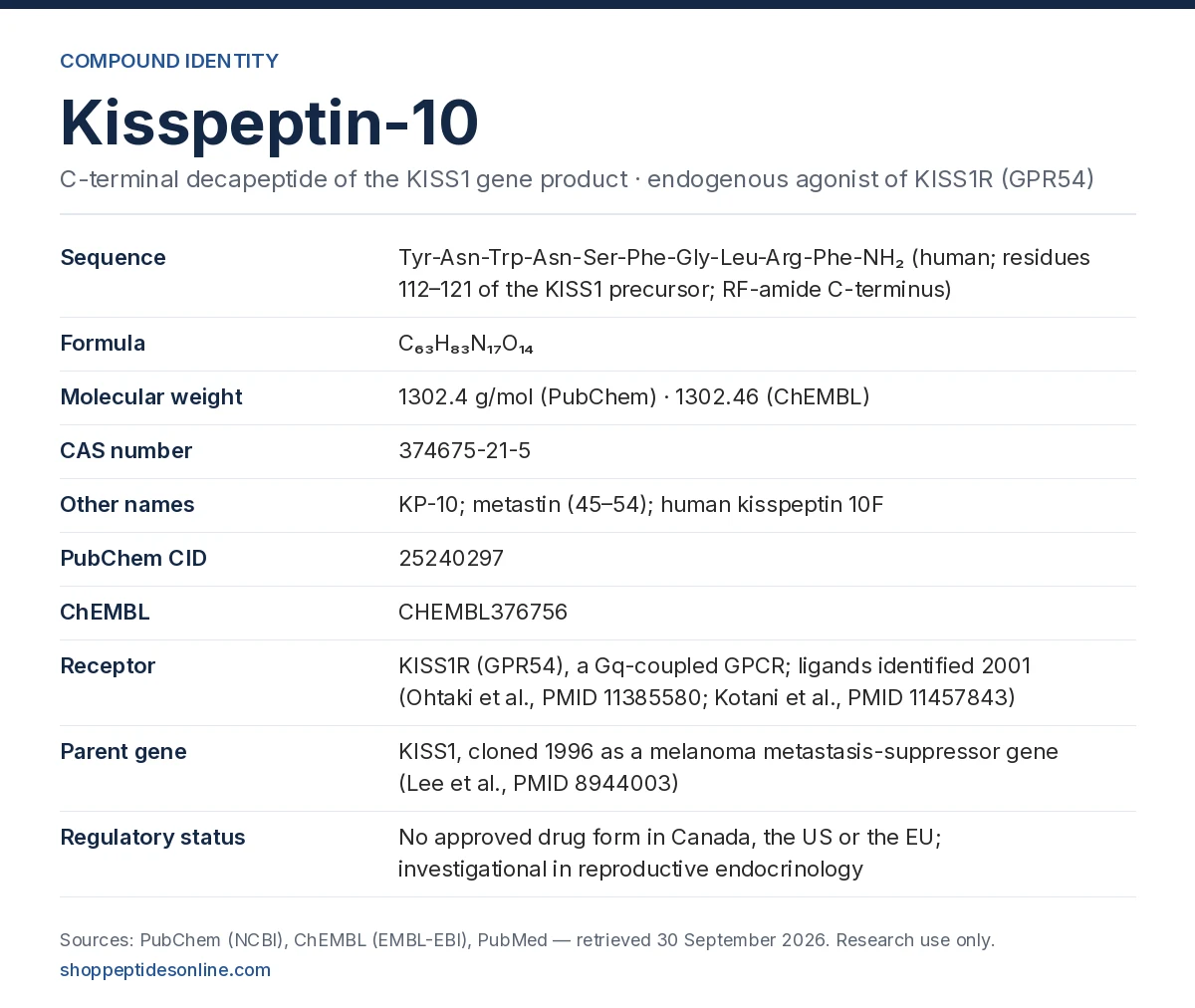
| Property | Value | Source |
|---|---|---|
| Name | Kisspeptin-10 (human); KP-10; metastin (45–54) | PubChem synonyms |
| Sequence | Tyr-Asn-Trp-Asn-Ser-Phe-Gly-Leu-Arg-Phe-NH2 (KISS1 residues 112–121) | PubChem; Chan et al. 2011[16] |
| Formula / MW | C63H83N17O14 / 1302.4 (exact mass 1301.6305) | PubChem CID 25240297 |
| MW (ChEMBL) | 1302.46; maximum development phase recorded: 3 | CHEMBL376756 |
| CAS | 374675-21-5 | PubChem |
| Parent peptides | Kisspeptin-54 (metastin), -14, -13 — all RF-amides cleaved from the 138-residue precursor | PMID 11457843; PMID 23550002 |
| Receptor | KISS1R (formerly GPR54, AXOR12, hOT7T175); ~40% homologous to galanin receptors | PMID 12944565; PMID 11385580 |
| Essential residues | Phe6 and Phe10: alanine substitution raises EC50 >100-fold and abolishes LH release in rats; helical segment Asn4–Tyr10 by NMR | PMID 19389922 |
Species matter for this peptide. Human and rat kisspeptin-10 differ in sequence yet give similar EC50 values at rat KISS1R[12]; a certificate of analysis should therefore name the species form as well as the mass, and a mass-spectrometry match to 1302.4 identifies the human decapeptide.
In CHO-K1 cells expressing rat or human GPR54, kisspeptins triggered PIP2 hydrolysis, calcium mobilisation, arachidonic-acid release, ERK1/2 and p38 phosphorylation and stress-fibre formation while inhibiting proliferation[3]. In receptor-transfected cells, alanine scanning of rat kisspeptin-10 showed that positions 6 and 10 carry most of the activity: substituting either raised the EC50 from the 10−8 M range to above 6 × 10⁻⁶ M and slowed the response[12]. Investigational analogues TAK-448 and TAK-683 matched natural Kp-10 for binding affinity and full agonism at rat KISS1R[19].
Delivered into the cerebral ventricles of mice, kisspeptin-54 and kisspeptin-10 both stimulated LH, and kisspeptin-54 stimulated LH and FSH at femtomolar amounts; acyline, a GnRH antagonist, blocked the effect, and KiSS-1 mRNA mapped to the anteroventral periventricular, periventricular and arcuate nuclei[6]. GPR54 transcripts co-localise with GnRH neurons, kisspeptin has no effect on LH or FSH in Gpr54-null mice, and in sheep it produced a large release of GnRH into cerebrospinal fluid with a parallel LH rise — direct evidence that the peptide acts at the level of GnRH release[7]. In ovariectomised rats with recording electrodes in the arcuate nucleus, kisspeptin-10 increased LH dose-dependently and cetrorelix blocked it, but the multiunit electrical volleys that mark each GnRH pulse did not change frequency[11]. In juvenile agonadal rhesus monkeys, hourly kisspeptin-10 for 48 hours produced a sustained train of GnRH-dependent LH discharges, supporting the idea that GPR54 activation triggers primate puberty[9]. A 2013 review lists rats, mice, hamsters, sheep, pigs, goats, cows, horses and monkeys among species in which acute kisspeptin stimulates gonadotrophins, LH more than FSH, and notes that continuous exposure desensitises the response in some species[18].
In the ewe, KiSS-1 mRNA in the arcuate nucleus rose after ovariectomy and fell back with estradiol replacement, and partly with progesterone; about 86% of arcuate kisspeptin cells carried progesterone receptors, and expression was lower in the non-breeding season — placing kisspeptin neurons in the negative-feedback and seasonal control of GnRH[10].
The stimulatory picture reverses with time. In prepubertal male rats given pulsatile kisspeptin-10 for 12 days, plasma LH and testosterone fell at the higher doses tested, sperm production and Sertoli-cell support capacity decreased, and seminiferous tubules showed degeneration with multinucleated giant cells and disrupted germ cells[14]. Continuous exposure of adult male rats to the analogues TAK-448 or TAK-683 caused a transient testosterone rise followed within days by castrate-level testosterone and prostate and seminal-vesicle atrophy, sustained for four weeks and faster than leuprolide; TAK-683 also lowered PSA in an androgen-dependent prostate-cancer model[19]. These are the pharmacology behind the rule that continuous kisspeptin signalling suppresses, rather than drives, the axis.
Kisspeptin is unusual among research peptides in having a genuine, if small, controlled human literature, all of it academic and none of it a product approval. In six healthy men, kisspeptin-54 exposure raised LH, FSH and testosterone against saline, with a plasma half-life of about 28 minutes[8]. Kisspeptin-10 itself raised LH in healthy men dose-dependently with a bell-shaped curve — the highest exposure tested produced a smaller response than the one below it — and prolonged exposure increased LH pulse frequency, pulse mass and testosterone[15]. A single exposure in 13 men triggered an immediate LH pulse larger than endogenous pulses, implied roughly 17 minutes of sustained GnRH release, and reset the timing of the next endogenous pulse[16]. In women with hypothalamic amenorrhoea, the first exposure to kisspeptin-54 produced strong LH and FSH rises, but after two weeks of repeated exposure the responses had shrunk markedly — tachyphylaxis[13]. In 53 women undergoing IVF, a single exposure to kisspeptin-54 across the doses tested induced oocyte maturation dose-dependently, with fertilisation and embryo transfer in 92% and clinical pregnancy in 23%[20]. Functional MRI in 29 healthy men showed kisspeptin enhanced limbic responses to sexual and couple-bonding images and reduced negative mood[21]. The 2025 Physiological Reviews article and 2025–2026 reviews frame these findings as the basis for kisspeptin as a possible IVF trigger and as a test of hypothalamic function — proposals, not approved uses[22, 23, 24].
A 2026 review of animal work describes kisspeptin neurons in the arcuate nucleus as integrators of glucocorticoid and serotonergic signals: stress lowers serotonin and 5-HT7 receptor expression on those neurons and, with glucocorticoids, suppresses kisspeptin, GnRH and gonadotrophin output[25]. That is a description of the endogenous system, not of what an exogenous decapeptide does.
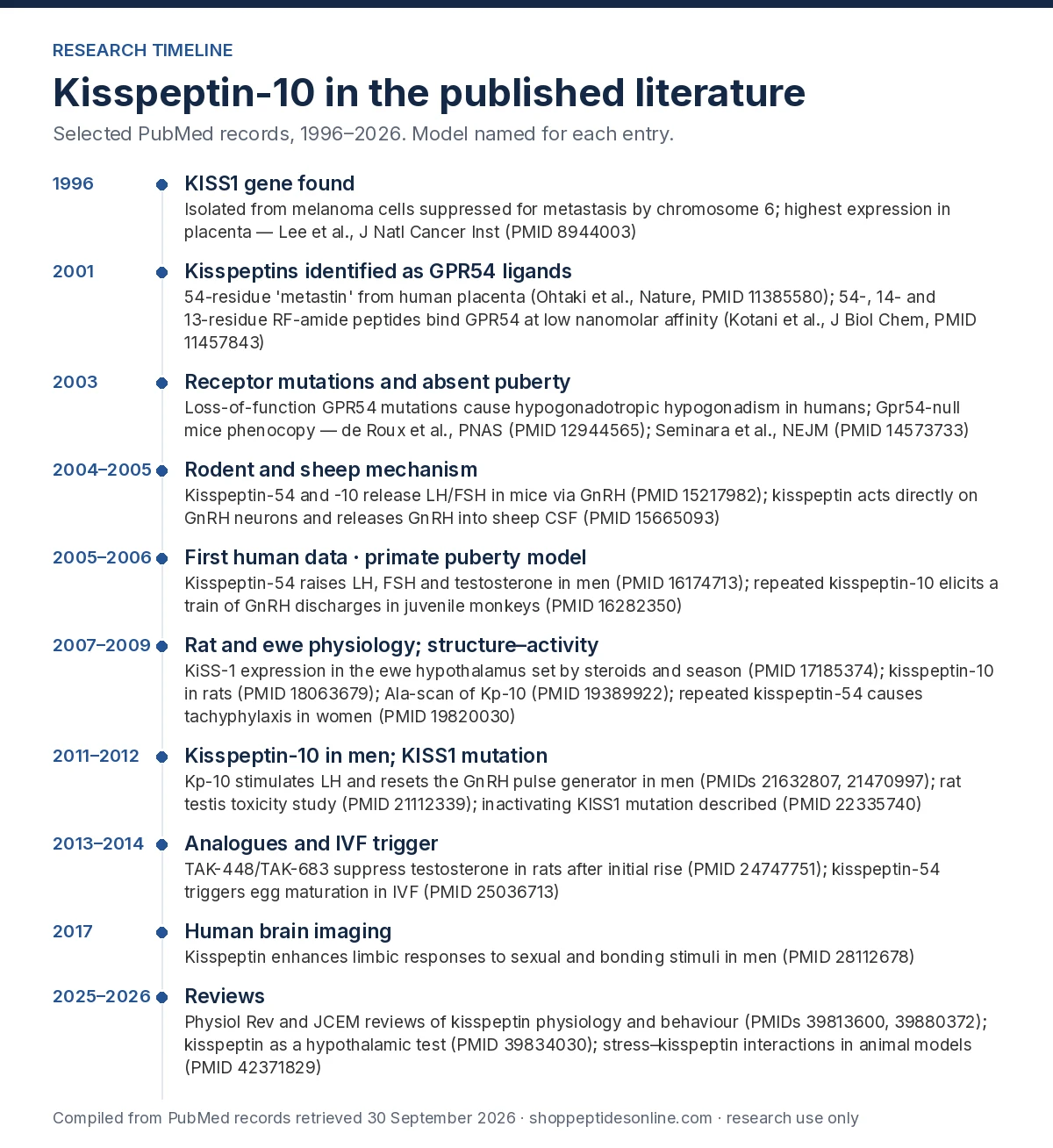
| Year | Model | What was investigated | Reference |
|---|---|---|---|
| 1996 | Human melanoma cell lines; chromosome-6 hybrids | Cloning of KISS1 as a metastasis-suppressor gene | PMID 8944003 |
| 2001 | Human placenta; CHO cells; B16 melanoma in mice | Metastin (kisspeptin-54) isolated as ligand of orphan receptor hOT7T175 | PMID 11385580 |
| 2001 | Human placenta; CHO-K1 cells; rats | Kisspeptins-54/-14/-13 bind GPR54; PIP2 hydrolysis, Ca2+, MAPK; oxytocin release in rats | PMID 11457843 |
| 2003 | Consanguineous family; genome mapping | Homozygous GPR54 deletion causes hypogonadotropic hypogonadism | PMID 12944565 |
| 2003 | Human pedigree; COS-7 cells; Gpr54-null mice | GPR54 mutations, reduced inositol phosphate signalling, absent puberty in mice | PMID 14573733 |
| 2004 | Mice (intracerebroventricular) | Kisspeptin-54 and -10 stimulate LH/FSH; blocked by GnRH antagonist; KiSS-1 mRNA mapped | PMID 15217982 |
| 2005 | Mice; sheep (CSF sampling) | GPR54 on GnRH neurons; kisspeptin releases GnRH into CSF | PMID 15665093 |
| 2005 | Healthy men (n=6), crossover | Kisspeptin-54 raises LH, FSH, testosterone; half-life ~28 min | PMID 16174713 |
| 2006 | Juvenile agonadal rhesus monkeys | Repeated kisspeptin-10 elicits sustained GnRH-dependent LH discharges | PMID 16282350 |
| 2007 | Ewes (ovariectomised ± steroids; season) | KiSS-1 mRNA in arcuate nucleus regulated by estradiol, progesterone and season | PMID 17185374 |
| 2008 | Ovariectomised rats with arcuate electrodes | Kisspeptin-10 raises LH dose-dependently without changing pulse-generator frequency | PMID 18063679 |
| 2009 | Rat kiss1r CHO cells; rats in vivo; NMR | Ala-scan of kisspeptin-10: positions 6 and 10 essential; helical segment | PMID 19389922 |
| 2009 | Women with hypothalamic amenorrhoea (n=10) | Acute kisspeptin-54 stimulates LH/FSH; repeated exposure over 2 weeks → tachyphylaxis | PMID 19820030 |
| 2011 | Prepubertal male rats, 12 days | Kisspeptin-10: reduced LH and testosterone, degenerative testicular changes | PMID 21112339 |
| 2011 | Healthy men | Kisspeptin-10 raises LH dose-dependently (bell-shaped); continuous exposure raises pulse frequency and testosterone | PMID 21632807 |
| 2011 | Healthy men (n=13) | Kisspeptin-10 induces an immediate LH pulse and resets the GnRH pulse generator | PMID 21470997 |
| 2012 | Consanguineous family | Inactivating KISS1 mutation causes hypogonadotropic hypogonadism | PMID 22335740 |
| 2013 | Review: rats, mice, hamsters, sheep, pigs, goats, cows, horses, monkeys | Kisspeptin stimulates LH > FSH via GnRH; desensitisation with continuous exposure | PMID 23550002 |
| 2014 | Adult male rats; prostate-cancer rat model | TAK-448/TAK-683: initial rise then castrate-level testosterone; PSA reduction | PMID 24747751 |
| 2014 | Women undergoing IVF (n=53) | Kisspeptin-54 triggers oocyte maturation dose-dependently; pregnancies achieved | PMID 25036713 |
| 2017 | Healthy men (n=29), fMRI | Kisspeptin enhances limbic responses to sexual and bonding stimuli; lowers negative mood | PMID 28112678 |
| 2025 | Review (Physiol Rev) | Kisspeptin and neurokinin B in puberty, menstrual cycle, menopause, bone | PMID 39813600 |
| 2025 | Review (JCEM) | Kisspeptin in reproductive behaviour and emotional control, rodents and humans | PMID 39880372 |
| 2026 | Review (Andrology) | Kisspeptin as a test of hypothalamic dysfunction | PMID 39834030 |
| 2026 | Review (Neuroendocrinology), animal models | Glucocorticoids, serotonin and kisspeptin neurons under stress | PMID 42371829 |
No batch-specific certificate of analysis for the Kisspeptin-10 10mg vial is posted in the COA library at the time of this review, and we have not substituted another product’s report. When an independent report for a kisspeptin-10 lot is issued, the product page will embed it and this page will quote the measured content and purity. A report worth relying on should state the species form (human kisspeptin-10), an HPLC purity figure and a mass-spectrometry identity result matching C63H83N17O14 (1302.4).
Kisspeptin-10 is one of the compounds on the page where you can buy peptides online in Canada; every listing there is sold under the same research-use-only terms.
All references were retrieved from PubMed (NCBI) on 30 September 2026 and cross-checked against Europe PMC; identity data from PubChem and ChEMBL (EMBL-EBI) on the same date.
Use the COA library as a starting point for batch documentation. Match the report’s sample name and identifiers to the actual vial, then retain the report with the order record. A report for another Kisspeptin-labelled sample does not automatically document the material received.
Keep the original report wording intact. If your internal inventory uses a shorter label, preserve a cross-reference to the full specification rather than changing the evidence to fit the abbreviation.
Our HPLC purity versus mass-spectrometry identity guide explains why a purity result does not answer every identity question. Record the method and result for each test actually shown. Do not infer a missing identity test from a purity percentage, or a measured amount from the 10MG product title.
This page provides no batch-specific percentage, sequence confirmation or testing guarantee. Those decisions depend on the exact specification and report available for the material, not the conceptual illustration above.
Review the shipping policy and confirm stock, destination and full charges on the live product page and checkout. Your laboratory’s procurement review is responsible for whether the exact material meets its requirements.
The research catalog provides other inventory options. For each material, keep its own specification and batch record rather than carrying conclusions from one listing into another.
Shop Peptides Online lists a 10mg Kisspeptin-10 vial on this page with live price and stock. Orders ship from inside Canada by Canada Post, so there is no customs step; delivery times and the free-shipping threshold are in the shipping policy and shown at checkout. The material is research-grade lyophilized peptide for laboratory use only.
The C-terminal decapeptide of the KISS1 gene product: Tyr-Asn-Trp-Asn-Ser-Phe-Gly-Leu-Arg-Phe-NH2, formula C63H83N17O14, molecular weight 1302.4 (PubChem CID 25240297; ChEMBL376756 lists 1302.46). It is the shortest kisspeptin fragment with full activity at the KISS1R (GPR54) receptor, whose ligands were identified in 2001 (PMIDs 11385580, 11457843).
No. The 10 counts amino acids — kisspeptin-10 is the ten-residue fragment, as kisspeptin-54, -14 and -13 are the 54-, 14- and 13-residue forms. The 10mg is the labelled vial content. Keep the two figures in separate fields of your inventory record.
Not at the time of this review. No batch-specific certificate for this vial is posted in the COA library, and no other product’s report is shown in its place. When an independent report for a kisspeptin-10 lot is issued it will be embedded on the product page and quoted here.
No. Kisspeptin-10 has no approved drug form in Canada, the US or the EU. The human data are small academic physiology studies (for example PMIDs 21632807, 21470997) and reviews that call for trials (PMID 39834030), not product approvals; repeated exposure desensitises the response (PMID 19820030) and a 12-day rat study found degenerative testicular changes (PMID 21112339). The material sold here is for laboratory research only, and Shop Peptides Online provides no dosing or administration guidance.
For laboratory research use only. Not for human or animal consumption. This page identifies the material, its documentation and the published literature on the compound, and makes no claim of efficacy or safety.