
In stock
TB-500 (Pen)
Price range: $98.99 through $131.99
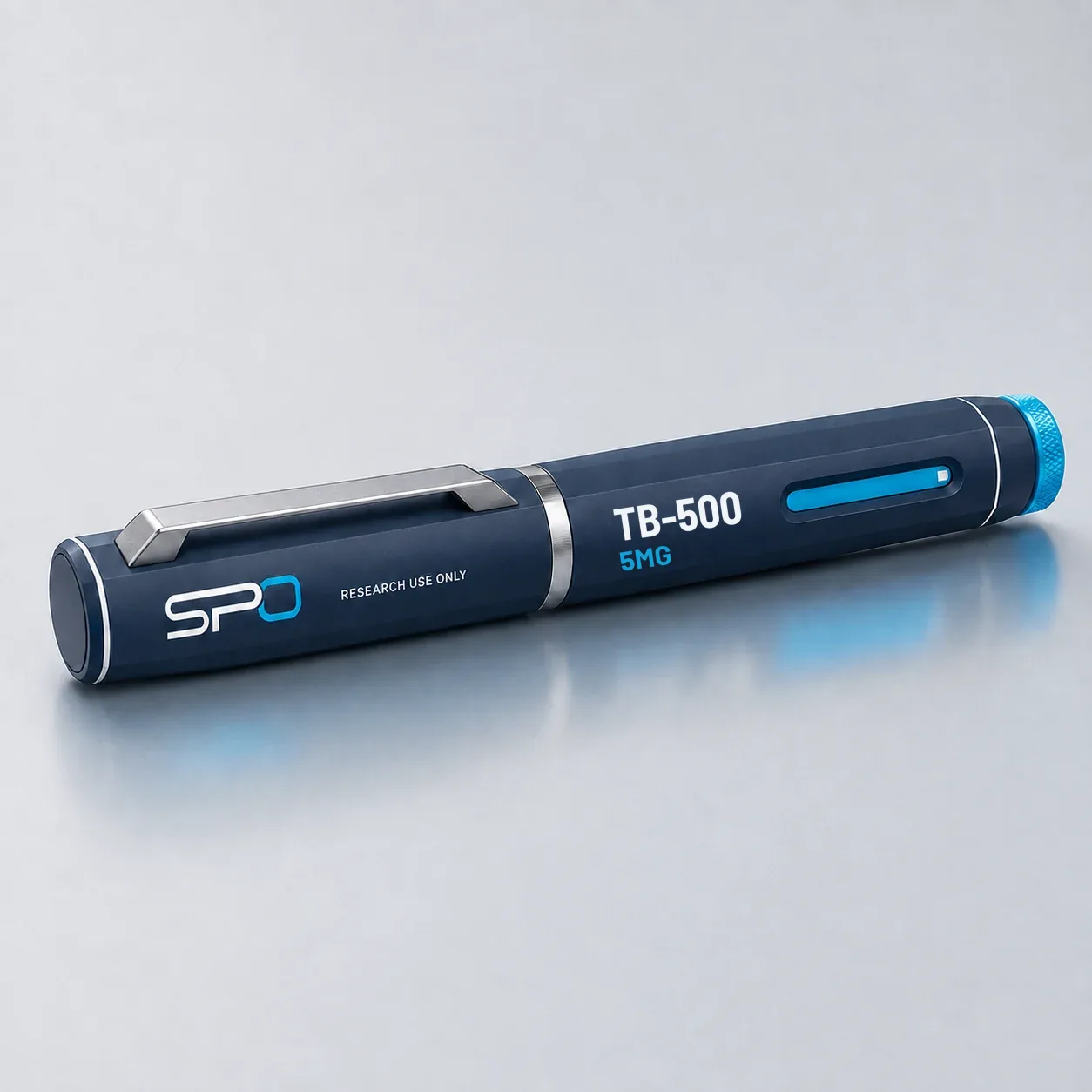
TB-500 research peptide in pen format (5mg or 10mg options), supplied for laboratory research only. TB-500 is the synthetic form of a fragment of thymosin beta-4, a naturally occurring actin-binding peptide. No batch COA is posted for the pen — see the COA library. Priced in CAD and shipped within Canada by Canada Post. Not for human or animal use.

Estimated delivery: 1–3 business days

Free shipping: On orders over $300
Guarantee Safe Checkout:

Description
TB-500 research pen — Canada
This listing is TB-500 in pen format (5mg or 10mg fill) — the same research material as our TB-500 vials, supplied in a pre-formatted research pen for laboratories that prefer logged, repeatable handling over loose vials. “TB-500” is a product name that vendors have applied to two related peptides: thymosin β4, the 43-residue actin-binding peptide found in most mammalian cells, and Ac-LKKTETQ, a seven-residue acetylated piece of it (residues 17–23) that carries the actin-binding motif[1, 3]. Laboratory research only; the pen is a handling format, not an instruction.
Full research overview, study table & references → TB-500 in Canada: research guide
Identity at a glance
| Thymosin β4 | 43 aa, Ac-SDKPDMAEIEKFDKSKLKKTETQEKNPLPSKETIEQEKQAGES · C212H350N56O78S · 4963 g/mol · CAS 77591-33-4 · PubChem CID 16132341 |
| Fragment sold as “TB-500” elsewhere | Ac-LKKTETQ · C38H68N10O14 · 889.0 g/mol · CAS 885340-08-9 · PubChem CID 62707662 |
| Other identifiers | UNII 2D5MRE3SSY (Tβ4); ChEMBL4594313; UNII QHK6Z47GTG (fragment) |
| Format | Pre-formatted research pen; declared content (5mg or 10mg) on the label, no measured value on file |
Identity values from PubChem and ChEMBL, sequence position from UniProt P62328, read on 30 September 2026.
Batch documentation: a batch-specific COA for the TB-500 pen has not been posted yet — see the COA library. Reports for the vial listings, where posted, are on those pages.
What researchers have looked at
- Endothelial cells and chick aortic arches: the seven-residue actin-binding motif alone matched the whole peptide’s migration and sprouting activity at about 50 nM, and soluble actin blocked it[1].
- Rat full-thickness wounds: topical or intraperitoneal thymosin β4 raised re-epithelialisation by 42% at day 4 and 61% at day 7 against saline, with more collagen and vessels[2].
- Rat Achilles transection (2026, n=32): the TB-500 group had higher load to failure and better histology scores than controls at four weeks; adding BPC-157 gave no extra benefit[4].
- Limits: six months of thymosin β4 in dystrophic mdx mice increased regenerating fibres but did not improve strength, heart function or fibrosis[5]; the human data are small investigational trials of thymosin β4, including a phase I safety study in 84 volunteers, with no approved product anywhere[6]. The fragment is treated as a suspected doping agent in the analytical literature[3].
Storage and handling
- Follow the label: keep the pen cool, dry and out of light, and do not subject it to repeated freeze–thaw.
- Log the batch number and dates of receipt and first use, as with any research material. No protocol or administration information is provided here.
Vial strengths: TB-500 5MG · TB-500 10MG. Other pens are on the peptide pens page; the whole range is on our buy peptides online in Canada page. Canada Post from inside Canada (shipping policy).
Frequently asked questions
What is the TB-500 pen?
The same synthetic TB-500 supplied in a pre-formatted research pen rather than a loose vial, for laboratories that want repeatable, logged handling. It is a research format only; no administration guidance of any kind is given.
Is there a batch report for the TB-500 pen?
Not yet. No batch-specific report for the pen is posted in the COA library. The page will state the report when one exists.
Is the TB-500 pen for human use?
No. The pen is supplied for laboratory research only and is not for human or animal use. No dosing, administration or protocol information is provided.
Cited
- Philp et al. (2003), FASEB journal : official publication of the Federation of American Societies for Experimental Biology — PMID 14500546
- Malinda et al. (1999), The Journal of investigative dermatology — PMID 10469335
- Esposito et al. (2012), Drug testing and analysis — PMID 22962027
- Biçer et al. (2026), Joint diseases and related surgery — PMID 42542926
- Spurney et al. (2010), PloS one — PMID 20126456
- Wang et al. (2021), Journal of cellular and molecular medicine — PMID 34346165
For laboratory research use only. Not for human or animal consumption. No dosing, administration or protocol information is provided, and nothing here is a claim of efficacy or safety in humans.
Additional information
| Amount | 5mg, 10mg |
|---|
Related products
-
BPC-157 (Pen)
Price range: $79.99 through $98.99 -
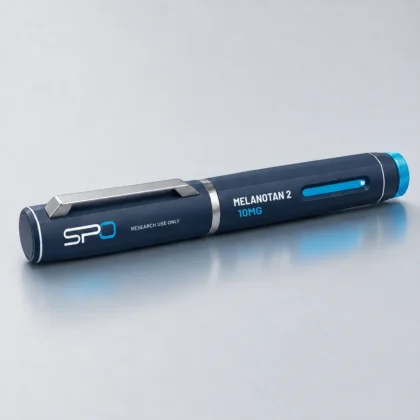
Melanotan 2 (Pen)
$110.99 -
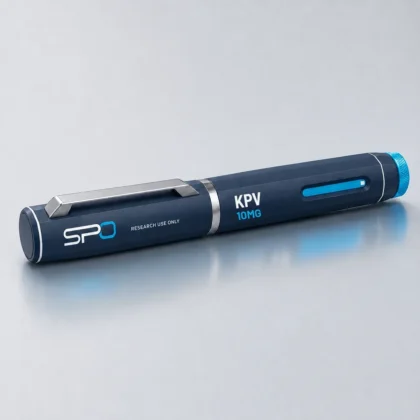
KPV (Pen)
$138.99 -
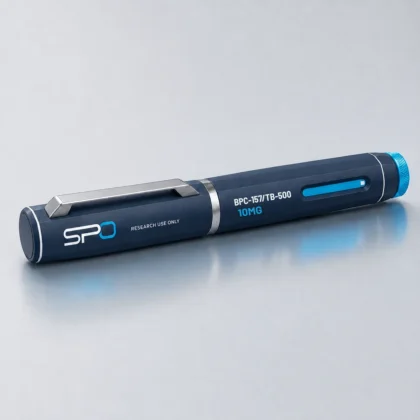
BPC-157/TB-500 (Pen)
Price range: $145.99 through $225.99