
In stock
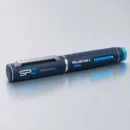
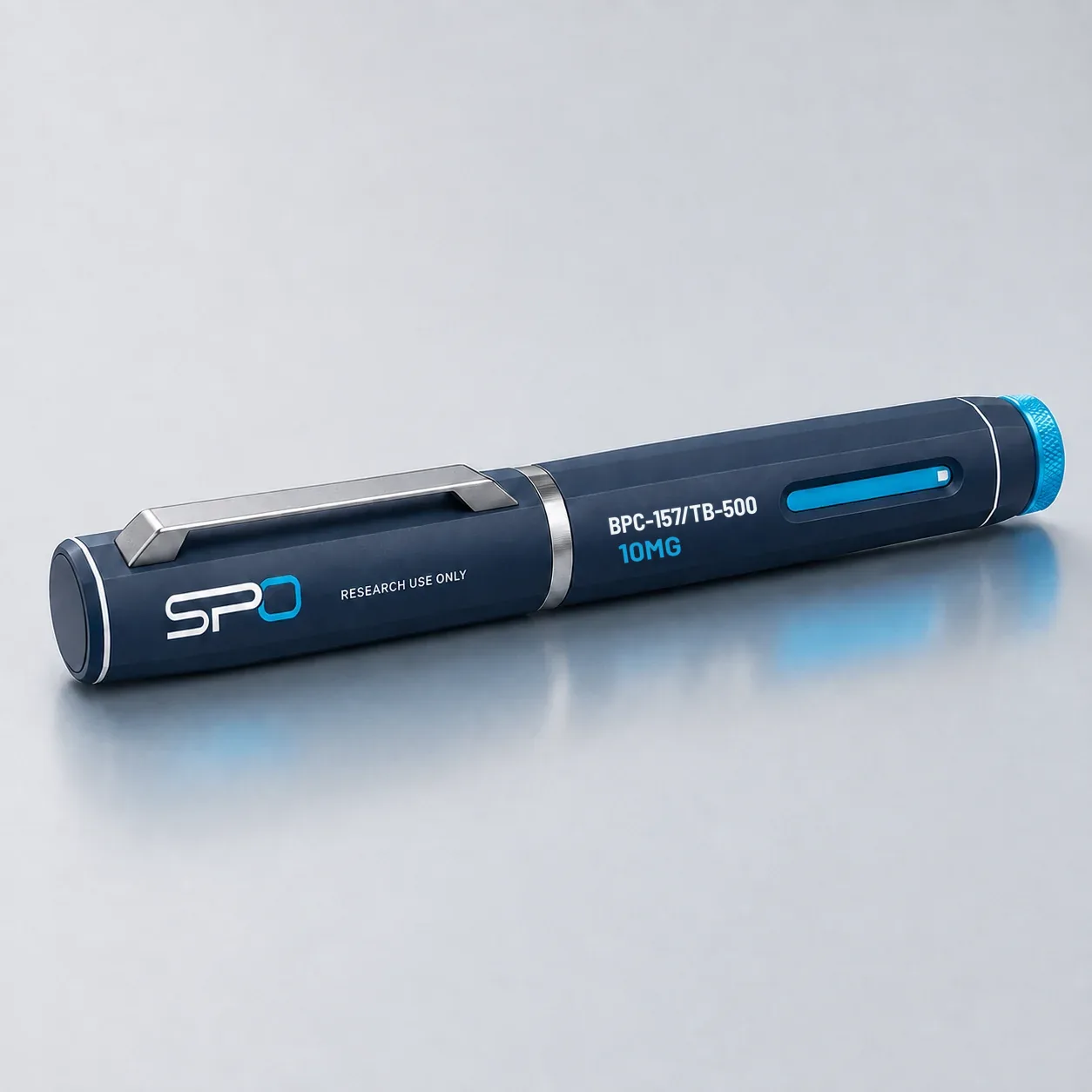
BPC-157/TB-500 (Pen)
Price range: $145.99 through $225.99
BPC-157/TB-500 research peptide in pen format (10mg or 20mg options), supplied for laboratory research only. This listing co-formulates BPC-157 and TB-500, two peptides that are usually studied apart, in a single pen. No batch COA is posted for the pen — see the COA library. Priced in CAD and shipped within Canada by Canada Post. Not for human or animal use.

Estimated delivery: 1–3 business days

Free shipping: On orders over $300
Guarantee Safe Checkout:

Description
BPC-157/TB-500 research pen — Canada
This listing is BPC-157/TB-500 in pen format (10mg or 20mg fill) — the same research material as our BPC-157/TB-500 vials, supplied in a pre-formatted research pen for laboratories that prefer logged, repeatable handling over loose vials. BPC-157 is a 15-residue fragment (GEPPPGKPADDAGLV) of a gastric-juice protein first characterised in 1993[1]; TB-500 is a trade name covering thymosin β4 (43 residues) or its acetylated 17–23 fragment[8]. Nearly all the published work is in rats, mice or cell culture, and one study has tested them together[6]. Laboratory research only; the pen is a handling format, not an instruction.
Full research overviews, study tables & references → BPC-157 research guide · TB-500 research guide
Identity at a glance
| BPC-157 | TB-500 | |
|---|---|---|
| Sequence | GEPPPGKPADDAGLV (15 aa) | Thymosin β4: 43 aa, Ac-SDKPDMAEIEKFDKSKLKKTETQEKNPLPSKETIEQEKQAGES; or the fragment Ac-LKKTETQ (7 aa) |
| Formula / MW | C62H98N16O22 · 1419.5 g/mol | C212H350N56O78S · 4963 g/mol; or C38H68N10O14 · 889.0 g/mol |
| CAS | 137525-51-0 | 77591-33-4 (Tβ4) / 885340-08-9 (fragment) |
| PubChem CID | 9941957 | 16132341 / 62707662 |
| Format | Pre-formatted research pen; declared content (10mg or 20mg) on the label, no measured value on file |
Batch documentation: a batch-specific COA for the BPC-157/TB-500 pen has not been posted yet — see the COA library. Reports for the vial listings, where posted, are on those pages.
What researchers have looked at
- BPC-157, rat Achilles tendon (2003): after transection, treated rats had higher failure load and better function than saline controls, while the peptide did not change cultured tendocyte growth[2].
- BPC-157, blood vessels (2017): more vessel formation in chick CAM and endothelial-tube assays, faster flow recovery after rat hind-limb ischaemia, and VEGFR2 up-regulation with Akt–eNOS signalling in cultured endothelial cells[3].
- Thymosin β4 / TB-500, angiogenesis and wounds: the seven-residue actin-binding motif carried the endothelial migration and sprouting activity in vitro[4]; in rat full-thickness wounds, thymosin β4 sped re-epithelialisation and raised collagen and vessel counts[5].
- The two together (2026): in 32 rats with a repaired Achilles transection, TB-500 alone improved load to failure and histology versus controls, BPC-157 alone showed numerically better histology, and the combination was no better than either — the authors call the work exploratory[6].
- Limits: a 2025 systematic review found 35 preclinical BPC-157 studies against one retrospective clinical report and no clinical safety data[7]; TB-500 products were identified in doping-control work as containing Ac-LKKTETQ, a suspected doping agent[8]. No human evidence exists for the blend.
Storage and handling
- Follow the label: keep the pen cool, dry and out of light, and do not subject it to repeated freeze–thaw.
- Log the batch number and dates of receipt and first use, as with any research material. No protocol or administration information is provided here.
Vial strengths: BPC-157/TB-500 10MG · BPC-157/TB-500 20MG. Other pens are on the peptide pens page; the whole range is on our buy peptides online in Canada page. Canada Post from inside Canada (shipping policy).
Frequently asked questions
What is the BPC-157/TB-500 pen?
The same synthetic BPC-157/TB-500 supplied in a pre-formatted research pen rather than a loose vial, for laboratories that want repeatable, logged handling. It is a research format only; no administration guidance of any kind is given.
Is there a batch report for the BPC-157/TB-500 pen?
Not yet. No batch-specific report for the pen is posted in the COA library. The page will state the report when one exists.
Is there research on BPC-157 and TB-500 used together?
Very little. One 2026 rat Achilles-tendon study compared each peptide alone with the combination and found the combination gave no additional benefit over either agent (PMID 42542926). Everything else in the literature concerns the two peptides separately, in rodents and cell culture.
Is the BPC-157/TB-500 pen for human use?
No. The pen is supplied for laboratory research only and is not for human or animal use. No dosing, administration or protocol information is provided.
Cited
- Sikirić et al. (1993), Journal of physiology, Paris — PMID 8298609
- Staresinic et al. (2003), Journal of orthopaedic research : official publication of the Orthopaedic Research Society — PMID 14554208
- Hsieh et al. (2017), Journal of molecular medicine (Berlin, Germany) — PMID 27847966
- Philp et al. (2003), FASEB journal : official publication of the Federation of American Societies for Experimental Biology — PMID 14500546
- Malinda et al. (1999), The Journal of investigative dermatology — PMID 10469335
- Biçer et al. (2026), Joint diseases and related surgery — PMID 42542926
- Vasireddi et al. (2025), HSS journal : the musculoskeletal journal of Hospital for Special Surgery — PMID 40756949
- Esposito et al. (2012), Drug testing and analysis — PMID 22962027
For laboratory research use only. Not for human or animal consumption. No dosing, administration or protocol information is provided, and nothing here is a claim of efficacy or safety in humans.
Additional information
| Amount | 10mg, 20mg |
|---|
Related products
-
KPV (Pen)
$138.99 -
Melanotan 2 (Pen)
$110.99 -
TB-500 (Pen)
Price range: $98.99 through $131.99 -
BPC-157 (Pen)
Price range: $79.99 through $98.99