
In stock
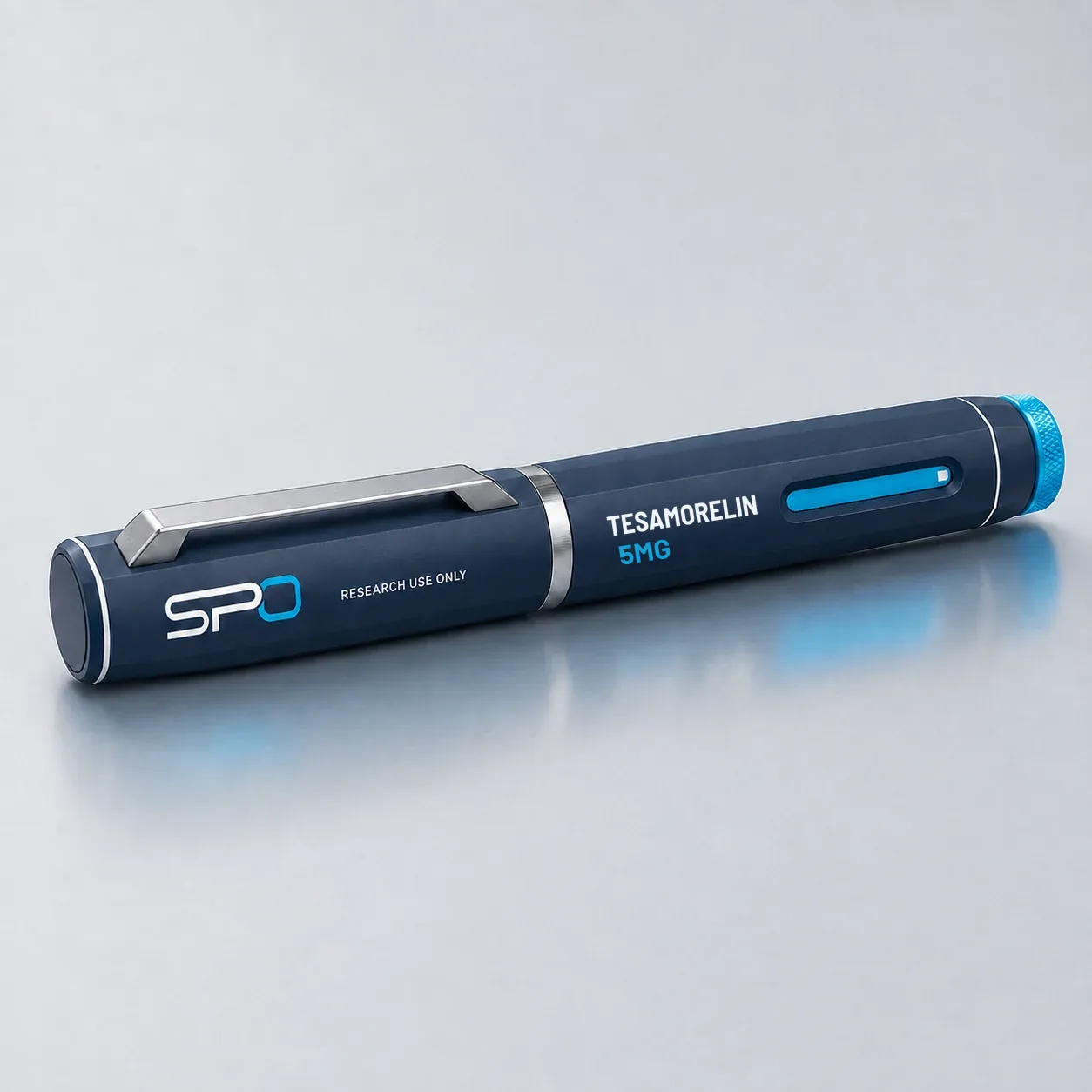
Tesamorelin 5mg (Pen)
$102.99
Tesamorelin research peptide in pen format (5mg fill), supplied for laboratory research only. Tesamorelin is a synthetic 44-amino-acid analogue of growth-hormone-releasing hormone (GHRH) with a stabilising trans-3-hexenoic acid modification. No batch COA is posted for the pen — see the COA library. Priced in CAD and shipped within Canada by Canada Post. Not for human or animal use.

Estimated delivery: 1–3 business days

Free shipping: On orders over $300
Guarantee Safe Checkout:

Description
Tesamorelin research pen — Canada
This listing is Tesamorelin in pen format (5mg fill) — the same research material as our Tesamorelin vials, supplied in a pre-formatted research pen for laboratories that prefer logged, repeatable handling over loose vials. Tesamorelin (TH9507) is human growth-hormone-releasing factor, GHRH(1-44)-NH2, with a trans-3-hexenoyl group added to its first tyrosine[1]. Laboratory research only; the pen is a handling format, not an instruction.
Full research overview, study table & references → Tesamorelin in Canada: research guide
Identity at a glance
| Name | Tesamorelin (TH9507) |
| Structure | trans-3-hexenoyl-GHRH(1-44)-NH2 (44 aa) |
| Formula / MW | C221H366N72O67S · 5136 g/mol |
| CAS / UNII | 218949-48-5 / MQG94M5EEO |
| PubChem CID | 16137828 |
| Format | Pre-formatted research pen; declared content (5mg) on the label, no measured value on file |
Batch documentation: a batch-specific COA for the Tesamorelin pen has not been posted yet — see the COA library. Reports for the vial listings, where posted, are on those pages.
What researchers have looked at
- Stability by design (2007): the N-terminal modification protected the peptide from DPP-IV and extended its plasma elimination in animal studies; rats and dogs tolerated repeated treatment, with more pronounced, reversible findings in dogs[1].
- Development history (2009 review): GHRH analogues were pursued as possibly better-tolerated alternatives to recombinant growth hormone, and tesamorelin was developed for conditions linked to relative GH deficiency, including HIV-related lipodystrophy[2].
- Beyond HIV (2012): a randomised, placebo-controlled trial in 152 older adults, 66 of them with mild cognitive impairment, examined cognitive test performance[4].
- Liver tissue (2020): paired biopsies from a randomised HIV-associated fatty-liver trial were analysed for hepatic gene-set changes with tesamorelin versus placebo[5].
Anti-doping note: GHRH and its synthetic analogues are prohibited by the World Anti-Doping Agency, and laboratories have developed in-vitro metabolite standards to detect tesamorelin in urine[6]. Trial designs above are listed to show where tesamorelin has been studied; they are not claims for this research material.
Storage and handling
- Follow the label: keep the pen cool, dry and out of light, and do not subject it to repeated freeze–thaw.
- Log the batch number and dates of receipt and first use, as with any research material. No protocol or administration information is provided here.
Vial strength: TESAMORELIN 5MG. Other pens are on the peptide pens page; the whole range is on our buy peptides online in Canada page. Canada Post from inside Canada (shipping policy).
Frequently asked questions
What is the Tesamorelin pen?
The same synthetic Tesamorelin supplied in a pre-formatted research pen rather than a loose vial, for laboratories that want repeatable, logged handling. It is a research format only; no administration guidance of any kind is given.
Is there a batch report for the Tesamorelin pen?
Not yet. No batch-specific report for the pen is posted in the COA library. The page will state the report when one exists.
Why is tesamorelin modified at the N-terminus?
The trans-3-hexenoyl group on tyrosine 1 made the peptide resistant to dipeptidyl aminopeptidase-IV and slowed its breakdown in rat, dog and human plasma compared with natural GHRH(1-44) (PMID 17214611).
Is the Tesamorelin pen for human use?
No. The pen is supplied for laboratory research only and is not for human or animal use. No dosing, administration or protocol information is provided.
Cited
- Ferdinandi et al. (2007), Basic & clinical pharmacology & toxicology — PMID 17214611
- Wang et al. (2009), Expert opinion on investigational drugs — PMID 19243281
- Traynor (2010), American journal of health-system pharmacy : AJHP : official journal of the American Society of Health-System Pharmacists — PMID 21115997
- Baker et al. (2012), Archives of neurology — PMID 22869065
- Fourman et al. (2020), JCI insight — PMID 32701508
- Memdouh et al. (2021), Drug testing and analysis — PMID 34665524
For laboratory research use only. Not for human or animal consumption. No dosing, administration or protocol information is provided, and nothing here is a claim of efficacy or safety in humans.
Additional information
| Amount | 5mg |
|---|
Related products
-
 Hot
Tesamorelin (Pen)
Price range: $139.99 through $217.99 -
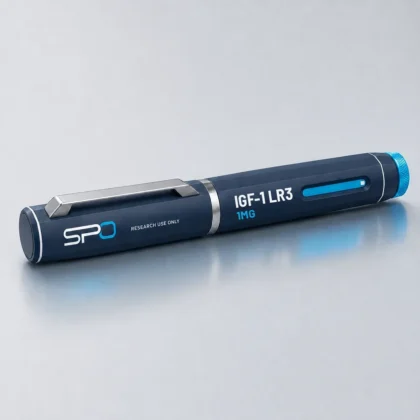
IGF-1 LR3 (Pen)
$148.99 -
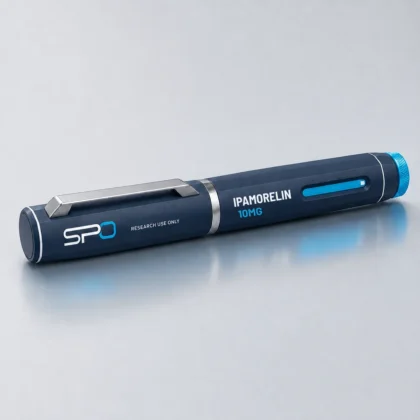
Ipamorelin (Pen)
$118.99 -
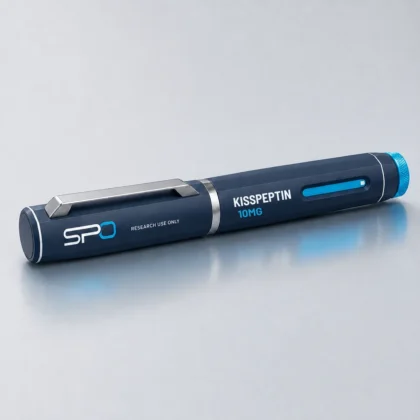
Kisspeptin (Pen)
$152.99