
In stock
Kisspeptin (Pen)
$152.99
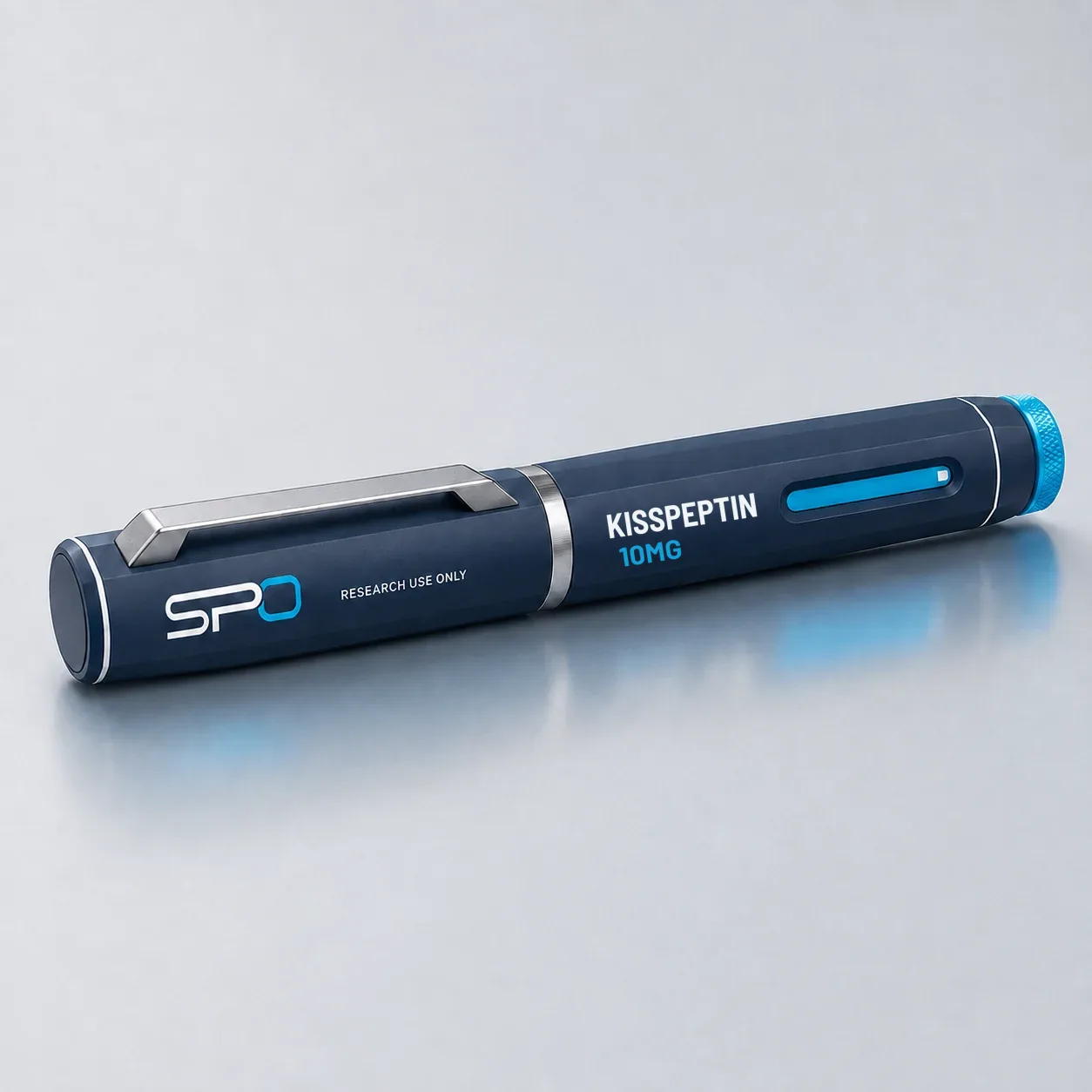
Kisspeptin-10 research peptide in pen format (10mg fill), supplied for laboratory research only. The ten-residue C-terminal fragment of the KISS1 gene product (C63H83N17O14, MW 1302.4), the natural agonist of KISS1R (GPR54). No batch COA is posted for the pen — see the COA library. Priced in CAD and shipped within Canada by Canada Post. Not for human or animal use.

Estimated delivery: 1–3 business days

Free shipping: On orders over $300
Guarantee Safe Checkout:

Description
Kisspeptin-10 research pen — Canada
This listing is Kisspeptin-10 in pen format (10mg fill) — the same research material as our Kisspeptin-10 vials, supplied in a pre-formatted research pen for laboratories that prefer logged, repeatable handling over loose vials. Kisspeptin-10 is the ten-amino-acid C-terminal piece of the peptides that the human KISS1 gene encodes, and the shortest fragment that fully activates their receptor, KISS1R (GPR54)[1, 4]. Mutations that silence that receptor stop puberty in humans and mice[2], which made kisspeptin a reference tool in reproductive neuroendocrinology. Laboratory research only; the pen is a handling format, not an instruction.
Full research overview, 25-reference study table & limits of the evidence → Kisspeptin-10 in Canada: research guide
Identity at a glance
| Peptide | Kisspeptin-10 (human); KP-10; metastin (45–54); decapeptide, C-terminal amide |
| Sequence | Tyr-Asn-Trp-Asn-Ser-Phe-Gly-Leu-Arg-Phe-NH2 (KISS1 residues 112–121) |
| Formula / MW | C63H83N17O14 / 1302.4 g/mol (PubChem); 1302.46 (ChEMBL) |
| CAS | 374675-21-5 |
| PubChem CID | 25240297 · ChEMBL376756 |
| Target studied | KISS1R / GPR54 on hypothalamic GnRH neurons[3] |
| Format | Pre-formatted research pen; declared content (10mg) on the label, no measured value on file |
Batch documentation: a batch-specific COA for the Kisspeptin-10 pen has not been posted yet — see the COA library. Reports for the vial listings, where posted, are on those pages.
What researchers have looked at
- Receptor signalling (cell culture, 2001): kisspeptins bound rat and human GPR54 at low-nanomolar affinity and set off phosphoinositide hydrolysis, calcium release and MAP-kinase phosphorylation while slowing cell proliferation[1].
- Site of action (mouse and sheep, 2005): the receptor sits on GnRH neurons, kisspeptin has no effect in receptor-knockout mice, and in sheep it released GnRH directly into cerebrospinal fluid[3].
- Healthy men (2011): kisspeptin-10 raised LH dose-dependently with a bell-shaped curve, triggered an immediate LH pulse and reset the timing of the hypothalamic GnRH pulse generator[4, 5].
- Repeated exposure (women, 2009; prepubertal rats, 2011): the LH response to kisspeptin-54 shrank after two weeks[6]; twelve days of kisspeptin-10 in immature rats lowered LH and testosterone and damaged seminiferous tubules[7].
- Status (2026 review): proposed as a diagnostic probe of hypothalamic function; not an approved medicine anywhere[8].
These are literature findings about the compound in the models named. They are not properties of this pen, and no benefit is claimed for it.
Storage and handling
- Follow the label: keep the pen cool, dry and out of light, and do not subject it to repeated freeze–thaw.
- Log the batch number and dates of receipt and first use, as with any research material. No protocol or administration information is provided here.
Vial strength: KISSPEPTIN 10MG. Other pens are on the peptide pens page; the whole range is on our buy peptides online in Canada page. Canada Post from inside Canada (shipping policy).
Frequently asked questions
What is the Kisspeptin-10 pen?
The same synthetic Kisspeptin-10 supplied in a pre-formatted research pen rather than a loose vial, for laboratories that want repeatable, logged handling. It is a research format only; no administration guidance of any kind is given.
Is there a batch report for the Kisspeptin-10 pen?
Not yet. No batch-specific report for the pen is posted in the COA library. The page will state the report when one exists.
Is the Kisspeptin-10 pen for human use?
No. The pen is supplied for laboratory research only and is not for human or animal use. No dosing, administration or protocol information is provided.
References
- Kotani M, Detheux M et al. (2001). The metastasis suppressor gene KiSS-1 encodes kisspeptins, the natural ligands of the orphan G protein-coupled receptor GPR54. J Biol Chem. PMID 11457843
- Seminara SB, Messager S et al. (2003). The GPR54 gene as a regulator of puberty. N Engl J Med. PMID 14573733
- Messager S, Chatzidaki EE et al. (2005). Kisspeptin directly stimulates gonadotropin-releasing hormone release via G protein-coupled receptor 54. Proc Natl Acad Sci U S A. PMID 15665093
- George JT, Veldhuis JD et al. (2011). Kisspeptin-10 is a potent stimulator of LH and increases pulse frequency in men. J Clin Endocrinol Metab. PMID 21632807
- Chan YM, Butler JP et al. (2011). Kisspeptin resets the hypothalamic GnRH clock in men. J Clin Endocrinol Metab. PMID 21470997
- Jayasena CN, Nijher GM et al. (2009). Subcutaneous injection of kisspeptin-54 acutely stimulates gonadotropin secretion in women with hypothalamic amenorrhea, but chronic administration causes tachyphylaxis. J Clin Endocrinol Metab. PMID 19820030
- Ramzan F, Qureshi IZ (2011). Intraperitoneal kisspeptin-10 administration induces dose-dependent degenerative changes in maturing rat testes. Life Sci. PMID 21112339
- Pierret ACS, Patel AH et al. (2026). Kisspeptin as a test of hypothalamic dysfunction in pubertal and reproductive disorders. Andrology. PMID 39834030
For laboratory research use only. Not for human or animal consumption. This description identifies the material and summarises published preclinical and clinical literature on the compound; it makes no claim of efficacy or safety for the material sold.
Additional information
| Amount | 10mg |
|---|
Related products
-
 Hot
Tesamorelin (Pen)
Price range: $139.99 through $217.99 -
IGF-1 LR3 (Pen)
$148.99 -
Tesamorelin 5mg (Pen)
$102.99 -
Ipamorelin (Pen)
$118.99