
Your cart is currently empty!.
You may check out all the available products and buy some in the shop.
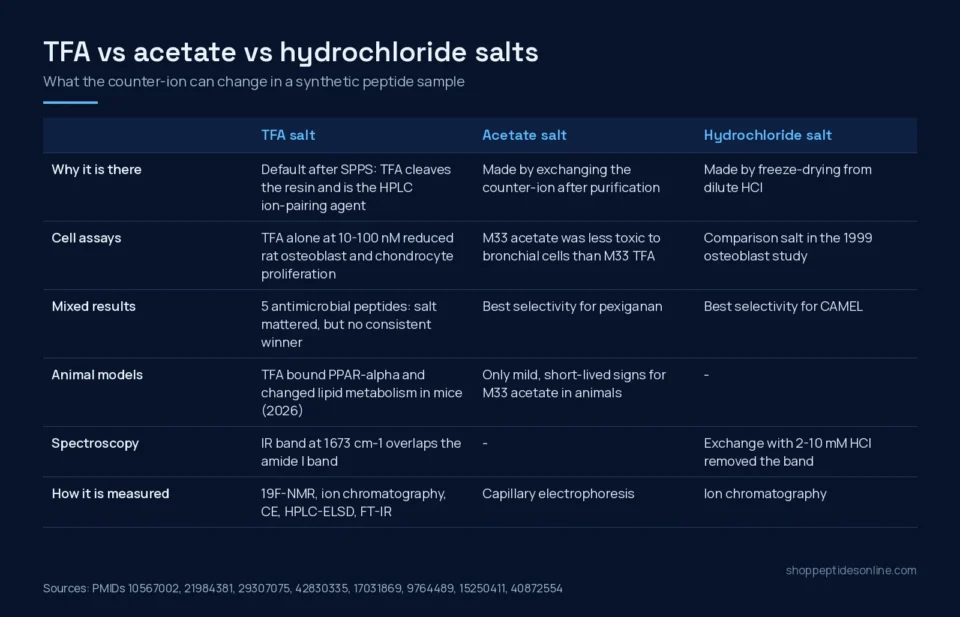
Continue ShoppingMost synthetic peptides leave purification as TFA salts. What the published cell, animal and analytical studies say about TFA vs acetate and hydrochloride, and…
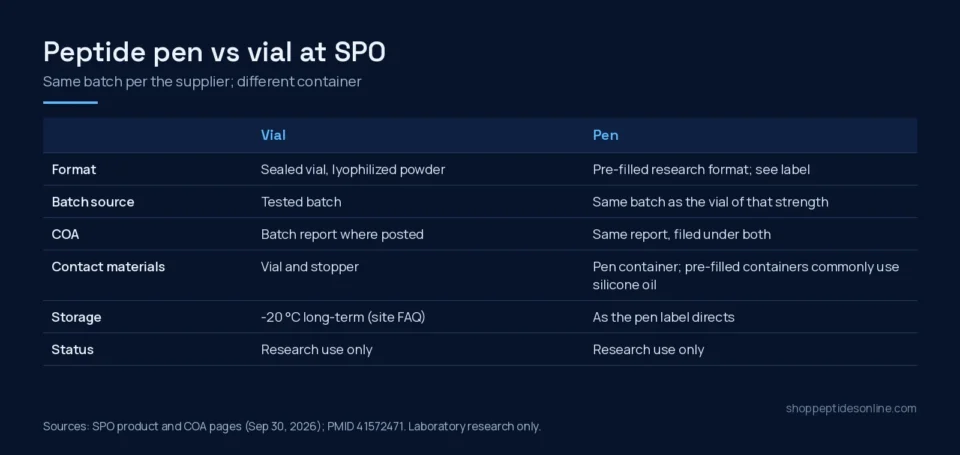
SPO's pens and vials of the same strength come from the same batch, per the supplier. How the formats differ in container, storage and…
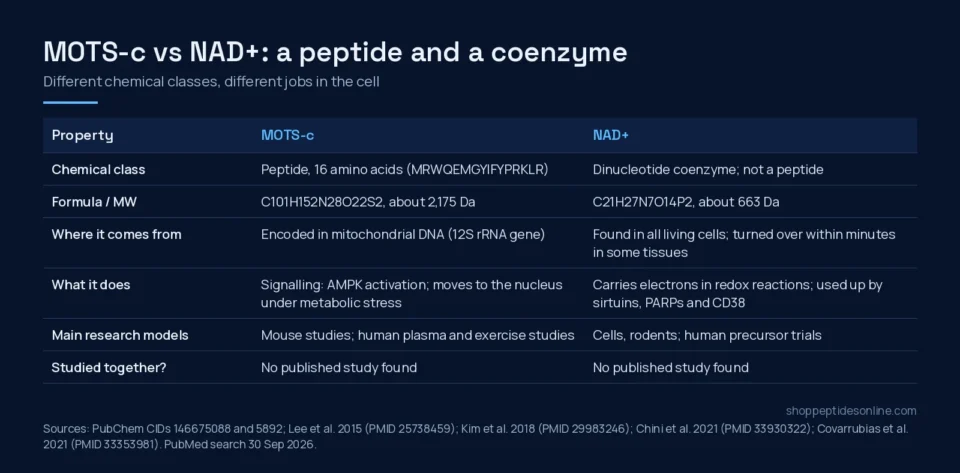
MOTS-c is a 16-residue mitochondrial-DNA-encoded peptide; NAD+ is a coenzyme. What each does, the research by model, and why no study has tested them…
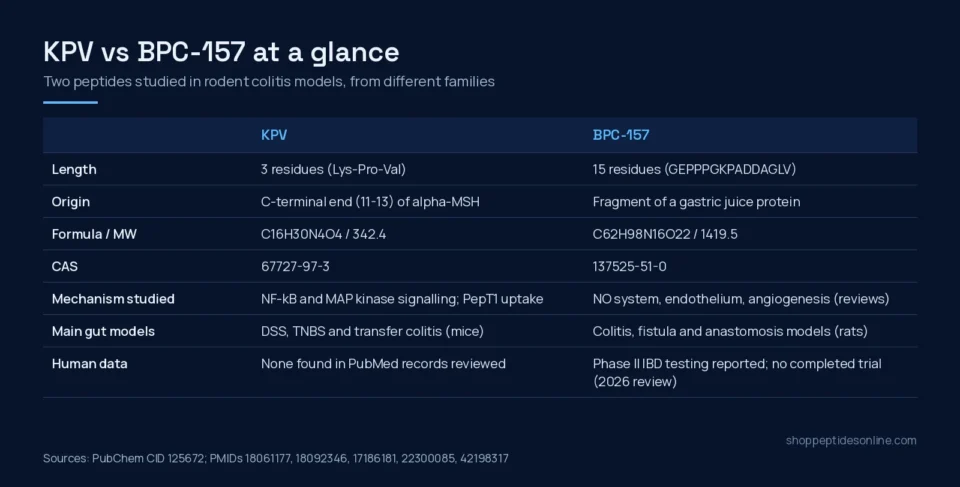
KPV and BPC-157 compared: a three-residue alpha-MSH fragment vs a fifteen-residue gastric peptide, their proposed mechanisms, rodent gut-model data and evidence limits.
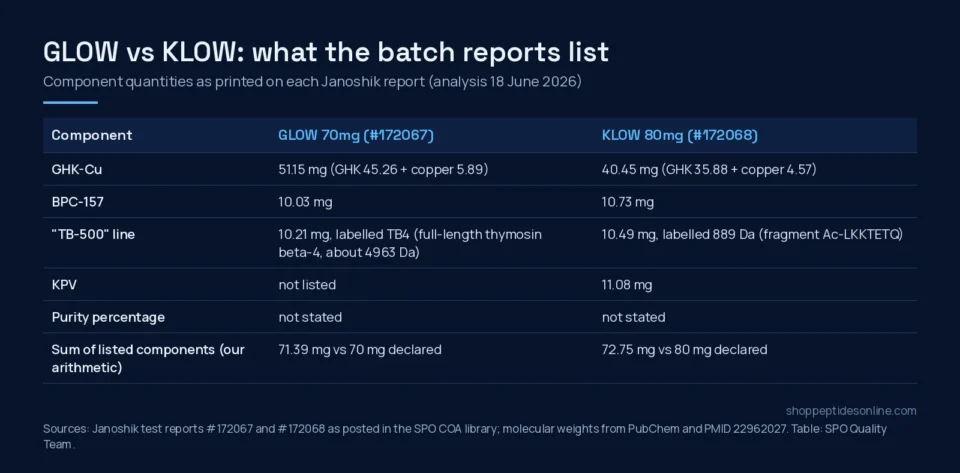
GLOW and KLOW share GHK-Cu and BPC-157, but KLOW adds KPV and the two reports show different TB-500 molecules. A component-by-component comparison with sources.
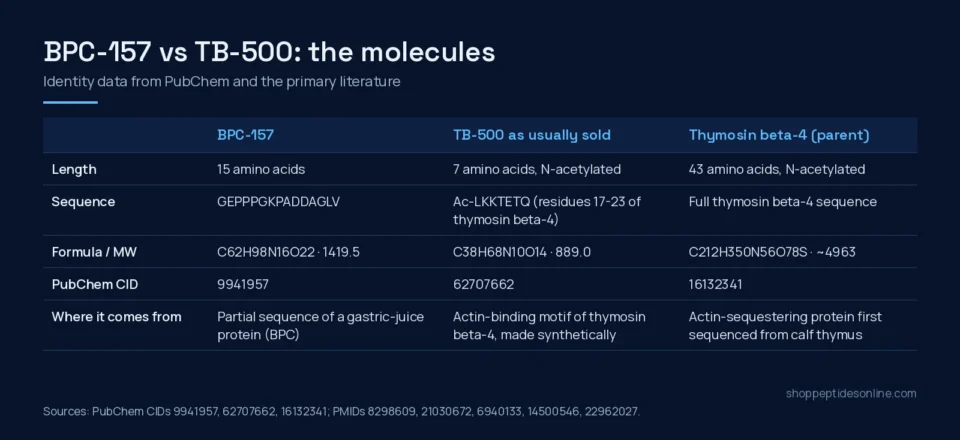
BPC-157 and TB-500 compared by structure, origin and the cell, rat and mouse studies behind each, including the 2026 head-to-head rat tendon study. Research…
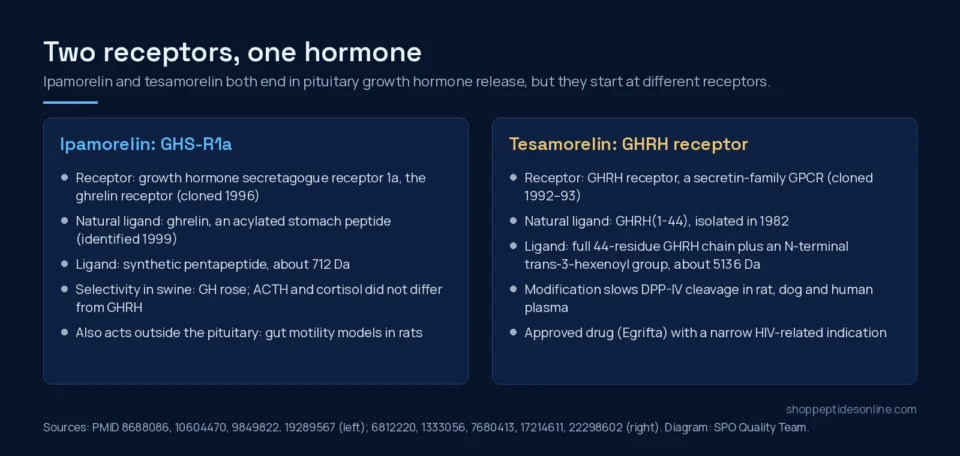
Ipamorelin and tesamorelin both raise GH in research models, but through different receptors. A sourced comparison of structure, models, negative results and regulatory status.
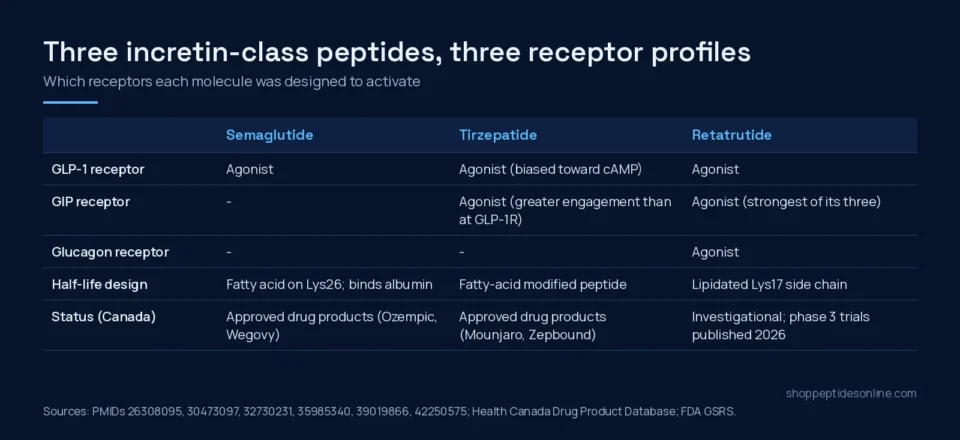
Semaglutide, tirzepatide and retatrutide compared by receptor profile (GLP-1, GIP, glucagon), structure and regulatory status. Mechanism only; no outcome claims. Research use only.
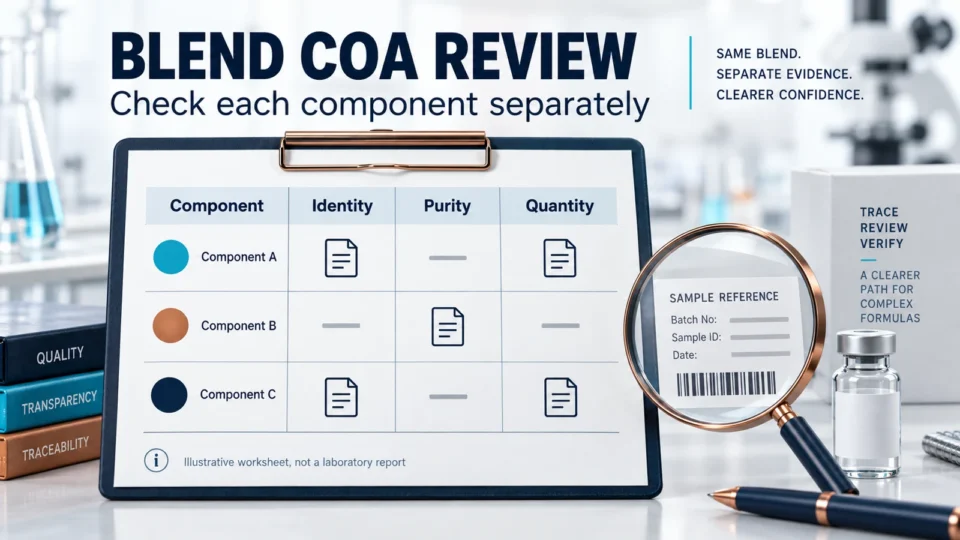
Review peptide blend COAs component by component: identity, purity, measured quantity, batch traceability and laboratory report verification.
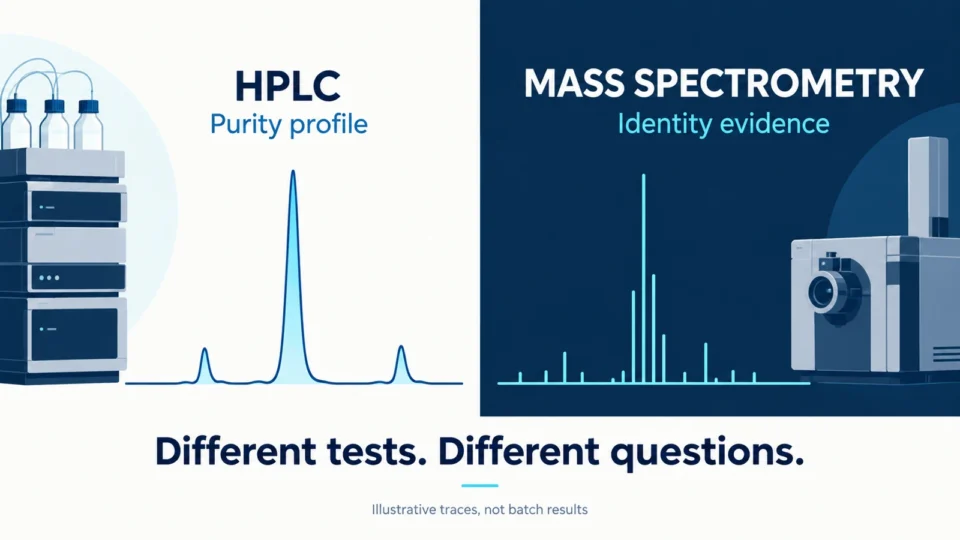
Understand the difference between HPLC purity, mass-spectrometry identity and peptide content when reviewing a research peptide COA.