
Your cart is currently empty!.
You may check out all the available products and buy some in the shop.
Continue ShoppingCompare MOTS-c research peptide listings by strength and format, then read what this mitochondrial-encoded 16-amino-acid peptide is, how it was discovered in 2015, and what mouse, cell and human-cohort studies have examined, with references. Shop Peptides Online carries MOTS-c in 10mg, 20mg and 40mg vials and as a pen.
For laboratory research use only. Not for human consumption. Shop Peptides Online does not provide dosing or administration guidance.
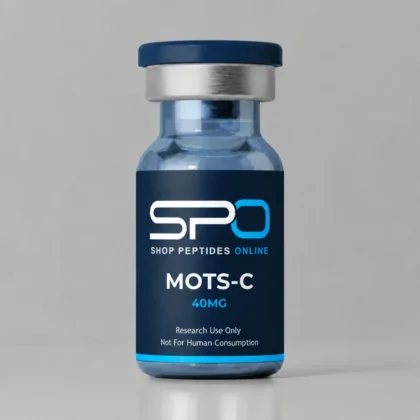
MOTS-C in 10mg, 20mg and 40mg vials.


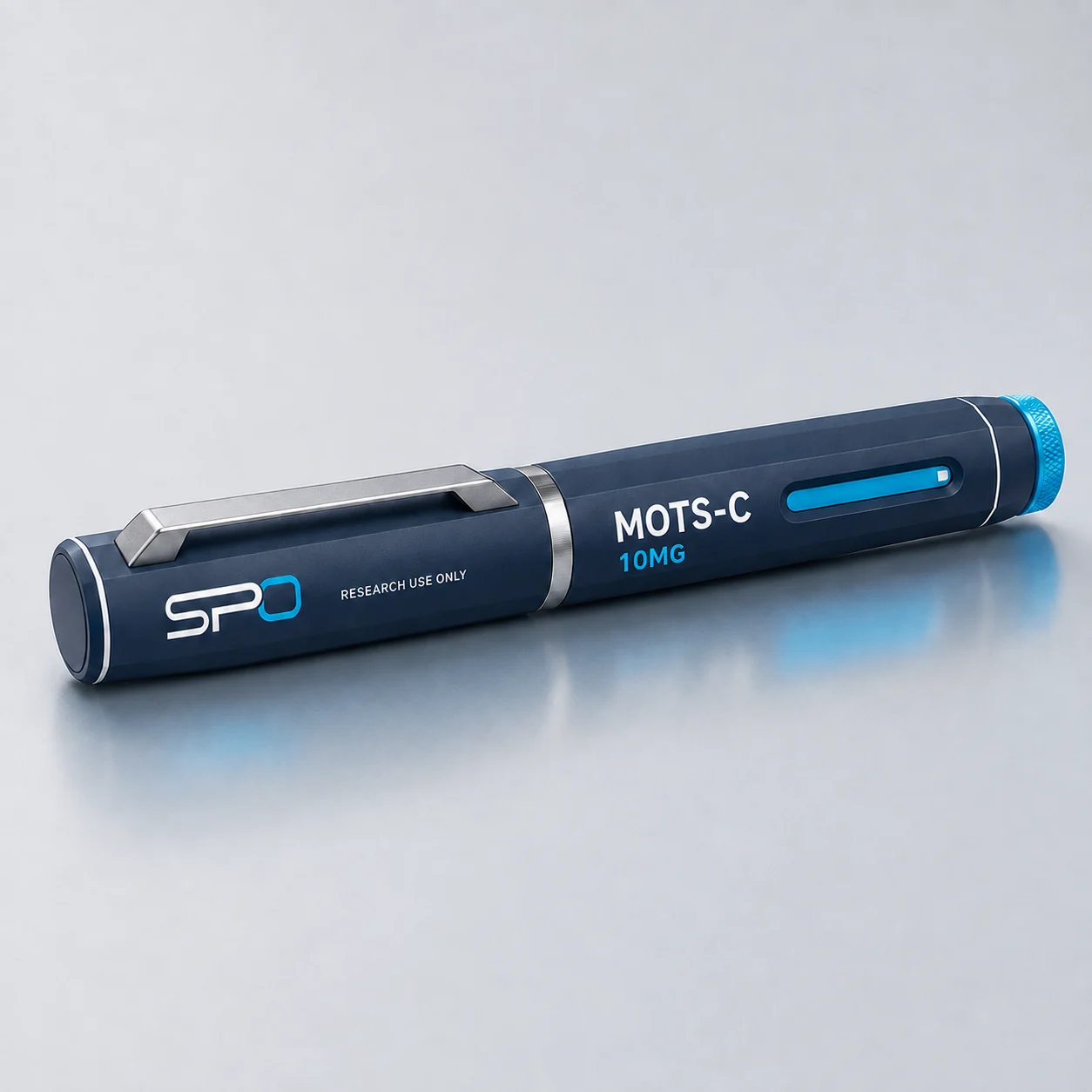
MOTS-C in pen format. Strength options and details are on the MOTS-C pen page.
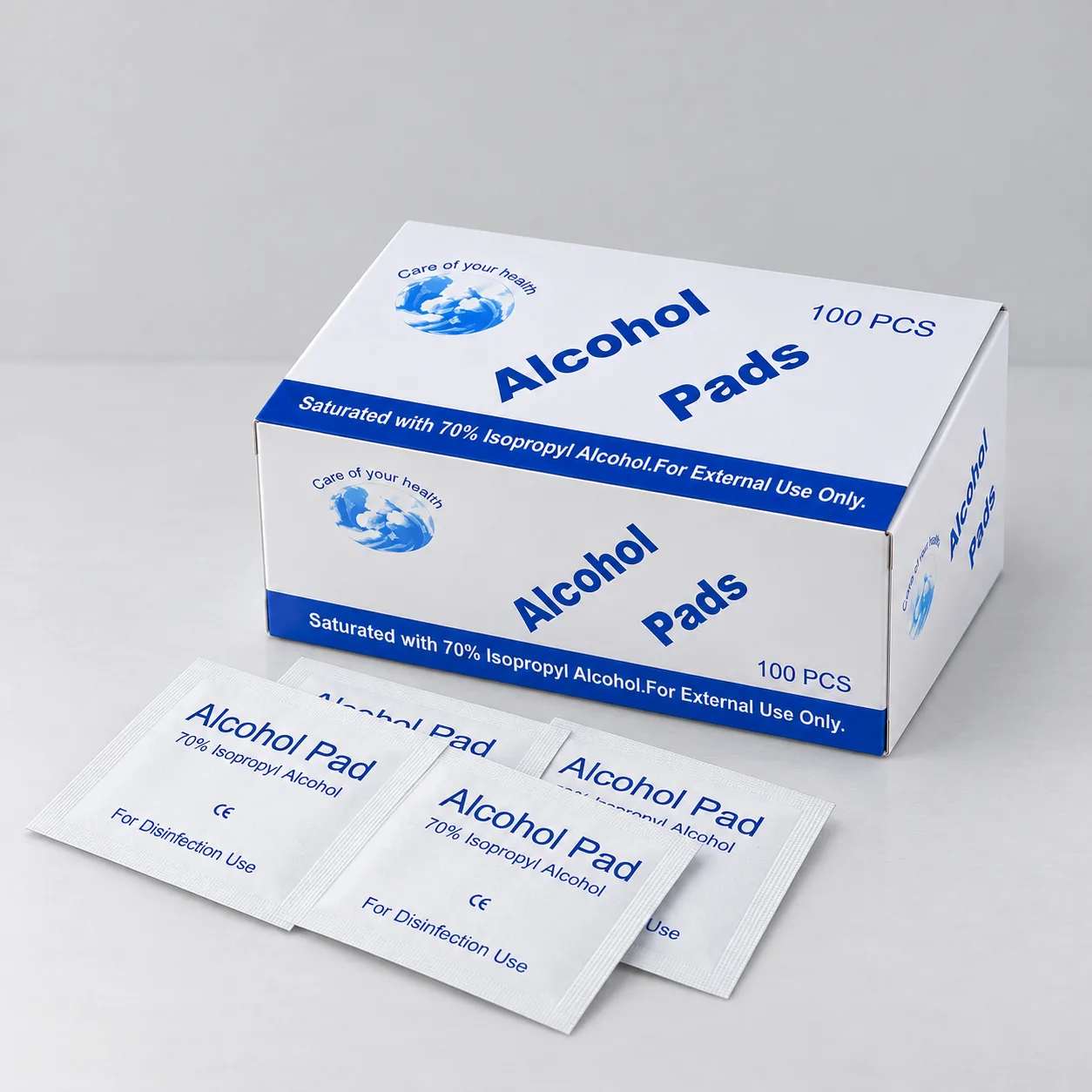
Bacteriostatic water, pen needles and alcohol pads, listed separately.


Choose the format (vial or pen) and strength, then check the current price, stock status and COA shown on that listing. Vials and pens are separate products, so confirm the exact item in your cart before checkout.
Available COAs for MOTS-c are shown on the product page and in the COA library — none is posted for MOTS-c yet. Match the product name, strength and batch to the document before relying on it. The rest of the range is on the buy peptides online in Canada page.
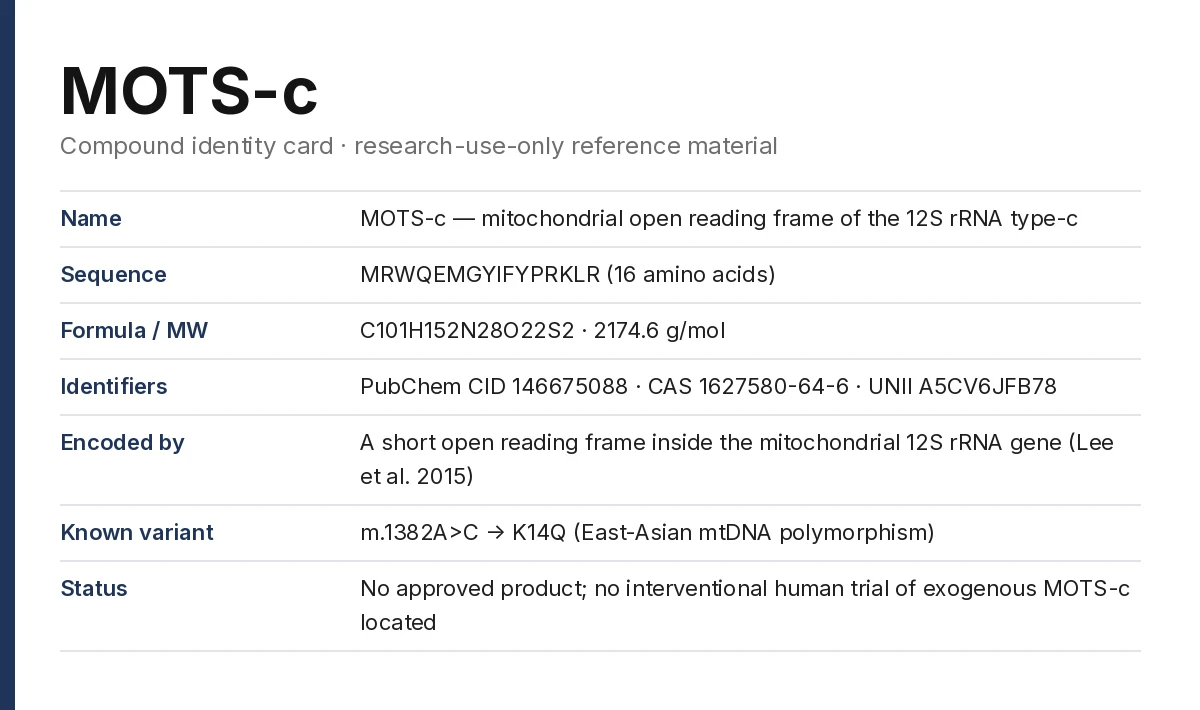
MOTS-c (mitochondrial open reading frame of the 12S rRNA type-c) is a 16-amino-acid peptide, MRWQEMGYIFYPRKLR, whose gene sits inside the mitochondrial genome rather than the nuclear one. Lee and colleagues reported it in 2015 as a second mitochondrial-encoded signalling peptide after humanin, showing that it activates AMPK by inhibiting the folate cycle and de-novo purine synthesis, and that treating mice with it prevented age-related and high-fat-diet-induced insulin resistance[1]. Since then it has been studied as a “mitochondrial-derived peptide” in mouse muscle and metabolism models, in cultured myotubes, and in human cohorts where only the body’s own MOTS-c was measured[3, 4]. No approved product exists, and we found no interventional human trial of the synthetic peptide. The vials and pen on this page are supplied for laboratory research only.
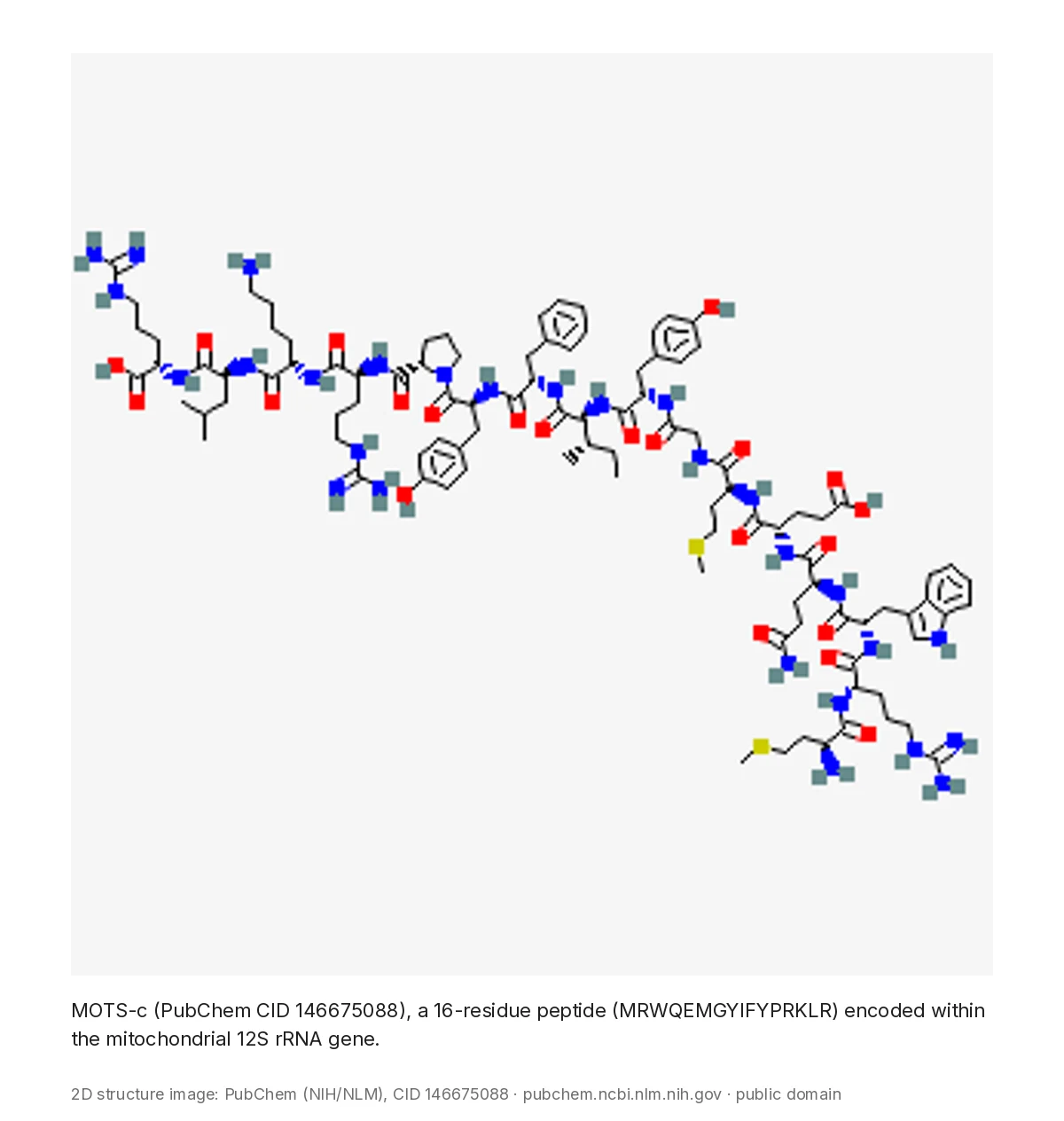
The mitochondrial genome was long assumed to code only for 13 respiratory-chain proteins plus its own tRNAs and rRNAs. The identification of humanin, a peptide encoded in the 16S rRNA gene, suggested that other short open reading frames might exist. Lee and colleagues searched the 12S rRNA gene and found one encoding a 16-residue peptide they named MOTS-c. In their 2015 paper the peptide’s main target organ appeared to be skeletal muscle; at the cellular level it inhibited the folate cycle and the purine biosynthesis tethered to it, which raised AMP and activated AMPK[1]. A 2018 follow-up from the same group showed that, under glucose restriction, MOTS-c moves from the cytoplasm into the nucleus in an AMPK-dependent way and there regulates a broad set of genes, including antioxidant-response-element genes, by interacting with stress-responsive transcription factors such as NRF2 — evidence that the mitochondrial genome can talk back to the nuclear one[2].
| Name | MOTS-c (mitochondrial open reading frame of the 12S rRNA type-c) |
| Sequence | Met-Arg-Trp-Gln-Glu-Met-Gly-Tyr-Ile-Phe-Tyr-Pro-Arg-Lys-Leu-Arg (MRWQEMGYIFYPRKLR) |
| Formula | C101H152N28O22S2 |
| Molecular weight | 2174.6 g/mol |
| CAS | 1627580-64-6 |
| PubChem CID | 146675088 (a second record, 176489569, carries the same formula) |
| UNII | A5CV6JFB78 |
| Natural variant | K14Q, from mtDNA m.1382A>C (rs111033358)[5, 6] |
Read from PubChem on 30 September 2026. ChEMBL has no record for MOTS-c under this name, so the identity rests on PubChem and the primary literature.
In differentiated C2C12 mouse myotubes, MOTS-c prevented palmitic-acid-induced atrophy; mechanistically it raised CK2 activity, inhibited PTEN, increased mTORC2 signalling and AKT phosphorylation, and so restrained FOXO1, a transcription factor upstream of myostatin[7]. In cells under glucose restriction it accumulated in the nucleus and altered gene expression[2]; myoblasts adapted differently to metabolic stress in its presence[3]. The K14Q variant showed diminished insulin-sensitising activity in vitro[5].
The discovery paper reported that MOTS-c treatment prevented diet-induced obesity and both age-dependent and high-fat-diet-induced insulin resistance[1]. In 2021, Reynolds and colleagues found that the peptide enhanced physical performance in young (2-month), middle-aged (12-month) and old (22-month) mice, and that intermittent treatment begun late in life (23.5 months) increased physical capacity and healthspan; it regulated nuclear genes for metabolism and proteostasis and altered skeletal-muscle metabolism[3]. High-fat-fed male mice given wild-type MOTS-c showed lower weight and better glucose tolerance, whereas the K14Q form did not; females were unaffected[5]. In diet-induced obese mice, MOTS-c lowered plasma myostatin[7]. In a 2022 exercise study, 4–8 weeks of voluntary running raised muscle MOTS-c protein 1.5- to 5-fold, an effect that persisted through 4–6 weeks of detraining, and a single administration to untrained mice improved running time and distance in an acute test by 12% and 15%[8]. In 2024, mice with a cast-immobilised limb lost about 15% of muscle mass over eight days, versus about 5% with MOTS-c, alongside normalised AKT/FOXO signalling, lower circulating IL-6, IL-1β, CXCL1 and MCP-1, and less intramuscular fat[9]. Injecting a MOTS-c-neutralising antibody shifted muscle toward fast myosin heavy chain, mimicking the K14Q genotype[6].
Nobody has published a trial giving synthetic MOTS-c to people. What exists is measurement of the body’s own peptide. Exercise induces MOTS-c expression in human skeletal muscle and raises it in circulation[3]. In ten lean and ten obese adults, plasma MOTS-c was similar between groups (about 0.5 ng/mL) but correlated with insulin-resistance indices, mainly in the lean group[4]. In 49 breast-cancer survivors, a 16-week aerobic-plus-resistance programme raised plasma MOTS-c in non-Hispanic White but not Hispanic participants, and the post-exercise level tracked reductions in fat mass, weight, HOMA-IR and CRP[10]. Plasma MOTS-c was inversely correlated with myostatin in human subjects[7]. On the genetic side, the K14Q variant was associated with type 2 diabetes prevalence in men (three cohorts, n = 27,527), particularly the least active tertile[5], and with a higher share of fast-twitch MHC-IIx fibres, higher leg torque and a higher frequency among sprint/power athletes in Japanese cohorts[6]. Reviews note that plasma levels decline with age and that no clinical method of using MOTS-c has been developed[11, 12].
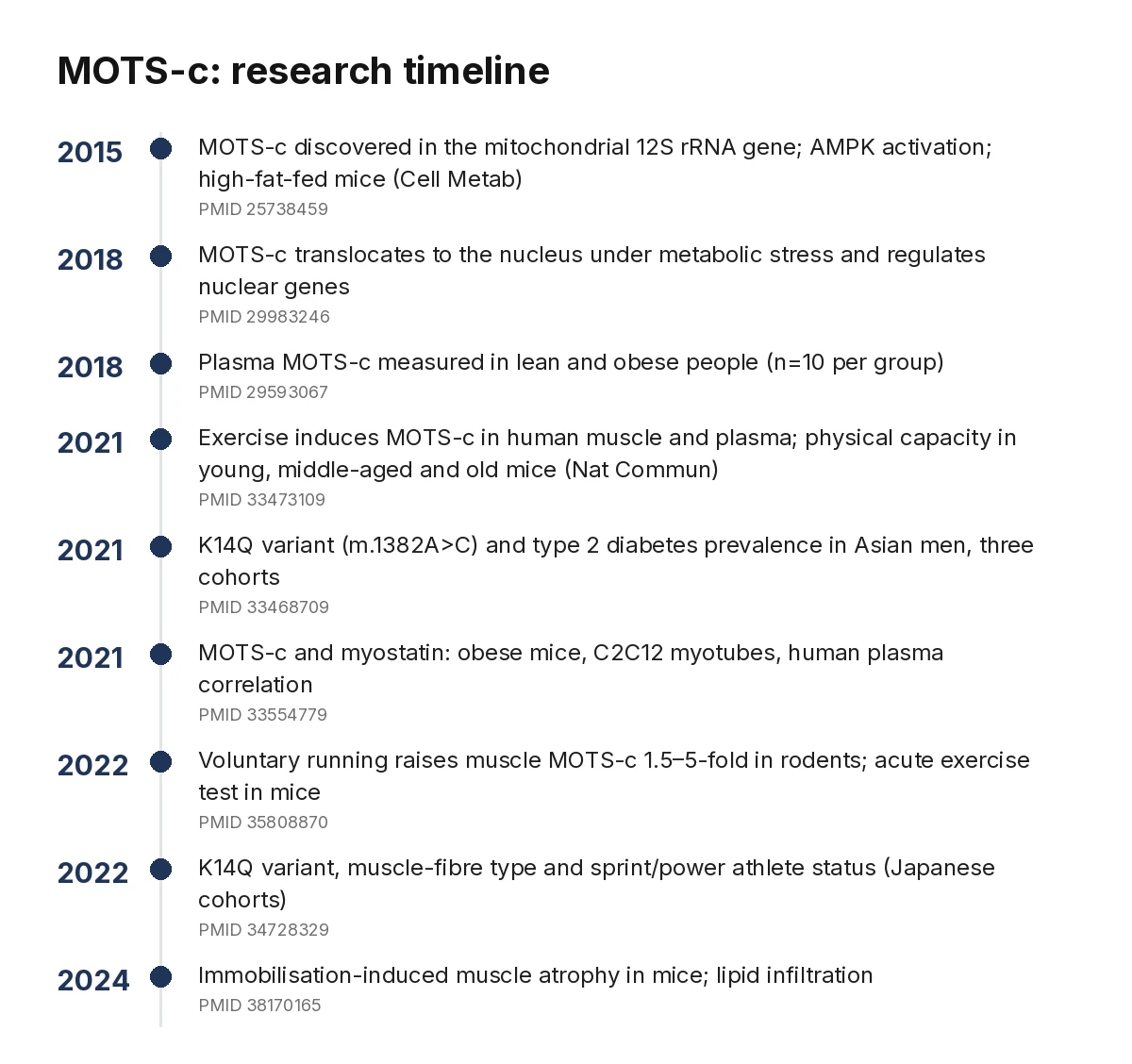
| Year | Model | What was investigated | Reference |
|---|---|---|---|
| 2015 | Cells; high-fat-fed and ageing mice | Discovery; folate cycle/AMPK; insulin resistance and obesity | PMID 25738459 |
| 2018 | Cells under glucose restriction | Nuclear translocation; ARE genes; NRF2 interaction | PMID 29983246 |
| 2018 | Human plasma (10 lean, 10 obese) | Endogenous MOTS-c vs HOMA and Matsuda indices | PMID 29593067 |
| 2021 | Mice at 2, 12, 22 months; late-life treatment; human muscle after exercise | Physical performance, healthspan, nuclear gene regulation, exercise induction | PMID 33473109 |
| 2021 | Three human cohorts (n=27,527); high-fat-fed mice; cells | K14Q variant and type 2 diabetes; activity of variant peptide | PMID 33468709 |
| 2021 | C2C12 myotubes; obese mice; human plasma | Myostatin, CK2–PTEN–mTORC2–AKT–FOXO1 | PMID 33554779 |
| 2021 | 49 breast-cancer survivors, 16-week exercise RCT (secondary analysis) | Plasma MOTS-c response to exercise by ethnicity | PMID 34413391 |
| 2022 | Rodent muscle after voluntary running; untrained mice | Training-induced MOTS-c; acute exercise performance; nuclear translocation | PMID 35808870 |
| 2022 | Japanese cohorts (211 + 86 + 721 athletes); mice with neutralising antibody | K14Q, fibre composition, torque, athlete status | PMID 34728329 |
| 2024 | Immobilised mice (8 days) | Muscle atrophy, AKT/FOXO, cytokines, lipid infiltration, PPAR genes | PMID 38170165 |
| 2022–2023 | Reviews | Ageing, metabolism, and the absence of clinical application | PMID 36233287, PMID 36761202 |
Shop Peptides Online lists MOTS-c in 10mg, 20mg and 40mg vials and as a pen on this page, shipped from inside Canada by Canada Post (the shipping policy states the free-shipping threshold). Everything is supplied for laboratory research only.
A 16-amino-acid peptide (MRWQEMGYIFYPRKLR) encoded by a short open reading frame inside the mitochondrial 12S rRNA gene, described in 2015 (PMID 25738459). It is one of a small group of “mitochondrial-derived peptides”; the research material sold here is synthetic.
Not yet. No batch-specific report for any MOTS-c strength or the pen is posted in the COA library at the time of writing. Each product page states this rather than borrowing another product’s document; reports will be added as they are received.
No. MOTS-c has no approved product anywhere, and no published trial has given the synthetic peptide to people — the human studies measured the body’s own MOTS-c (PMIDs 29593067, 34413391). The material here is for laboratory research; no dosing or administration guidance is provided.