
Your cart is currently empty!.
You may check out all the available products and buy some in the shop.
Continue ShoppingGLP-3 (retatrutide) research peptide, priced in CAD, third-party tested, shipped within Canada by Canada Post. Five formats, batch COAs in the library, free shipping over $300.
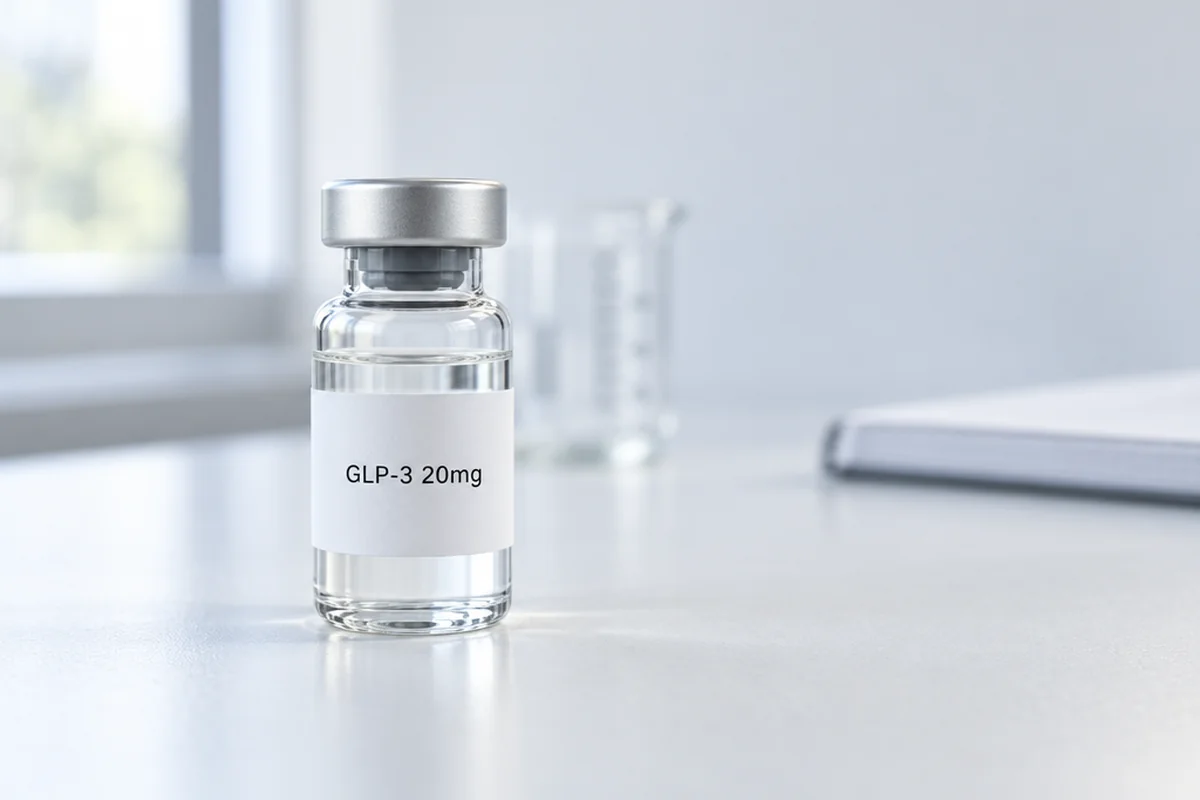
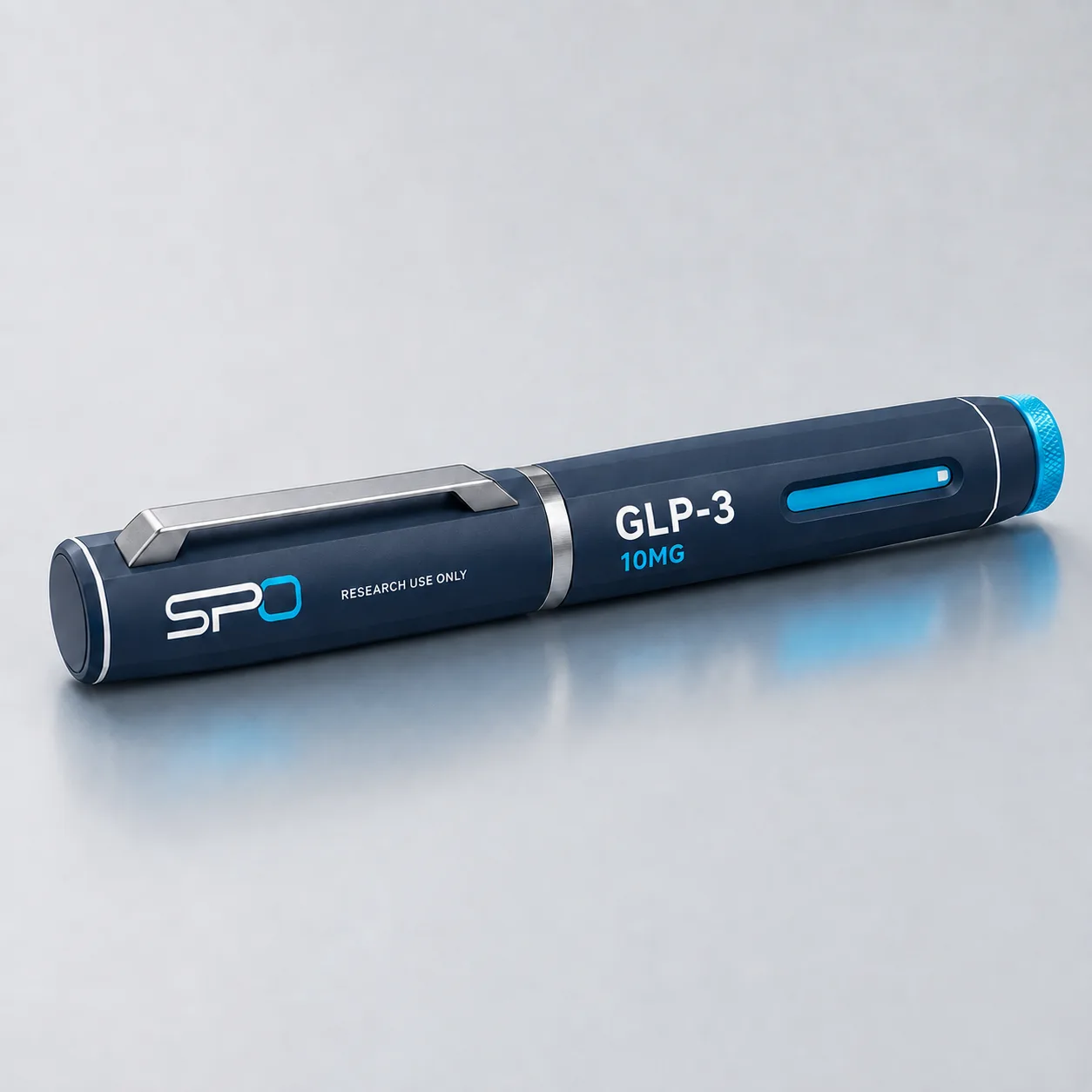
Five formats are stocked: 5mg vial, 10mg vial, 20mg vial, 60mg vial and the GLP-3 research pen. Larger vials usually carry a lower per-milligram cost, so labs running longer assay series usually standardise on the 20mg or 60mg vial and keep a 5mg vial for method validation. The GLP-3 pen guide explains how the pen format differs from loose vials for handling and documentation.


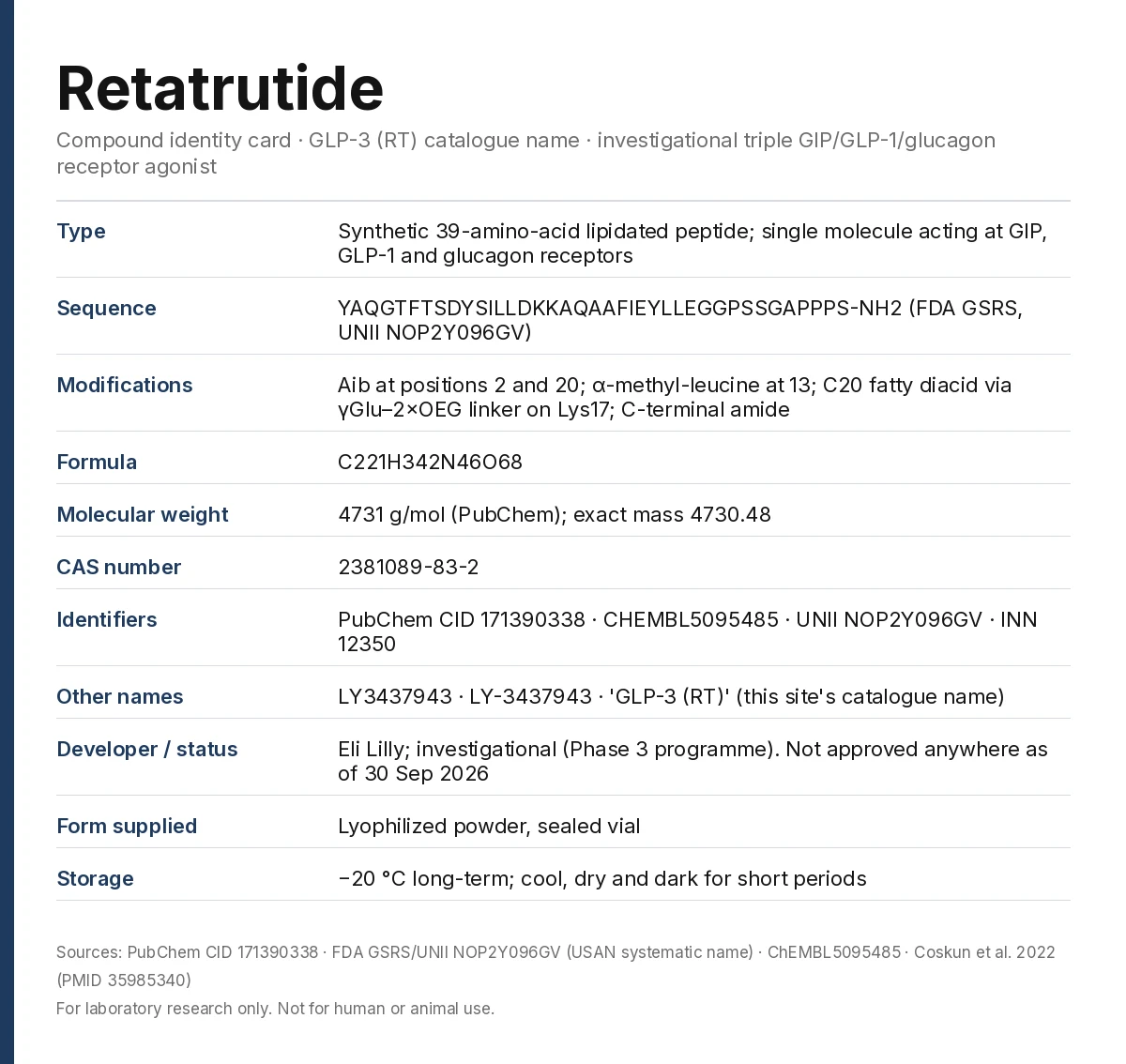
Retatrutide (LY3437943) is a single synthetic peptide of 39 amino acids, designed by Eli Lilly to activate three receptors at once: the glucose-dependent insulinotropic polypeptide (GIP) receptor, the glucagon-like peptide-1 (GLP-1) receptor and the glucagon receptor[1]. “GLP-3” is not a hormone and does not exist in the body; it is the catalogue name this site uses for the compound, and the batch report on the product page is titled “Retatrutide” for that reason. Retatrutide is an investigational drug: it has completed Phase 2 and has Phase 3 results published[4, 5, 9, 10], but as of this review it is not approved by Health Canada, the FDA or any other regulator. The vials on this page are research-grade material for in-vitro and preclinical laboratory work only. They are not the investigational drug used in those trials, and nothing reported below describes or supports them.
The design follows the incretin-drug lineage: GLP-1 receptor agonists, then the dual GIP/GLP-1 agonist tirzepatide, then a molecule adding glucagon-receptor activity. The 2022 discovery paper describes the rationale: in obese mice, weight loss from reduced calorie intake (GIP and GLP-1 receptor signalling) was augmented by glucagon-receptor-mediated increases in energy expenditure, and a single ascending-dose Phase 1 study in humans showed a tolerability profile similar to other incretins with a pharmacokinetic profile suited to weekly dosing[1]. Structural work published in 2024 used cryo-electron microscopy to show how one peptide engages all three receptors[7]. Everything since has been clinical: Phase 1b in type 2 diabetes[2], two Phase 2 programmes[4, 5] with liver-fat and body-composition substudies[6, 8], and the first Phase 3 publications in 2026[9, 10].
| Property | Value | Source |
|---|---|---|
| Name | Retatrutide (INN, USAN); LY3437943; “GLP-3 (RT)” on this site | FDA GSRS names; PubChem synonyms |
| Type | 39-residue lipidated peptide; C-terminal amide | FDA GSRS (UNII NOP2Y096GV) |
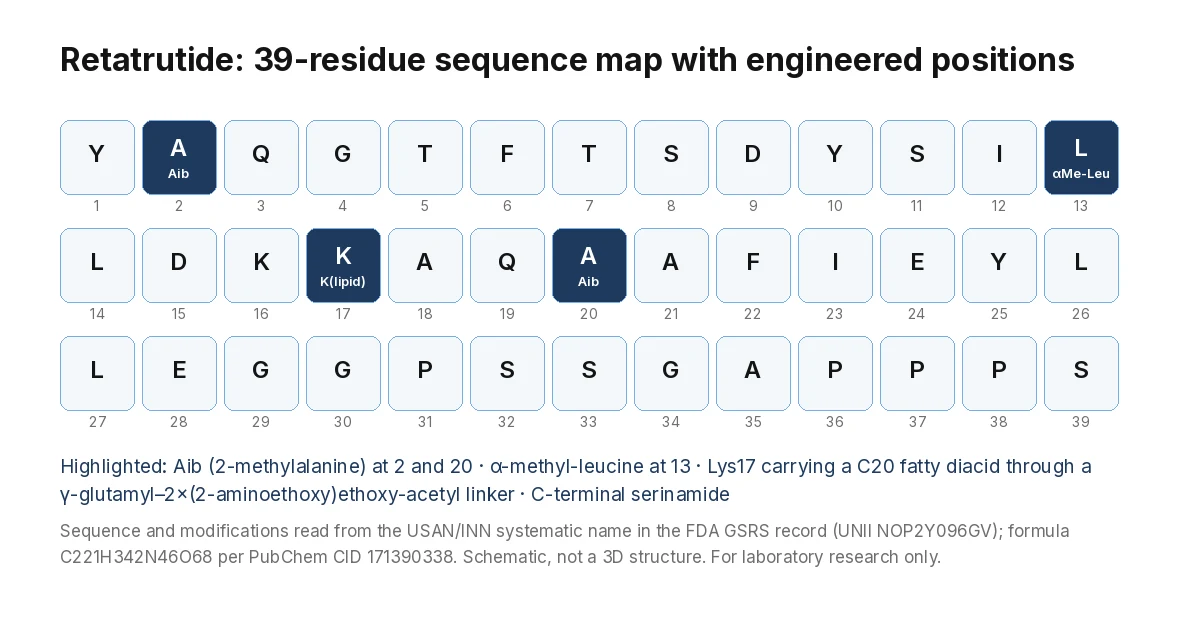
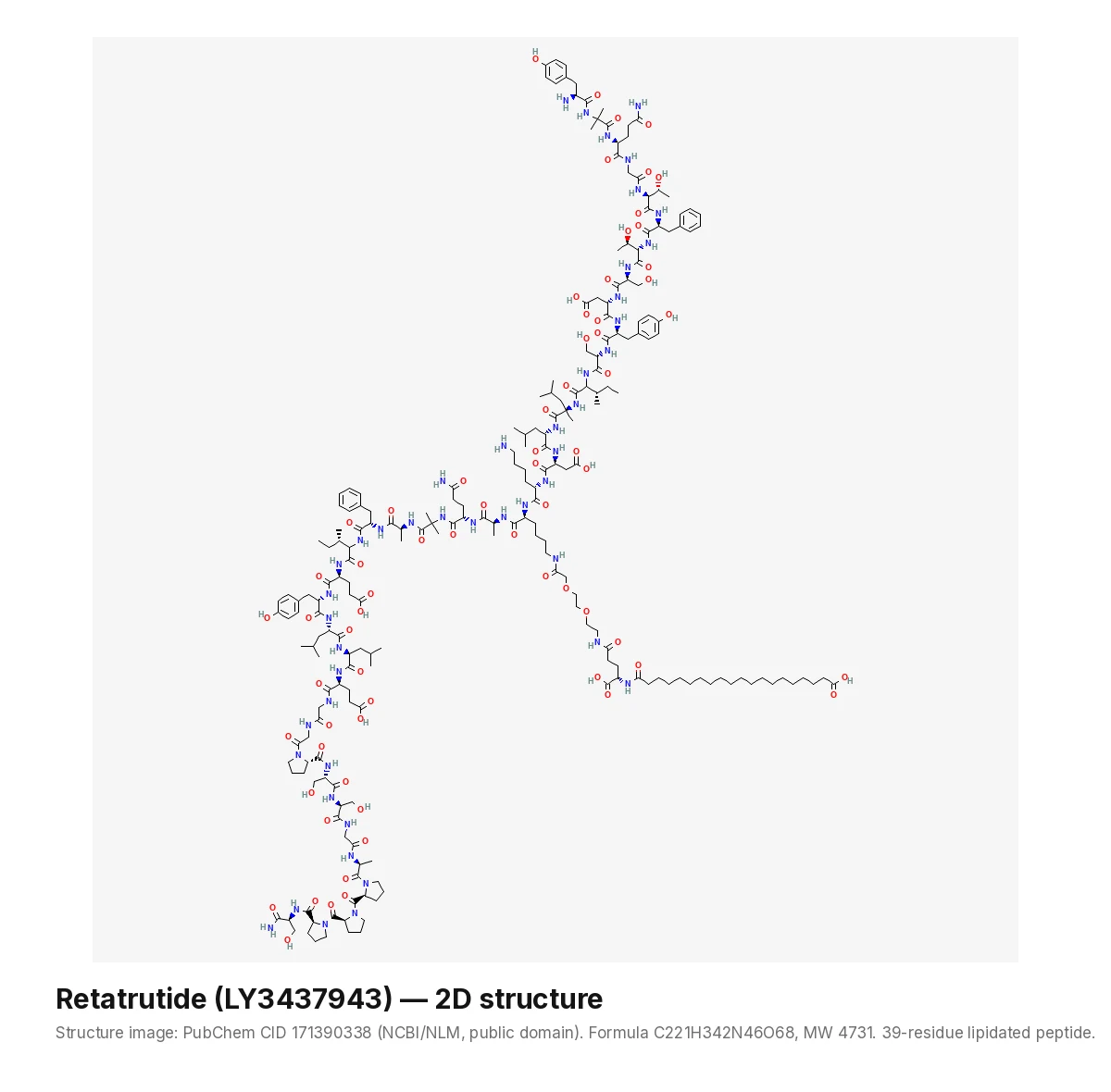
| Engineered positions | Aib2, α-methyl-Leu13, Lys17-(C20 diacid–γGlu–2×OEG), Aib20 | USAN systematic name, FDA GSRS |
| Molecular formula | C221H342N46O68 | PubChem CID 171390338 |
| Molecular weight | 4731 g/mol (exact mass 4730.478); GSRS “estimated” 4091.5 for the unlipidated chain | PubChem; FDA GSRS |
| CAS | 2381089-83-2 | FDA GSRS; PubChem substance records |
| ChEMBL | CHEMBL5095485 — max phase 3, no approval | ChEMBL (EMBL-EBI) |
| Receptor profile | GIPR > GLP-1R ≈ GCGR in vitro | Coskun et al. 2022[1] |
PubChem carries the compound under the title “Triple G” with retatrutide and its CAS number attached through deposited substance records; ChEMBL classes it as a protein and gives no weight. The weight discrepancy between PubChem and GSRS is explained above and matters for anyone reading a mass-spectrometry line on a certificate.
The discovery paper reports lower body weight and improved glycaemic control in obese mice, with the glucagon-receptor component adding energy expenditure to the appetite effects of the other two receptors[1]. A 2026 study in diet-induced obese MASH mice and hamsters recorded a 31% body-weight reduction in mice with reduced food and water intake and no significant change in energy expenditure, lower HOMA-IR, steatosis score and lipids; in hamsters, altered food preference, lower LDL and a 50% fall in hepatic triglyceride without a change in histopathological score[11]. In mouse models of non-diabetic renal fibrosis (unilateral ureteral obstruction and ageing) and in HK-2 cells, retatrutide’s effects were associated with inhibition of PI3K-AKT and NF-κB pathways[12]. Cryo-EM structures of the peptide bound to each of its three receptors were published in 2024[7].
In the 12-week Phase 1b trial (72 adults with type 2 diabetes), pharmacokinetics were dose-proportional with a half-life of about six days; gastrointestinal disorders were the most frequent adverse events, and 29 of 72 participants discontinued early[2]. A separate pharmacology study measured delayed gastric emptying[3].
The 48-week obesity trial (338 adults, NCT04881760) reported dose-dependent reductions in body weight versus placebo across its dose arms; adverse events were mostly gastrointestinal and rose with dose, and heart rate increased with dose, peaking at 24 weeks[4]. The 36-week type 2 diabetes trial (281 adults, NCT04867785) reported dose-dependent HbA1c and body-weight reductions versus placebo and versus the comparator dulaglutide, with mild-to-moderate gastrointestinal adverse events in 35% of retatrutide participants[5]. A liver-fat substudy (98 participants with MASLD) reported dose-dependent relative reductions in liver fat versus placebo at 24 weeks[6]; a DXA substudy (189 participants) reported dose-dependent reductions in total fat mass versus placebo and dulaglutide[8].
TRANSCEND-T2D-1 (537 adults with type 2 diabetes, 40 weeks) reported dose-dependent HbA1c and body-weight reductions versus placebo; discontinuations for adverse events were 2–5% versus 0%, and two deaths in one retatrutide group were judged unrelated[9]. TRIUMPH-2 (1,152 adults with obesity and type 2 diabetes, 80 weeks) reported dose-dependent body-weight reductions versus placebo; diarrhoea (27–34% vs 13%), nausea (14–28% vs 8%), hypotension (1–6% vs under 1%) and dysesthesia (4–7% vs 1%) were more frequent on the drug, permanent discontinuation for adverse events reached 12% in one dose group, and seven deaths occurred across all groups, all judged unrelated by investigators[10]. A 2026 meta-analysis pooled blood-pressure and lipid changes from the randomised trials[14]; a 2025 systematic review covered three trials to March 2025[13]; a 2026 overview summarises the programme[15].
Three 2026 papers concern the material now circulating outside the trial programme. An anti-doping group validated an LC-HRMS method after four self-administering users provided plasma and urine, noting “increasing off-label use among physically active populations” and finding the intact peptide undetectable in urine[16]. An Australian letter analysed the composition and labelling accuracy of products sold as retatrutide[17]. A case report describes a man with type 1 diabetes who developed severe vomiting, ketonaemia and acute kidney injury after self-administering an online-purchased product marketed as retatrutide, with the authors noting that such products’ “composition, purity and dosing accuracy may be uncertain”[18]. These papers are the reason the batch report on each product page is shown in full.
| Year | Model | What was investigated | Reference |
|---|---|---|---|
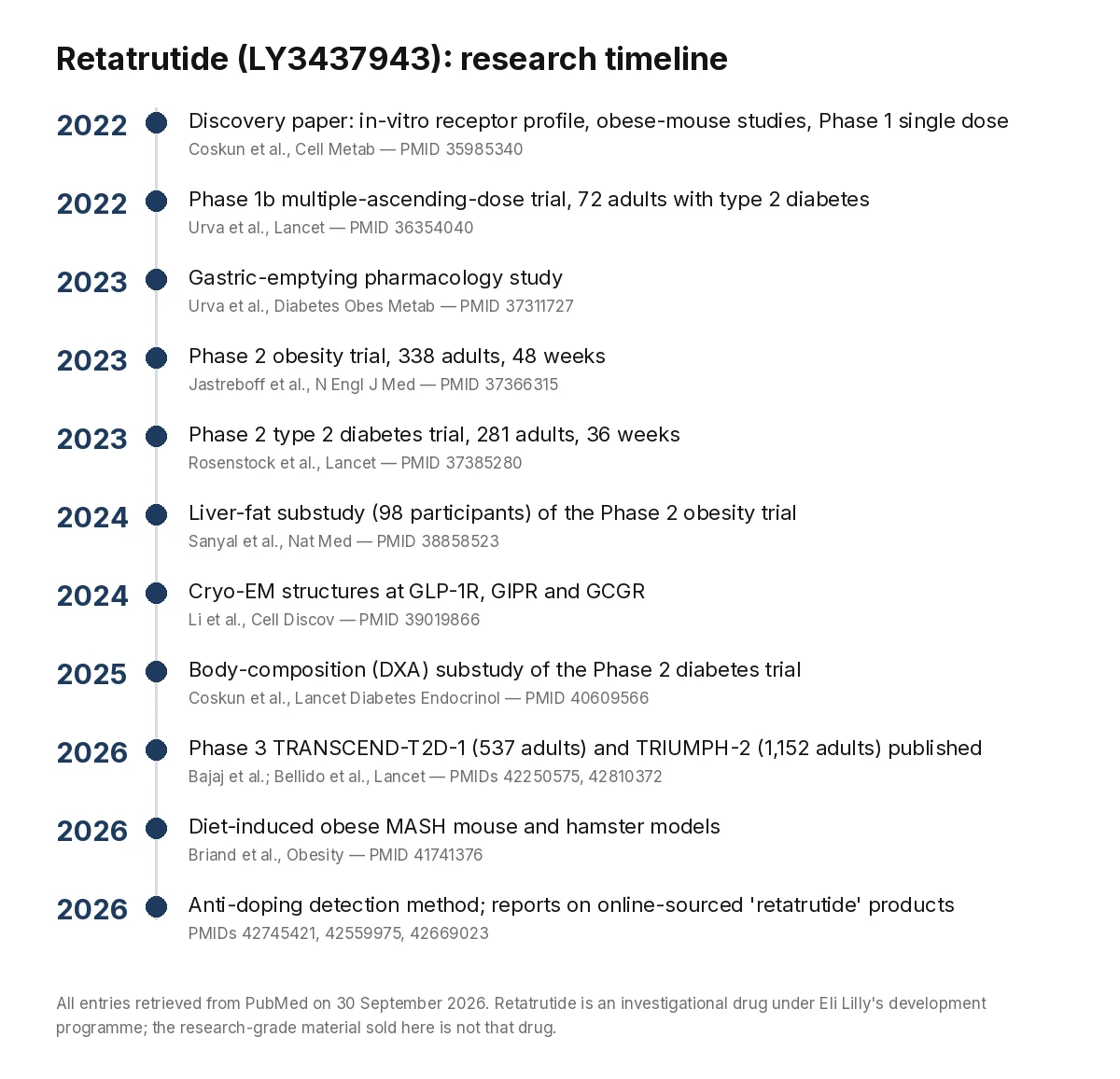
| 2022 | Cells (receptor assays); obese mice; human Phase 1 single dose | Receptor selectivity, weight and glucose in mice, first-in-human PK and tolerability | PMID 35985340 |
| 2022 | Human Phase 1b, n=72, type 2 diabetes, 12 wk | Safety, PK (t½ ≈ 6 days), glucose, weight | PMID 36354040 |
| 2023 | Human pharmacology | Gastric emptying | PMID 37311727 |
| 2023 | Human Phase 2, n=338, obesity, 48 wk | Body weight vs placebo by dose arm; GI adverse events; heart rate | PMID 37366315 |
| 2023 | Human Phase 2, n=281, type 2 diabetes, 36 wk | HbA1c vs placebo and dulaglutide; weight; GI events | PMID 37385280 |
| 2024 | Human Phase 2a substudy, n=98, MASLD | Liver fat at 24 weeks | PMID 38858523 |
| 2024 | Cryo-EM structures | Binding mode at GLP-1R, GIPR, GCGR | PMID 39019866 |
| 2025 | Human Phase 2 substudy, n=189, DXA | Total fat mass and lean mass | PMID 40609566 |
| 2026 | Human Phase 3, n=537, type 2 diabetes, 40 wk | HbA1c, weight, adverse events (TRANSCEND-T2D-1) | PMID 42250575 |
| 2026 | Human Phase 3, n=1,152, obesity + type 2 diabetes, 80 wk | Weight, glycaemia, adverse events, discontinuations (TRIUMPH-2) | PMID 42810372 |
| 2026 | Diet-induced obese MASH mice and hamsters | Weight, intake, HOMA-IR, liver lipids, histology | PMID 41741376 |
| 2026 | Mouse UUO and ageing kidney models; HK-2 cells | Fibrosis, PI3K-AKT and NF-κB pathways | PMID 42630988 |
| 2026 | Human plasma/urine, 4 self-administering users | LC-HRMS anti-doping detection and excretion | PMID 42745421 |
| 2026 | Products sold online (Australia); one clinical case | Composition and label accuracy; adverse presentation after online-sourced product | PMID 42559975, PMID 42669023 |
An independent Janoshik report titled “Retatrutide” is posted for the 10mg vial: report #232263, sample received 16 September 2026, analysed 21 September 2026, measured content 9.24 mg against a 10 mg label, purity 99.079%, verification key LBUI98X8TRUG. The same document is listed in the COA library for the 10mg pen. The 5mg, 20mg and 60mg vials have no posted report at the time of this review; their product pages say so. The report identifies the sample within Janoshik’s “common GLP-1 peptide blind test” panel (semaglutide, tirzepatide, retatrutide), which is the identity check that distinguishes retatrutide from the other two.
Retatrutide is one of the compounds listed on the page where you can buy peptides online in Canada; each listing there carries the same research-use-only terms and links to its own batch documentation.
All references were retrieved from PubMed (NCBI) on 30 September 2026 and cross-checked against Europe PMC; identity data from PubChem, the FDA Global Substance Registration System and ChEMBL (EMBL-EBI) on the same date.
Orders ship from within Canada by Canada Post; payments confirmed before 11:00 AM PST on a business day ship the same day, and Priority service typically delivers in 1–3 business days to Toronto, Vancouver, Montreal, Calgary and most urban postal codes, a little longer to remote areas. Orders over $300 ship free by Xpresspost. Every parcel is tracked and arrives in plain packaging. Payment is by Interac e-Transfer or cryptocurrency; see the shipping policy.
Tirzepatide Canada (dual GIP/GLP-1 agonist, 20mg and 60mg) · MOTS-c Canada (mitochondrial-derived peptide) · Tesamorelin Canada · Full Canadian research-peptide catalogue.
Yes. GLP-3 (RT) is this site’s catalogue name for retatrutide (LY3437943), an investigational 39-amino-acid peptide that acts on the GIP, GLP-1 and glucagon receptors (PMID 35985340). There is no hormone called GLP-3. The batch report on the 10mg product page is titled “Retatrutide” and identifies the sample within Janoshik’s GLP-1-peptide panel.
No on both counts. Retatrutide is an investigational drug in Eli Lilly’s Phase 3 programme with published Phase 2 and Phase 3 results (PMIDs 37366315, 42810372), but no regulator has approved it as of 30 September 2026. The vials sold here are research-grade material for laboratory use only; they are not the investigational product and no effect of any kind is claimed for them.
For the 10mg vial, yes: independent Janoshik report #232263 (sample received 16 September 2026, analysed 21 September 2026) shows 9.24 mg measured against a 10 mg label and 99.079% purity, verification key LBUI98X8TRUG; it is embedded on the product page. The 5mg, 20mg and 60mg vials have no posted report at the time of this review.
A synthetic lipidated peptide, sequence YAQGTFTSDYSILLDKKAQAAFIEYLLEGGPSSGAPPPS-NH2, with Aib at positions 2 and 20, α-methyl-leucine at 13 and a C20 fatty diacid on Lys17 (FDA GSRS, UNII NOP2Y096GV). Formula C221H342N46O68, molecular weight 4731 (PubChem CID 171390338), CAS 2381089-83-2.
For laboratory research use only. Not for human or animal consumption. This page identifies the material, its documentation and the published literature on the investigational compound, and makes no claim of efficacy or safety for the material sold.
Sold for laboratory research use only. Not for human or animal use. Descriptions identify the material and its documentation; they are not claims of efficacy or safety.