
In stock
BPC-157 (Pen)
Price range: $79.99 through $98.99
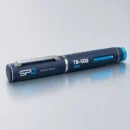
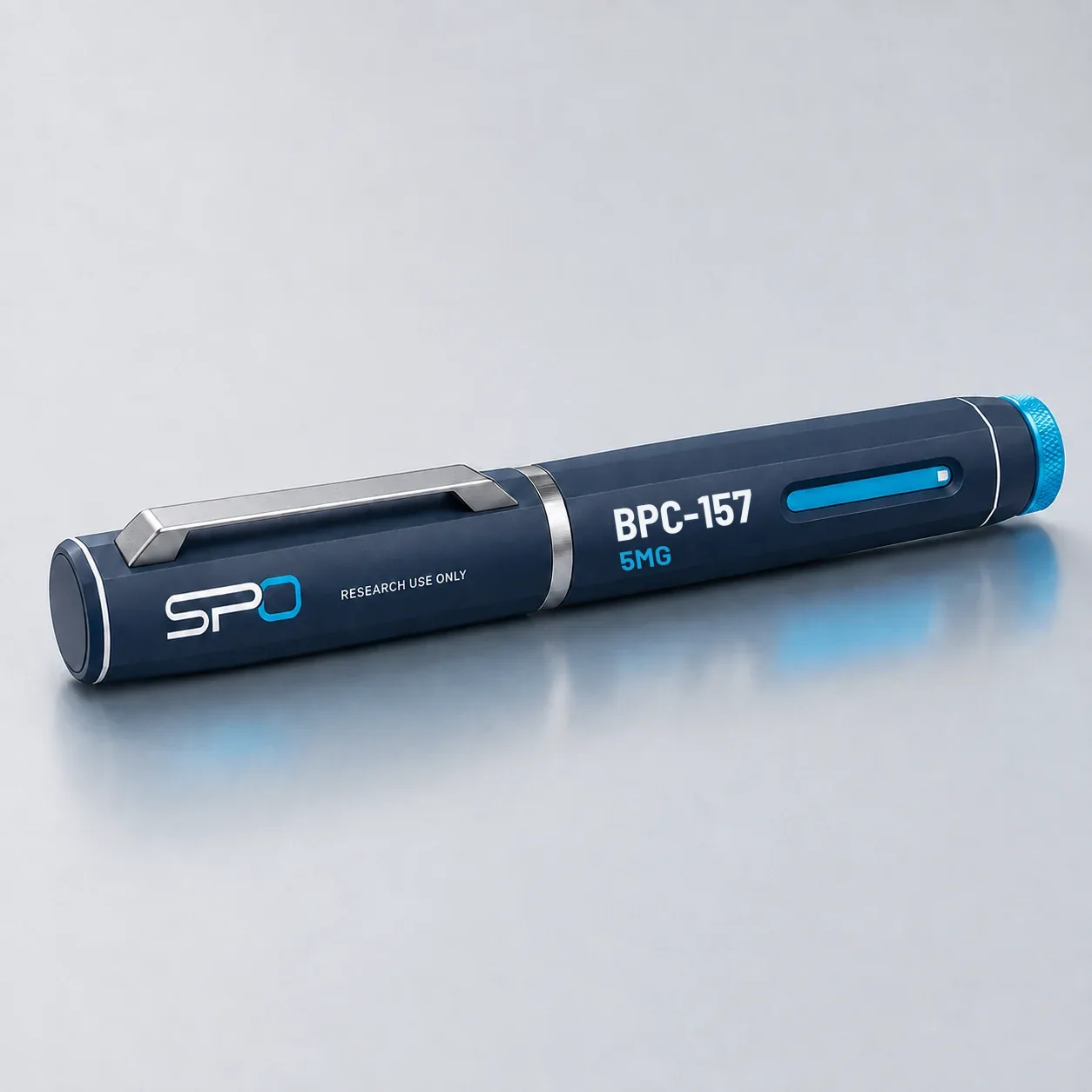
BPC-157 research peptide in pen format (5mg or 10mg options), supplied for laboratory research only. BPC-157 is a synthetic 15-amino-acid fragment of a gastric juice protein (Body Protection Compound). No batch COA is posted for the pen — see the COA library. Priced in CAD and shipped within Canada by Canada Post. Not for human or animal use.

Estimated delivery: 1–3 business days

Free shipping: On orders over $300
Guarantee Safe Checkout:

Description
BPC-157 research pen — Canada
This listing is BPC-157 in pen format (5mg or 10mg fill) — the same research material as our BPC-157 vials, supplied in a pre-formatted research pen for laboratories that prefer logged, repeatable handling over loose vials. BPC-157 is a synthetic pentadecapeptide — fifteen amino acids, GEPPPGKPADDAGLV — cut from a larger protein that Sikirić’s group isolated from gastric juice and named Body Protection Compound in 1993[1]. Three decades of work on it are almost all in rats and cell culture; it has no approved form for any use[12]. Laboratory research only; the pen is a handling format, not an instruction.
Full research overview, study table & references → BPC-157 Canada (part of our BPC-157 Canada range: 5mg, 10mg and blends)
Identity at a glance
| Sequence | GEPPPGKPADDAGLV (Gly-Glu-Pro-Pro-Pro-Gly-Lys-Pro-Ala-Asp-Asp-Ala-Gly-Leu-Val) |
| Formula | C62H98N16O22 |
| Molecular weight | 1419.5 g/mol |
| CAS | 137525-51-0 |
| PubChem CID | 9941957 |
| Also known as | Bepecin, PL-10, PLD-116, PL 14736 |
| Format | Pre-formatted research pen; declared content (5mg or 10mg) on the label, no measured value on file |
Cross-checked against PubChem and ChEMBL (CHEMBL4297358, which lists 1419.56).
Batch documentation: a batch-specific COA for the BPC-157 pen has not been posted yet — see the COA library. Reports for the vial listings, where posted, are on those pages.
What researchers have looked at
- Rat Achilles tendon after transection: higher failure load and better functional scores than saline controls; in the same paper the peptide had no direct effect on cultured tendocyte growth[3].
- Rat tendon fibroblasts in vitro: faster outgrowth from explants, more migration and spreading, higher FAK and paxillin phosphorylation — without a change in proliferation[4]; a later microarray study found growth hormone receptor strongly up-regulated[5].
- Blood vessels: more vessel formation in the chick CAM assay and endothelial tube assays, faster blood-flow recovery in rat hind-limb ischaemia, and VEGFR2 up-regulation with Akt–eNOS activation in cultured endothelial cells[8].
- Limits: a 2025 systematic review counted 35 preclinical studies against a single retrospective clinical report and found no clinical safety data[11]; a 2026 review records no completed Phase II trial and a plasma half-life under 30 minutes in animals[12].
Storage and handling
- Follow the label: keep the pen cool, dry and out of light, and do not subject it to repeated freeze–thaw.
- Log the batch number and dates of receipt and first use, as with any research material. No protocol or administration information is provided here.
Vial strengths: BPC-157 5mg · BPC-157 10MG. Other pens are on the peptide pens page; the whole range is on our buy peptides online in Canada page. Canada Post from inside Canada (shipping policy).
Frequently asked questions
What is the BPC-157 pen?
The same synthetic BPC-157 supplied in a pre-formatted research pen rather than a loose vial, for laboratories that want repeatable, logged handling. It is a research format only; no administration guidance of any kind is given.
Is there a batch report for the BPC-157 pen?
Not yet. No batch-specific report for the pen is posted in the COA library. The page will state the report when one exists.
Is the BPC-157 pen for human use?
No. The pen is supplied for laboratory research only and is not for human or animal use. No dosing, administration or protocol information is provided.
Cited
- Sikirić et al. (1993), Journal of physiology, Paris — PMID 8298609
- Staresinic et al. (2003), Journal of orthopaedic research — PMID 14554208
- Chang et al. (2011), Journal of applied physiology — PMID 21030672
- Chang et al. (2014), Molecules — PMID 25415472
- Sikiric et al. (2014), Current pharmaceutical design — PMID 23755725
- Hsieh et al. (2017), Journal of molecular medicine — PMID 27847966
- Vasireddi et al. (2025), HSS journal — PMID 40756949
- Mateescu et al. (2026), Pharmaceutics — PMID 42198317
For laboratory research use only. Not for human or animal consumption. No dosing, administration or protocol information is provided, and nothing here is a claim of efficacy or safety in humans.
Additional information
| Amount | 5mg, 10mg |
|---|
Related products
-
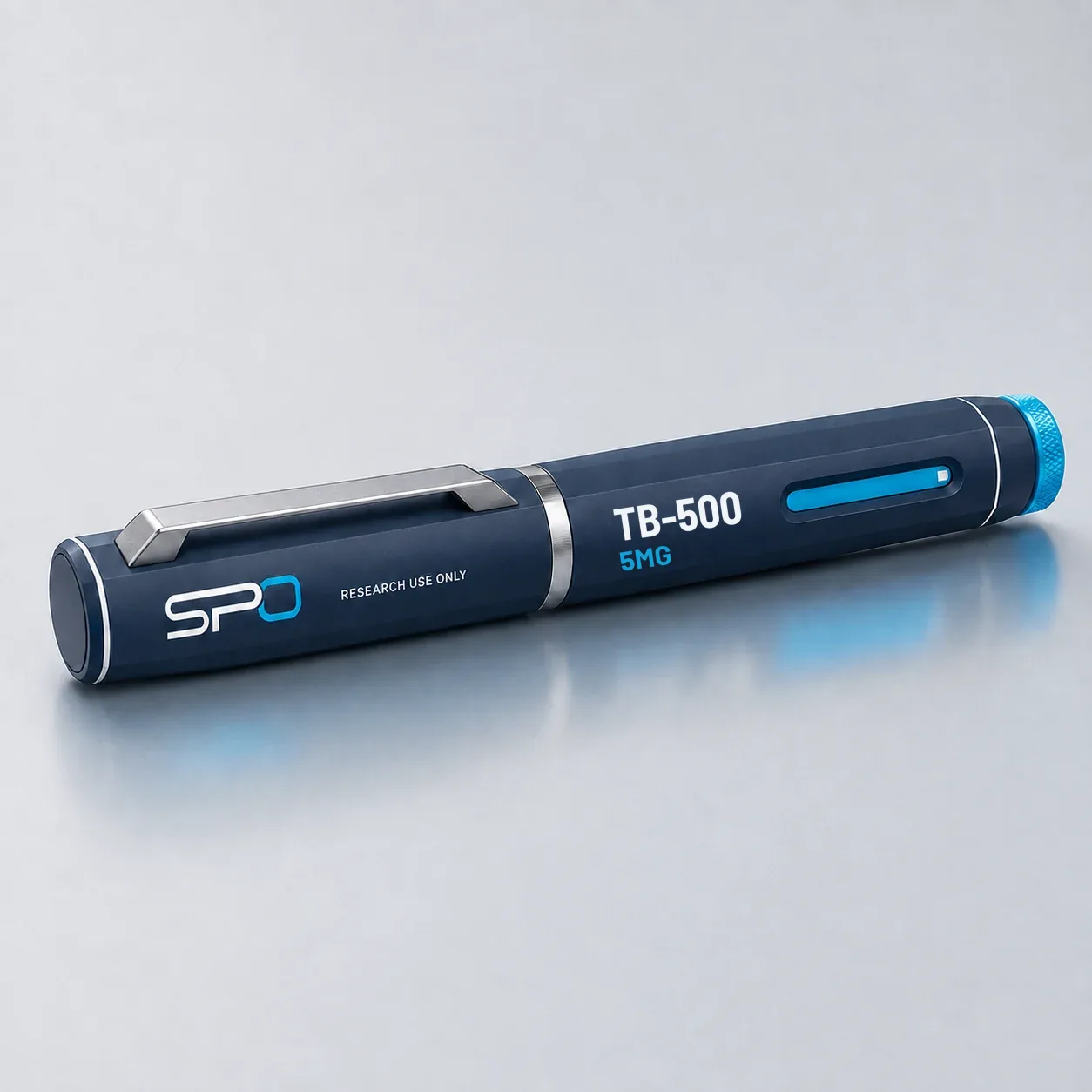
TB-500 (Pen)
Price range: $98.99 through $131.99 -
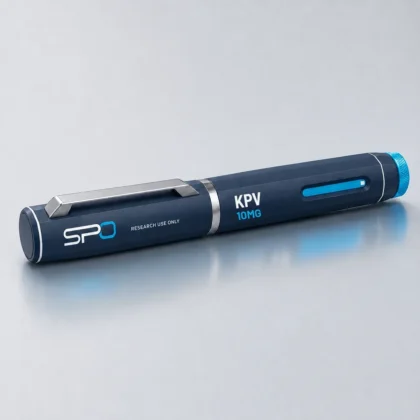
KPV (Pen)
$138.99 -
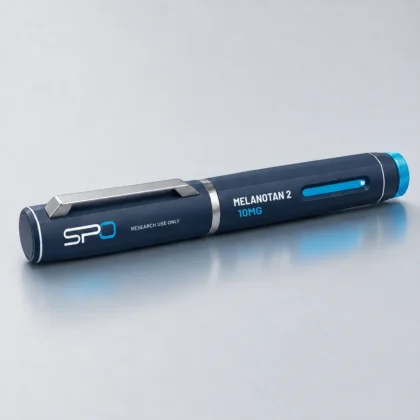
Melanotan 2 (Pen)
$110.99 -
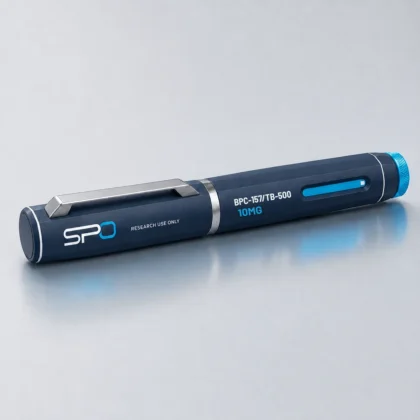
BPC-157/TB-500 (Pen)
Price range: $145.99 through $225.99