
Your cart is currently empty!.
You may check out all the available products and buy some in the shop.
Continue ShoppingCompare the Ipamorelin research listing at Shop Peptides Online with live price, stock and batch documentation — then read what this pentapeptide is, how it was developed, and what rat, swine, mouse and human studies have and have not shown, with 27 references. This page also compares it with Tesamorelin and explains how to check a COA before you order.
For laboratory research use only. Not for human consumption. Shop Peptides Online does not provide dosing, administration or medical guidance, and nothing on this page is a claim about what any compound does in people or animals.

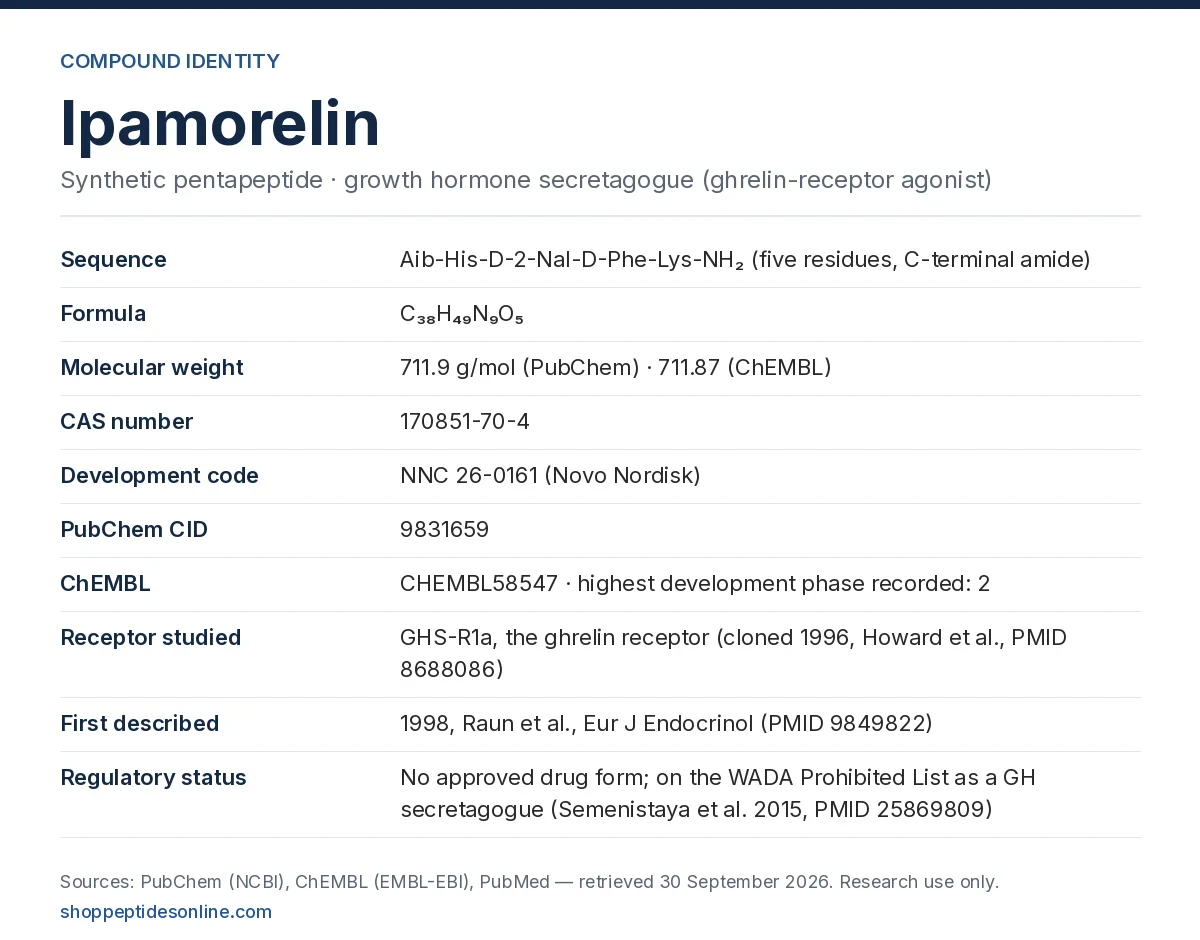
Ipamorelin is a synthetic five-amino-acid peptide (Aib-His-D-2-Nal-D-Phe-Lys-NH2) first described in the late 1990s. It belongs to the growth hormone secretagogue class and is studied as an agonist of the ghrelin receptor (GHS-R1a) in growth hormone axis research.
| Ipamorelin | Tesamorelin | |
|---|---|---|
| Type | Synthetic pentapeptide | Synthetic GHRH analog |
| Receptor studied | Ghrelin receptor (GHS-R1a) | GHRH receptor |
| Class | Growth hormone secretagogue | GHRH analog |
| Listed here | 10mg vial | 5mg, 10mg, 20mg vials and pen |
Because they are studied at different receptors, the two are often compared in GH-axis research. See Tesamorelin Canada for the full Tesamorelin range.


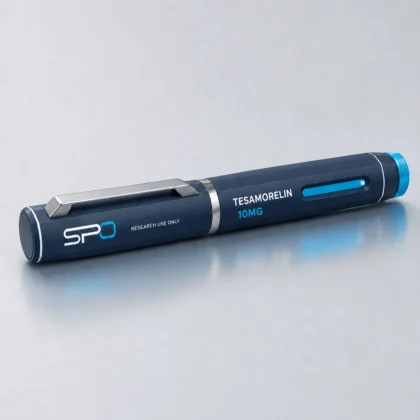
Browse all Growth Hormone Peptides.
Where a certificate of analysis (COA) is published for an Ipamorelin batch, it appears on the product page and in the COA library. A useful COA check has four parts:
See Lab Standards for how testing documentation is published.
Ipamorelin is a synthetic five-residue peptide, Aib-His-D-2-Nal-D-Phe-Lys-NH2, developed in a Novo Nordisk chemistry programme and first described in 1998 as a growth hormone (GH) secretagogue that released GH through the GHRP-type receptor while leaving ACTH and cortisol untouched in swine[2]. That receptor, GHS-R, had been cloned two years earlier[1], and its natural ligand, ghrelin, was identified from rat stomach a year later[8] — which is why ipamorelin is described interchangeably as a GH secretagogue, a GHS-R1a agonist and a ghrelin mimetic. Its literature is mostly rat, mouse and swine pharmacology from 1998–2012, a handful of gastrointestinal-motility studies, two human studies (a volunteer pharmacokinetic study and one negative phase 2 trial)[6, 19], and a growing anti-doping analytical literature. It has no approved drug form. The vial on this page is lyophilized research-grade material for laboratory use only.
The story starts with a receptor rather than a peptide. Small synthetic GH secretagogues had been known to act on the pituitary and hypothalamus for years before Howard and colleagues cloned their G-protein-coupled target from swine and human tissue in 1996 and argued that the synthetic molecules must be mimicking an undiscovered hormone[1]. Novo Nordisk’s medicinal chemists were working through series of GHRP-like peptides at the time; Raun and co-workers reported in 1998 that a pentapeptide lacking GHRP-1’s central Ala-Trp dipeptide, coded NNC 26-0161 and named ipamorelin, released GH from primary rat pituitary cells with potency and efficacy close to GHRP-6 (EC50 1.3 ± 0.4 nmol/l, Emax 85 ± 5% of the GHRP-6 response)[2]. The same group then trimmed the molecule further, replacing residues with a 3-(aminomethyl)benzoic acid fragment and N-methylating the backbone to reach smaller derivatives with some oral bioavailability in dogs[3]. In 1999 Kojima’s laboratory purified the receptor’s endogenous ligand from rat stomach and named it ghrelin[8], closing the loop the 1996 paper had opened.
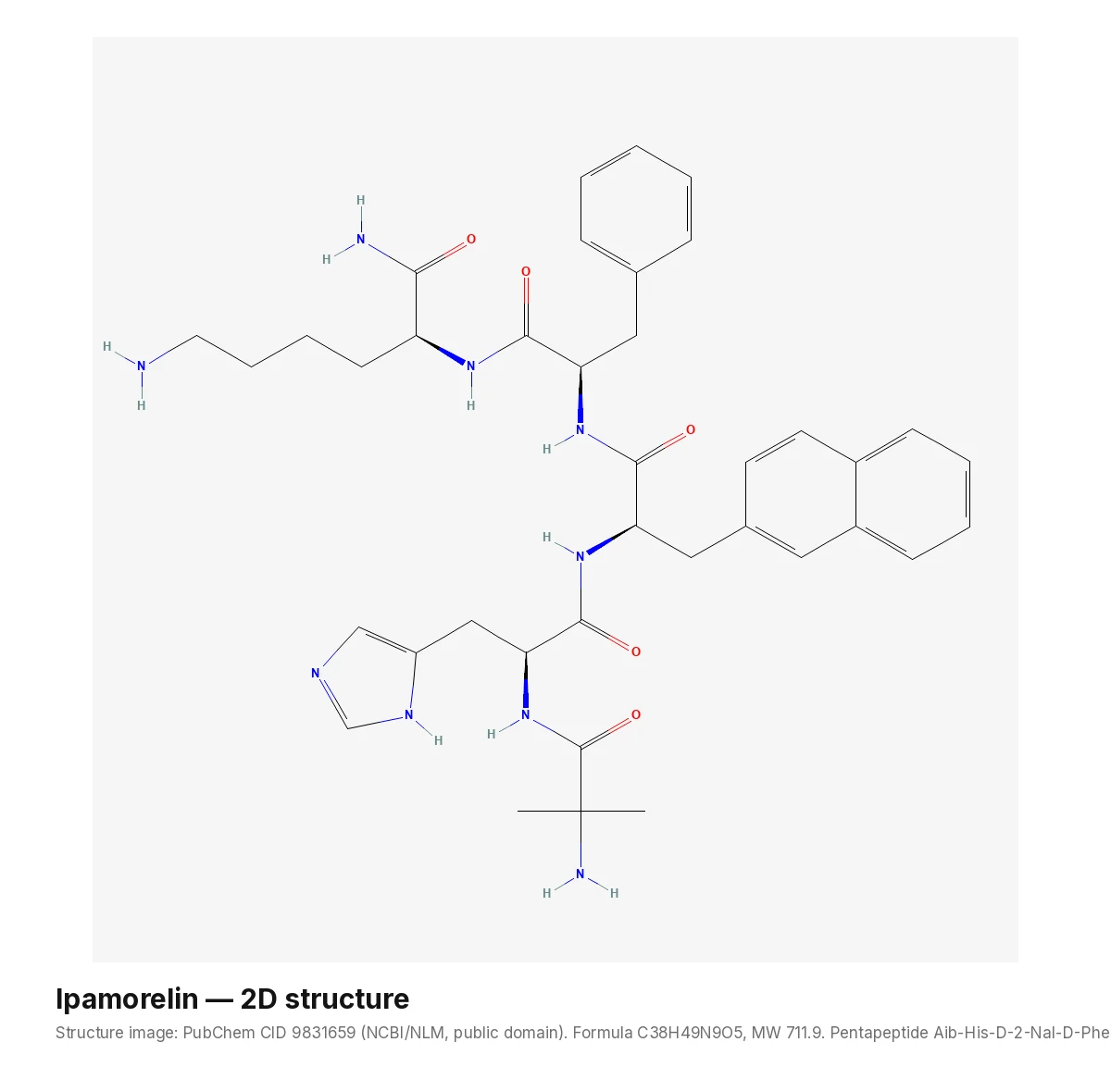
| Property | Value | Source |
|---|---|---|
| Name | Ipamorelin (INN); NNC 26-0161; ipamorelin acetate is the common salt form | PubChem synonyms |
| Sequence | Aib-His-D-2-Nal-D-Phe-Lys-NH2 | Raun et al. 1998[2] |
| Formula / MW | C38H49N9O5 / 711.9 (exact mass 711.3857) | PubChem CID 9831659 |
| MW (ChEMBL) | 711.87; highest development phase recorded: 2 | CHEMBL58547 |
| CAS | 170851-70-4 | PubChem |
| Class | Growth hormone secretagogue; GHS-R1a (ghrelin receptor) agonist | PMID 9849822; PMID 8688086 |
| Stereochemistry | Two D-residues (D-2-Nal, D-Phe) between two L-residues; N-terminal Aib is achiral | PubChem IUPAC name |
The acetate counter-ion and the water content of a lyophilized lot both add to the mass of “ipamorelin” in a vial without adding peptide, so a certificate of analysis that reports peptide content by mass is the number to read, not the label weight alone.
In primary rat pituitary cell cultures ipamorelin released GH at nanomolar concentrations with a maximum response somewhat below GHRP-6[2]. Pituitary cells taken from young female rats after three weeks of in-vivo ipamorelin showed a larger volume of secretory granules in somatotrophs, and only in those cells did a four-hour in-vitro challenge with ipamorelin, GHRP-6 or GHRH raise both the proportion of somatotrophs and their GH content[12]. Those are dish measurements of a hormone-secreting cell; they say nothing about tissue outcomes.
In anaesthetised rats and in conscious swine, ipamorelin’s GH-releasing potency and maximal effect sat close to GHRP-6, with GHRP-2 more potent but less efficacious. None of the secretagogues changed FSH, LH, prolactin or TSH in swine; GHRP-2 and GHRP-6 raised ACTH and cortisol, whereas ipamorelin did not, even at doses far above those needed for GH release[2]. Methylprednisolone did not blunt the acute GH response to ipamorelin in rats[7]. In streptozotocin-diabetic mice the GH surge after an ipamorelin challenge was more than twice that of non-diabetic mice while IGF-I failed to rise — a model of the GH hypersecretion and GH resistance seen in type 1 diabetes rather than a finding about the peptide itself[13].
In male rats, plasma concentrations fell biexponentially after injection; ipamorelin’s clearance was about five-fold lower than GHRP-6’s, it left the body mainly in urine rather than bile, and 60–80% of the material was recovered intact, indicating moderate resistance to metabolism. Nasal bioavailability in rats was about 20%, lower than the 50% seen for GHRP-2 and two NNC analogues[4]. In healthy men across five escalating dose levels, pharmacokinetics were dose-proportional, the terminal half-life was about 2 hours, and each exposure produced a single GH pulse peaking at roughly 40 minutes before declining to baseline; a population PK/PD model estimated the half-maximal stimulating concentration at 214 nmol/l[6]. Later in-vivo (rat) and in-vitro (human serum) work mapped the urinary metabolites of the GHRP family, including ipamorelin, for doping-control assays[18].
Three Scandinavian rat studies make up most of the skeletal literature. Over 15 days in adult female rats, ipamorelin increased the longitudinal growth rate of the proximal tibia dose-dependently, measured by the spacing of tetracycline labels, and increased body-weight gain, without changing total IGF-I, IGF-binding proteins or serum markers of bone turnover[5]. Twelve weeks of continuous infusion in 13-week-old female rats raised total tibial and vertebral bone mineral content, but the gain disappeared once corrected for the increase in body weight, and cortical volumetric density was unchanged — the extra mineral came from a larger cross-sectional bone area, not denser bone[9]. In 8-month-old rats given methylprednisolone for three months, adding ipamorelin increased calf-muscle tetanic tension and quadrupled the periosteal bone-formation rate relative to glucocorticoid alone[11].
Rats receiving methylprednisolone lost weight after surgery; those also given ipamorelin lost markedly less, with IGF-I rising in parallel[7]. In prednisolone-treated rats, ipamorelin reduced the liver’s capacity for urea synthesis by a fifth, lowered urea-cycle gene expression and brought nitrogen balance back to neutral — a smaller effect than GH itself produced in the same experiment[16].
The one result that runs against the “GH-releasing” label: in both GH-deficient (lit/lit) and GH-intact mice, repeated ipamorelin produced a modest body-weight increase that plateaued by two weeks and raised fat-pad weight relative to body weight, while GH itself lowered relative fat mass. GHS treatment, but not GH, also increased serum leptin and food intake in GH-intact mice. The authors concluded that GH secretagogues increase adiposity by GH-independent routes, probably including feeding[10].
Fragments of pancreas from normal and streptozotocin-diabetic rats released more insulin when incubated with ipamorelin across a wide concentration range; the effect was blocked by a calcium-channel blocker and by adrenergic antagonists, pointing to calcium-channel and adrenergic pathways[14].
Because ghrelin receptors drive gut motility, ipamorelin was tested in rats after laparotomy and intestinal handling. A single dose shortened the time to the first bowel movement; repeated doses over two days increased faecal pellet output, food intake and weight gain[15]. In the same model, ipamorelin accelerated gastric emptying of a radiolabelled meal and restored the contractile response of isolated gastric fundus strips to acetylcholine and electrical stimulation[17]. In a non-inflammatory model of colonic hypersensitivity induced by dilute acetic acid, the peripherally restricted agonist ipamorelin and the brain-penetrant agonist HM01 both reduced abdominal contractions to colorectal distension and paw withdrawal to a von Frey filament, and a ghrelin-receptor antagonist abolished the effect[23].
In ferrets given cisplatin, ipamorelin and anamorelin each reduced the weight loss of the delayed phase by about a quarter but had no effect on acute or delayed emesis; only centrally administered anamorelin reduced acute vomiting[24]. In the cichlid Oreochromis mossambicus, 21 days of ipamorelin acetate increased food intake dose-dependently, increased spermatocyte and spermatid counts, and raised serum LH and 11-ketotestosterone without changing hypothalamic GnRH fibres[25].
Two studies. The 1999 volunteer study described above characterised pharmacokinetics and the GH response[6]. The 2014 phase 2 trial (NCT00672074) randomised 117 adults undergoing small- or large-bowel resection to ipamorelin or placebo after surgery. The peptide was well tolerated at the dose tested, but median time to tolerating a solid meal (25.3 vs 32.6 hours) did not differ significantly from placebo (p = 0.15), and no secondary efficacy endpoint did either[19]. No later phase of development is recorded in PubMed or ChEMBL.
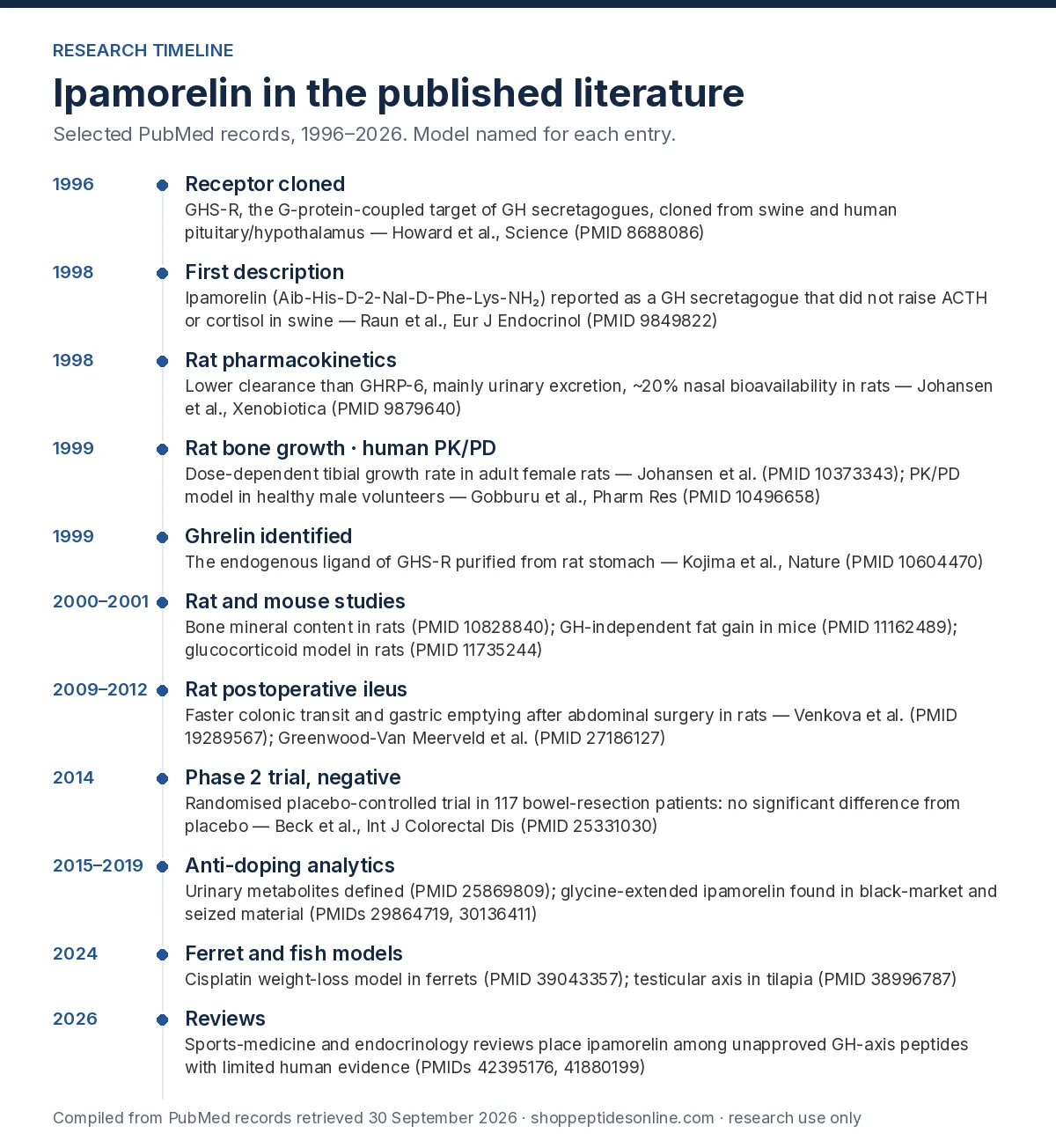
| Year | Model | What was investigated | Reference |
|---|---|---|---|
| 1996 | Swine and human pituitary/hypothalamus; cloning | GHS-R identified as the G-protein-coupled target of GH secretagogues | PMID 8688086 |
| 1998 | Rat pituitary cells; anaesthetised rats; conscious swine | GH release, receptor pathway, hormone selectivity (ACTH, cortisol, FSH, LH, PRL, TSH) | PMID 9849822 |
| 1998 | Rat pituitary cells; anaesthetised rats; swine; dogs | Smaller peptidomimetic derivatives of ipamorelin designed for oral bioavailability | PMID 9733495 |
| 1998 | Male rats, several routes | Plasma clearance, route of excretion, metabolic stability, nasal bioavailability | PMID 9879640 |
| 1999 | Adult female rats, 15 days | Longitudinal bone growth rate by tetracycline labelling; body weight; IGF-I | PMID 10373343 |
| 1999 | Healthy male volunteers, 5 dose levels | Pharmacokinetics and the time course of the GH response | PMID 10496658 |
| 1999 | Rats given methylprednisolone | Whether a glucocorticoid blunts the GH response; body-weight recovery; IGF-I | PMID 10629165 |
| 1999 | Rat stomach; purification | Ghrelin identified as the endogenous ligand of GHS-R | PMID 10604470 |
| 2000 | Adult female rats, 12 weeks (minipump) | Bone mineral content and density (DXA, pQCT, ash weight) | PMID 10828840 |
| 2001 | GH-deficient and GH-intact mice | Body fat, leptin and food intake with GHS vs GH | PMID 11162489 |
| 2001 | Rats given glucocorticoid, 3 months | Calf-muscle tetanic tension; periosteal bone formation rate | PMID 11735244 |
| 2002 | Young female rats; pituitary cell culture | Somatotroph cell population and intracellular GH content | PMID 12168778 |
| 2003 | Streptozotocin-diabetic mice | GH response, IGF-I, hepatic GH-receptor and IGF-I expression | PMID 14630569 |
| 2004 | Rat pancreatic tissue in vitro (normal and diabetic) | Insulin release and the pathways blocking it | PMID 15665799 |
| 2009 | Rats after laparotomy (postoperative ileus) | Time to first bowel movement, faecal output, food intake | PMID 19289567 |
| 2009 | Prednisolone-treated rats | Urea synthesis, urea-cycle gene expression, nitrogen balance | PMID 19231263 |
| 2012 | Rats after laparotomy; isolated gastric fundus | Gastric emptying; smooth-muscle contractility | PMID 27186127 |
| 2012 | Rats (in vivo); human serum (in vitro) | Urinary metabolites of GHRPs incl. ipamorelin for doping control | PMID 23101768 |
| 2014 | Human phase 2 RCT, 117 bowel-resection patients | Time to tolerating a solid meal vs placebo — no significant difference | PMID 25331030 |
| 2015 | Human urine (anti-doping) | Metabolite pattern and detection window after nasal administration | PMID 25869809 |
| 2018 | Black-market product analysis | Gly-ipamorelin identified alongside Gly-GHRP-2 and Gly-GHRP-6 | PMID 29864719 |
| 2019 | Seized doping material (Danish customs) | Glycine-extended ipamorelin and other GHS analogues by LC-HRMS | PMID 30136411 |
| 2020 | Rats, acetic-acid visceral hypersensitivity | Colonic sensitivity and paw withdrawal; antagonist reversal | PMID 32801950 |
| 2024 | Ferrets, cisplatin model; isolated ileum | Weight loss, food and water intake; emesis; ileal contractions | PMID 39043357 |
| 2024 | Tilapia (Oreochromis mossambicus), 21 days | Food intake, spermatogenesis, LH, 11-ketotestosterone, androgen receptor | PMID 38996787 |
| 2026 | Narrative reviews | Evidence tiers for unapproved GH-axis peptides; reported adverse effects; doping context | PMID 42395176 |
| 2026 | Critical review | Peptide use in sport and bodybuilding; unregulated supply; limited clinical evidence | PMID 41880199 |
No batch-specific certificate of analysis for the 10mg vial is posted in the COA library at the time of this review. We have not borrowed another product’s report to stand in for it. When an independent report for an ipamorelin lot is issued, the product page will embed it and this page will quote the measured peptide content and purity. In the meantime the analytical literature is a useful guide to what a good report should show: an HPLC purity figure and a mass-spectrometry identity confirmation whose mass matches C38H49N9O5 (711.9), since the glycine-extended analogues found in seized material differ from the genuine peptide by exactly one glycine residue[22].
Ipamorelin is one of the compounds on the page where you can buy peptides online in Canada; every listing there is sold under the same research-use-only terms.
All references were retrieved from PubMed (NCBI) on 30 September 2026 and cross-checked against Europe PMC; identity data from PubChem and ChEMBL (EMBL-EBI) on the same date.
Shop Peptides Online ships within Canada. Current shipping options, costs and any free-shipping threshold are shown in the cart and at checkout, so the total you see before paying is the one that applies. Stock status is shown live on each product card above.
Policies: Shipping Policy · Returns & Refunds · Order Tracking · FAQs.
Shop Peptides Online lists a 10mg Ipamorelin vial on this page with live price and stock. Orders ship from inside Canada by Canada Post, so there is no customs step; delivery times and the free-shipping threshold are in the shipping policy and shown at checkout. The material is research-grade lyophilized peptide for laboratory use only.
A synthetic pentapeptide, Aib-His-D-2-Nal-D-Phe-Lys-NH2, with formula C38H49N9O5 and molecular weight 711.9 (PubChem CID 9831659; ChEMBL58547 lists 711.87). It was developed by Novo Nordisk under the code NNC 26-0161 and first described in 1998 as a growth hormone secretagogue acting at the ghrelin receptor, GHS-R1a (PMID 9849822).
No. Ipamorelin is a five-residue growth hormone secretagogue studied at the ghrelin receptor (GHS-R1a); Tesamorelin is a 44-residue GHRH analogue studied at the GHRH receptor and approved in the US for one specific indication. Ipamorelin has no approved form anywhere. The two are compared in GH-axis research because they act on different receptors of the same axis.
Not at the time of this review. No batch-specific certificate for the 10mg vial is posted in the COA library, and we do not present another product’s report in its place. When an independent report for an ipamorelin lot is issued it will be embedded on the product page and quoted here.
No. Ipamorelin is an investigational compound whose only randomised trial, in postoperative ileus, found no significant difference from placebo (PMID 25331030); it is not approved by Health Canada, the FDA or the EMA, and GH-releasing peptides are on the WADA Prohibited List (PMID 25869809). The material sold here is for laboratory research only, and Shop Peptides Online provides no dosing or administration guidance.
For laboratory research use only. Not for human or animal consumption. This page identifies the material, its documentation and the published literature on the compound, and makes no claim of efficacy or safety.
Related: Ipamorelin 10 mg (product page) · Growth Hormone Research Peptides category · All research peptides in Canada