
Your cart is currently empty!.
You may check out all the available products and buy some in the shop.
Continue ShoppingCompare the KLOW 80mg research blend at Shop Peptides Online with live price, stock and batch documentation — then read what its batch report says is in the vial (GHK-Cu, BPC-157, the TB-500 fragment and KPV), what each component is, and what the published preclinical work has examined, with references.
For laboratory research use only. Not for human consumption. Shop Peptides Online does not provide dosing, administration or medical guidance, and nothing on this page is a claim about what any compound does in people or animals.
The KLOW blend supplied as lyophilized material in an 80mg vial, for labs that prepare their own concentrations.

Shop Peptides Online currently lists KLOW as an 80mg vial. For pre-formatted research pens, see Peptide Pens, which covers the GHK-Cu, MOTS-C, Tesamorelin and GLP-3 pens.
KLOW is a four-peptide blend, and the only authoritative list of what a vial holds is its independent batch report. Janoshik test report #172068 (sample received 3 June, analysis 18 June 2026) for the current KLOW 80mg batch reports GHK-Cu 40.45 mg (35.88 mg of the tripeptide GHK plus 4.57 mg copper), BPC-157 10.73 mg, TB-500 10.49 mg — with the TB-500 line labelled “889 Da”, which is the acetylated seven-residue thymosin β4 fragment Ac-LKKTETQ rather than the whole 4963 Da protein[16] — and KPV 11.08 mg. Added together those come to 72.75 mg against an 80 mg declaration (our sum; the report itself gives only the four component values). The report contains no purity percentage, so this site quotes none for KLOW. Each component has its own literature, nearly all of it in mice, rats and cell culture, and no published study has tested the four together. The vial is sold for laboratory research only.
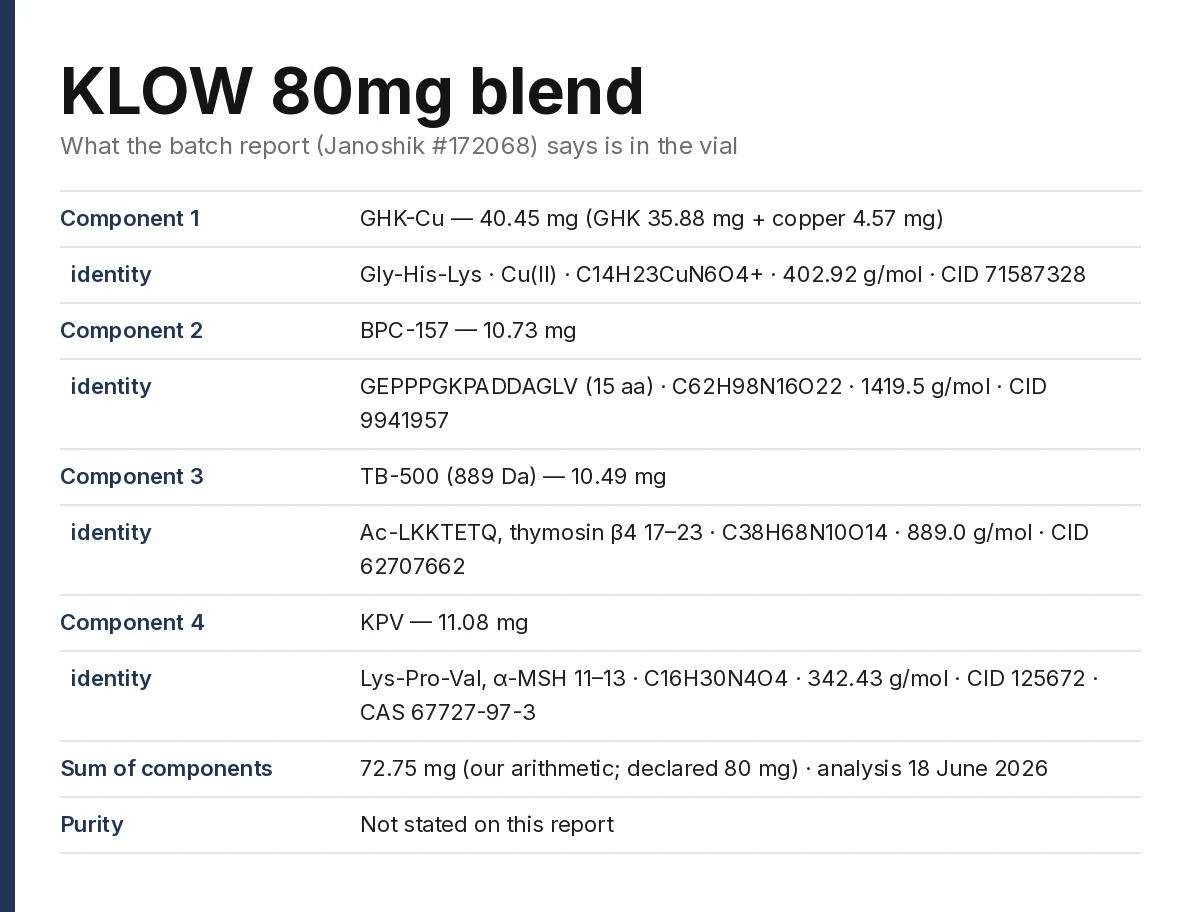
| KPV | GHK-Cu | BPC-157 | TB-500 (fragment) | |
|---|---|---|---|---|
| Sequence | Lys-Pro-Val (α-MSH 11–13) | Gly-His-Lys · Cu(II) | GEPPPGKPADDAGLV | Ac-Leu-Lys-Lys-Thr-Glu-Thr-Gln (Tβ4 17–23) |
| Formula | C16H30N4O4 | C14H23CuN6O4+ | C62H98N16O22 | C38H68N10O14 |
| Molecular weight | 342.43 g/mol | 402.92 g/mol (GHK 340.38) | 1419.5 g/mol | 889.0 g/mol |
| CAS | 67727-97-3 | 89030-95-5 | 137525-51-0 | 885340-08-9 |
| PubChem CID | 125672 | 71587328 | 9941957 | 62707662 |
| Other identifiers | UNII 7V6LGD8S5R; also called ACTH(11–13) | INN prezatide copper; UNII 6BJQ43T1I9 | ChEMBL4297358; UNII 8ED8NXK95P | UNII QHK6Z47GTG |
| In this batch | 11.08 mg | 40.45 mg (35.88 GHK + 4.57 Cu) | 10.73 mg | 10.49 mg |
Identity values read from PubChem and ChEMBL on 30 September 2026; batch quantities from Janoshik #172068.
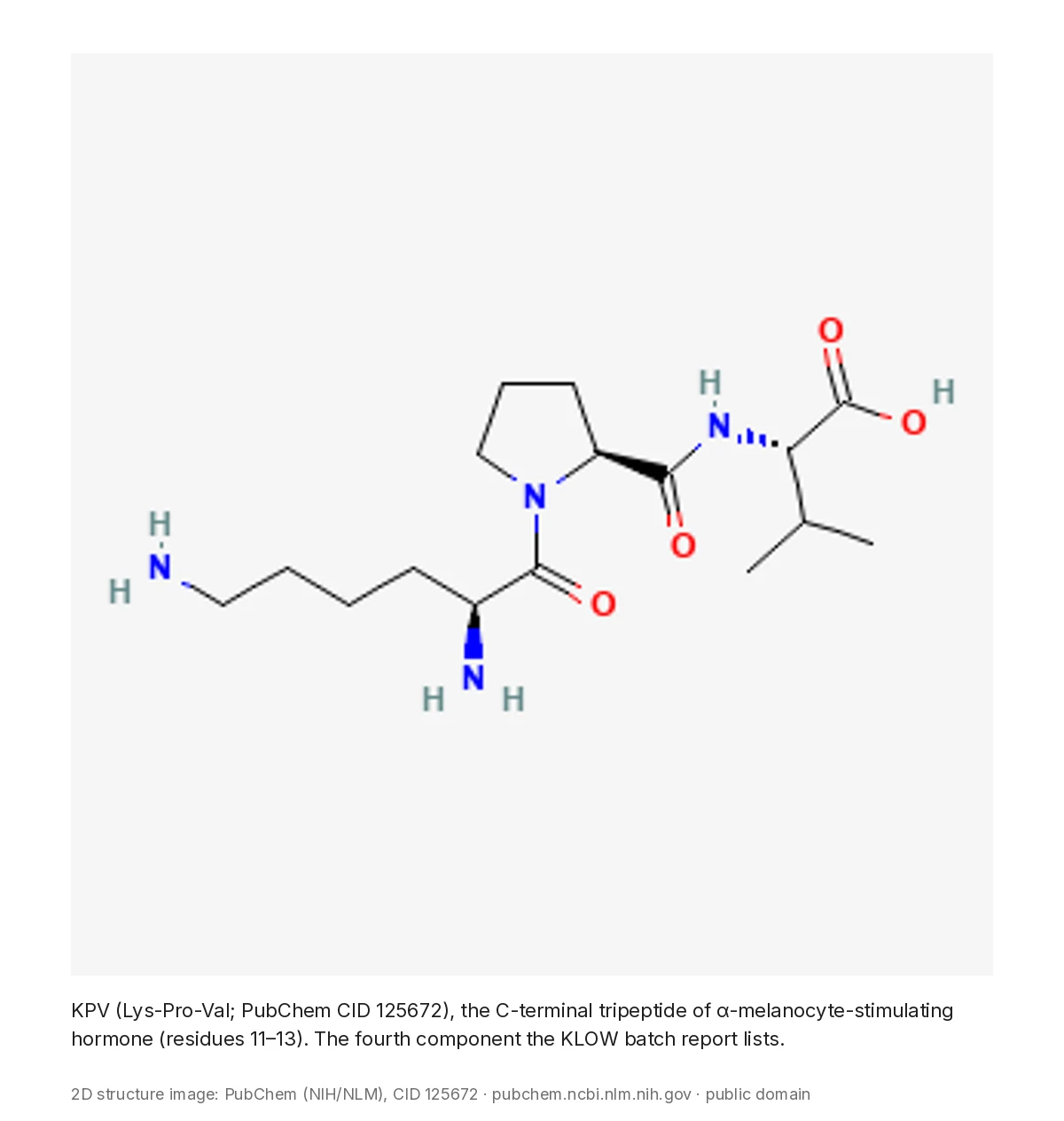
α-Melanocyte-stimulating hormone (α-MSH) is a 13-residue peptide cut from pro-opiomelanocortin. Its anti-inflammatory effects — on NF-κB activation, adhesion molecules, cytokine production, IL-10 synthesis and T-cell activity — have been shown in animal models of fever, contact dermatitis, vasculitis, gut, brain, airway and eye inflammation, and arthritis; because α-MSH also darkens pigment, its C-terminal tripeptide KPV, which keeps the anti-inflammatory activity but not the pigmentary one, was singled out as an alternative[1]. A 2000 study found that α-MSH and KPV inhibited Staphylococcus aureus colony formation and reduced viability and germ-tube formation of Candida albicans in vitro, over a range that included picomolar concentrations, and that the effect tracked a rise in cellular cAMP[2].
In human intestinal epithelial lines (Caco2-BBE, HT29-Cl.19A) and Jurkat T cells stimulated with pro-inflammatory cytokines, nanomolar KPV inhibited NF-κB and MAP-kinase signalling and reduced cytokine secretion; competition and radiolabel experiments showed the peptide is carried into cells by the di/tripeptide transporter PepT1[3].
Dalmasso and colleagues added KPV to drinking water and reported a lower incidence of dextran-sulfate (DSS) and TNBS colitis with reduced pro-inflammatory cytokine expression[3]. Kannengiesser and colleagues, in the same year, treated DSS colitis and CD45RBhi transfer colitis: KPV-treated mice recovered earlier, regained more weight, had fewer inflammatory infiltrates and lower myeloperoxidase activity, and the effect persisted in mice lacking a functional melanocortin-1 receptor, so at least part of it is receptor-independent[4]. In a 2016 azoxymethane/DSS model of colitis-associated cancer, KPV reduced tumour formation in wild-type mice but not in PepT1-knockout mice, again pointing to PepT1 as the route in[5]. Later delivery work loaded KPV into hyaluronic-acid nanoparticles or a KPV-binding hydrogel to concentrate it in the inflamed colon of mice[6, 7].
We found no clinical trial of KPV itself in PubMed. The 2008 review discusses it as a candidate for future development, which is where the published record stands[1].
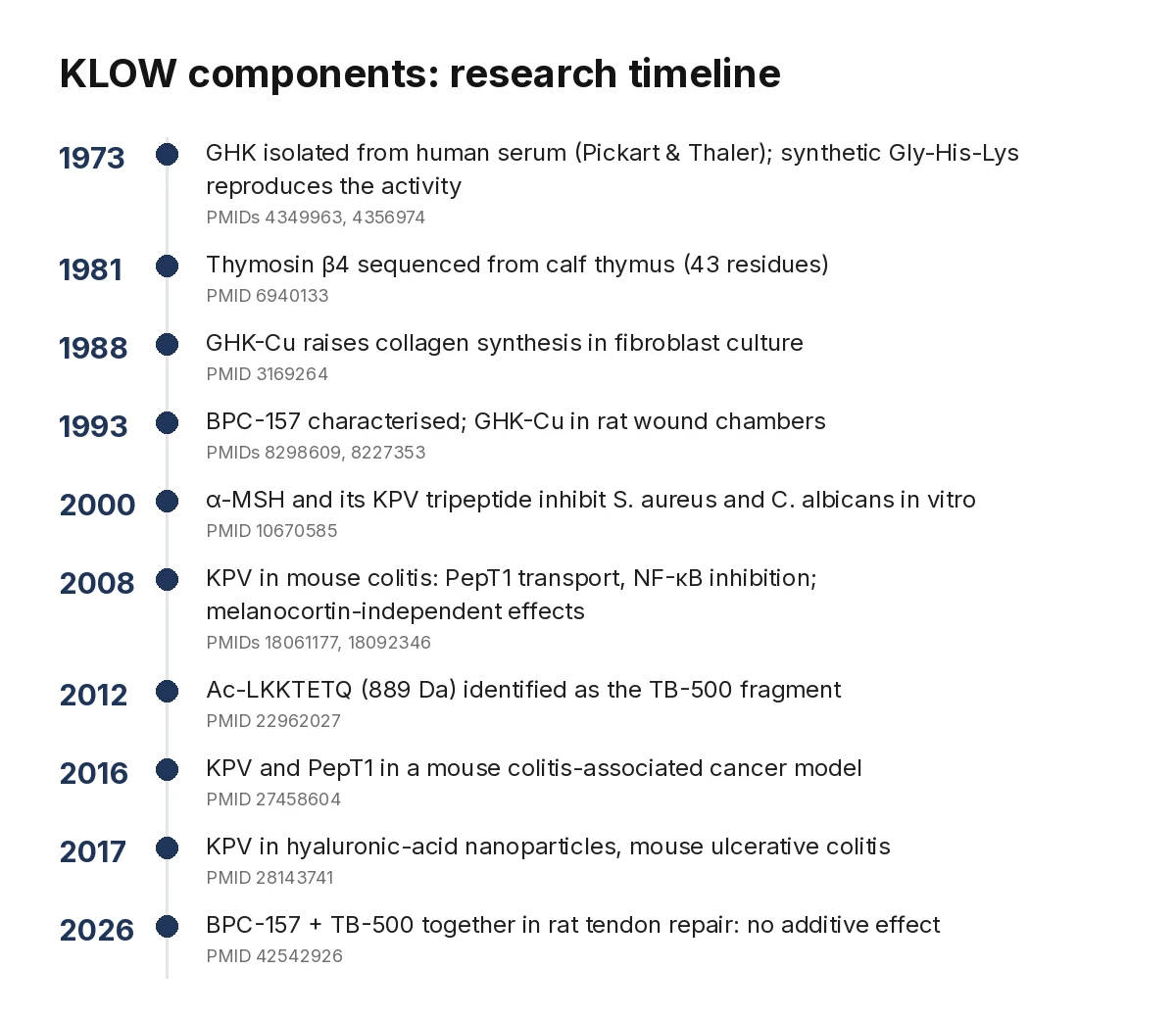
GHK-Cu: in fibroblast culture it raised collagen synthesis from picomolar concentrations without changing cell number[8]; in rat wound chambers it increased dry weight, DNA, collagen and glycosaminoglycans in a concentration-dependent way[9]; in rat ACL reconstruction its effect on knee laxity at 6 weeks had vanished by 12 weeks[10]. BPC-157: a 15-residue gastric-juice peptide fragment characterised in 1993[11], with rat data on Achilles tendon transection[12] and on angiogenesis through VEGFR2[13], and a 2025 systematic review reporting no clinical safety data[14]. TB-500 (Ac-LKKTETQ): the seven-residue actin-binding motif of thymosin β4 reproduced the whole peptide’s endothelial migration and sprouting activity in vitro[15]; the fragment was identified as the ingredient of TB-500 products in 2012 and is treated as a suspected doping agent, with a detection method in horses[16, 17]. The single rat study combining BPC-157 with TB-500 found no additive benefit[18].
| KLOW 80mg (#172068) | GLOW 70mg (#172067) | |
|---|---|---|
| GHK-Cu | 40.45 mg | 51.15 mg |
| BPC-157 | 10.73 mg | 10.03 mg |
| TB-500 | 10.49 mg, labelled 889 Da (fragment) | 10.21 mg, labelled TB4 (thymosin β4) |
| KPV | 11.08 mg | — |
| Purity stated | No | No |
| Analysis date | 18 June 2026 | 18 June 2026 |
| Year | Component | Model | What was investigated | Reference |
|---|---|---|---|---|
| 1988 | GHK-Cu | Fibroblast culture | Collagen synthesis | PMID 3169264 |
| 1993 | GHK-Cu | Rat wound chamber | Matrix accumulation; collagen I/III mRNA | PMID 8227353 |
| 1993 | BPC-157 | Overview (rodent) | Characterisation of the fragment | PMID 8298609 |
| 2000 | KPV / α-MSH | S. aureus, C. albicans, human neutrophils | Antimicrobial activity; cAMP | PMID 10670585 |
| 2003 | BPC-157 | Rat Achilles transection | Failure load, function | PMID 14554208 |
| 2003 | Tβ4 motif | HUVEC; chick aortic arch | LKKTETQ carries the angiogenic activity | PMID 14500546 |
| 2008 | KPV | Review | α-MSH and tripeptides: biochemistry, anti-inflammatory models | PMID 18612139 |
| 2008 | KPV | Intestinal epithelial and T-cell lines; DSS and TNBS colitis (mouse) | PepT1 uptake; NF-κB, MAPK; colitis incidence | PMID 18061177 |
| 2008 | KPV | DSS and transfer colitis; MC1R-deficient mice | Weight, histology, MPO; receptor independence | PMID 18092346 |
| 2012 | TB-500 | Analytical; horse urine and plasma | Identification of Ac-LKKTETQ; doping-control detection | PMID 22962027, PMID 23084823 |
| 2015 | GHK-Cu | Rat ACL reconstruction (n=72) | Laxity and stiffness at 6 vs 12 weeks | PMID 25731775 |
| 2016 | KPV | AOM/DSS colitis-associated cancer (mouse); PepT1 TG and KO | Tumour number and size; PepT1 dependence | PMID 27458604 |
| 2017 | KPV | Mouse ulcerative colitis | Hyaluronic-acid nanoparticle delivery | PMID 28143741 |
| 2017 | BPC-157 | Chick CAM; HUVEC; rat hind limb | Angiogenesis; VEGFR2; Akt–eNOS | PMID 27847966 |
| 2022 | KPV | Inflamed mouse colon | KPV-binding double-network hydrogel; mucosal barrier | PMID 35245681 |
| 2025 | BPC-157 | Systematic review | 35 preclinical + 1 clinical report; no safety data | PMID 40756949 |
| 2026 | BPC-157 + TB-500 | Rat Achilles repair (n=32) | Combination vs each alone: no additive effect | PMID 42542926 |

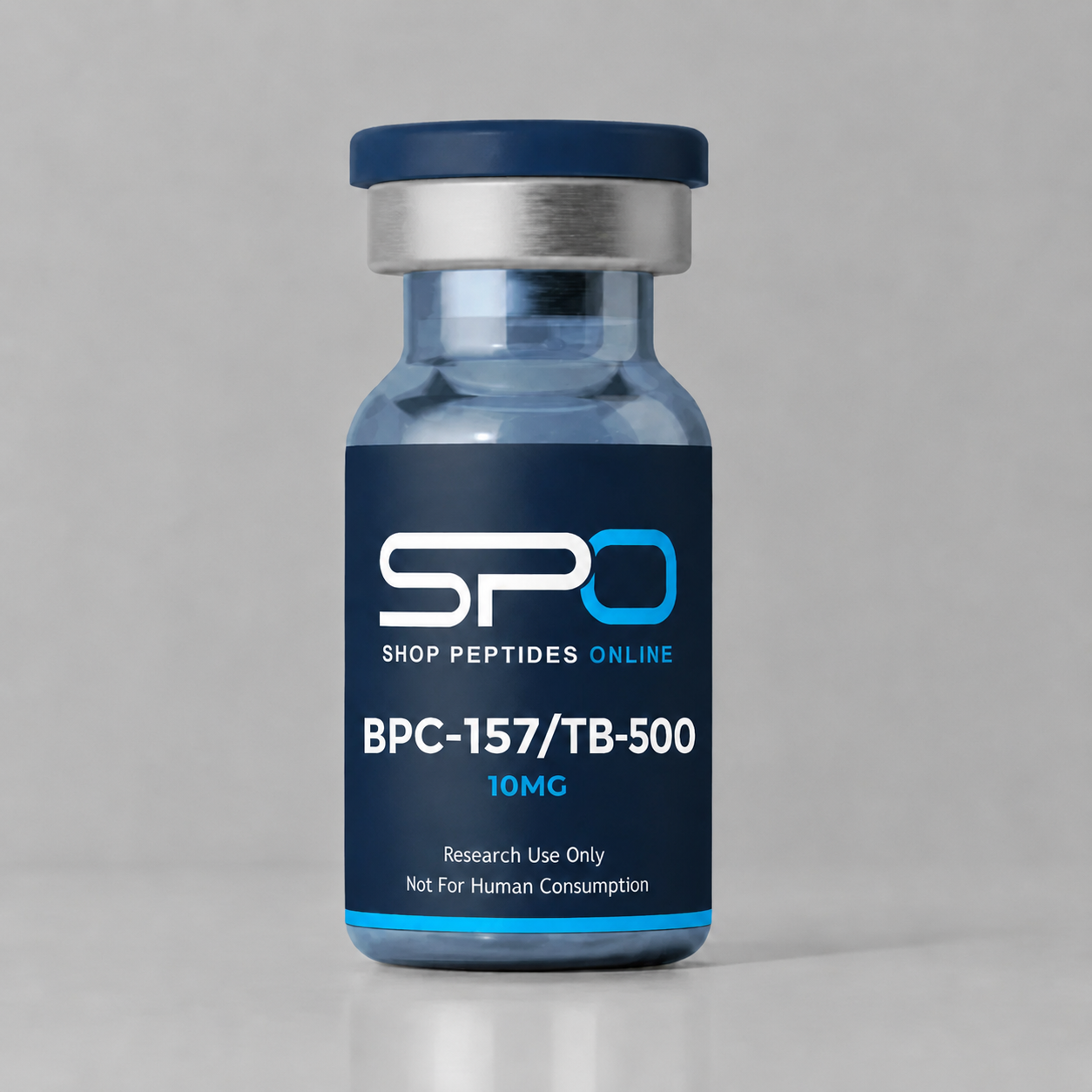
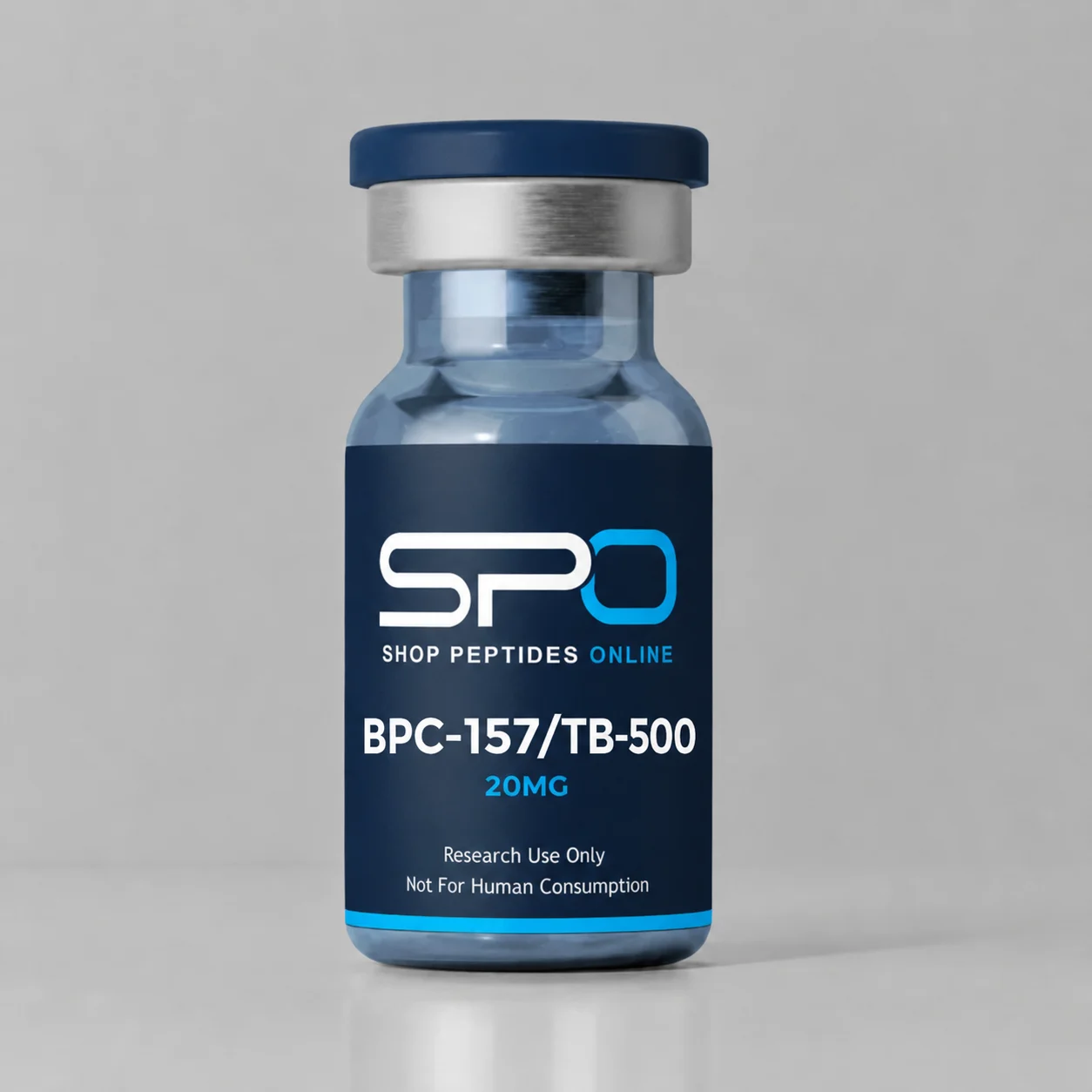
Bacteriostatic water, pen needles and alcohol pads, listed separately.
Where a certificate of analysis (COA) is published for a KLOW batch, it appears on the product page and in the COA library. A useful COA check has four parts:
See Lab Standards for how testing documentation is published.
Follow the storage instructions on the label and product page for each item. As general laboratory practice:
Shop Peptides Online ships within Canada. Current shipping options, costs and any free-shipping threshold are shown in the cart and at checkout, so the total you see before paying is the one that applies. Stock status is shown live on each product card above, and the rest of the range is on the buy peptides online in Canada page.
Policies: Shipping Policy · Returns & Refunds · Order Tracking · FAQs.
Four peptides, per Janoshik report #172068 (analysis 18 June 2026): GHK-Cu 40.45 mg (35.88 mg GHK + 4.57 mg copper), BPC-157 10.73 mg, TB-500 10.49 mg and KPV 11.08 mg. The TB-500 line is labelled 889 Da, meaning the acetylated thymosin β4 fragment Ac-LKKTETQ.
KLOW adds KPV (Lys-Pro-Val, the C-terminal tripeptide of α-MSH), and its TB-500 component is the 889 Da fragment, whereas GLOW’s report identifies its TB-500 as full-length thymosin β4 (TB4). GLOW carries more GHK-Cu (51.15 vs 40.45 mg). Both reports omit a purity figure.
Mostly intestinal inflammation in mice: oral KPV reduced DSS- and TNBS-induced colitis, entered cells through the PepT1 transporter and inhibited NF-κB signalling (PMIDs 18061177, 18092346). In vitro, α-MSH and KPV inhibited S. aureus and C. albicans (PMID 10670585). No clinical trial of KPV was found.
No. None of the four components has an approved drug product in Canada, the US or the EU, the TB-500 fragment is treated as a suspected doping agent in the analytical literature (PMID 22962027), and no study exists of the blend. KLOW is supplied for laboratory research only, with no dosing or administration guidance.