

Your cart is currently empty!.
You may check out all the available products and buy some in the shop.
Continue ShoppingUnderstand the difference between HPLC purity, mass-spectrometry identity and peptide content when reviewing a research peptide COA.
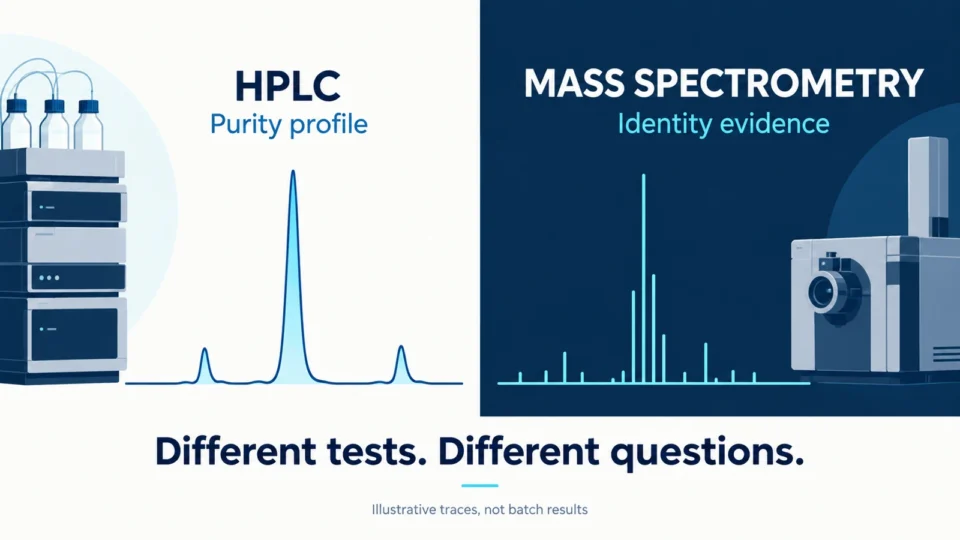
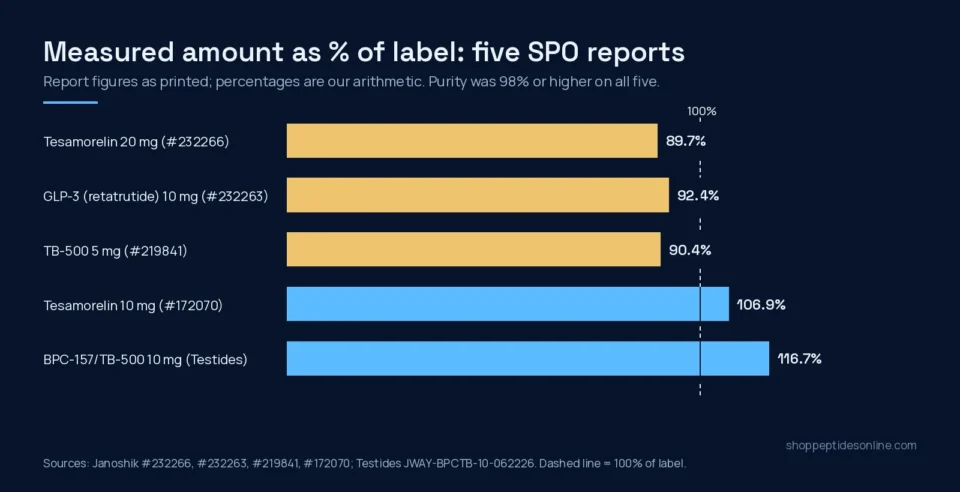
Purity and quantity are different numbers on a COA. Why a 98%-pure vial can measure below label, with five SPO reports as printed and…
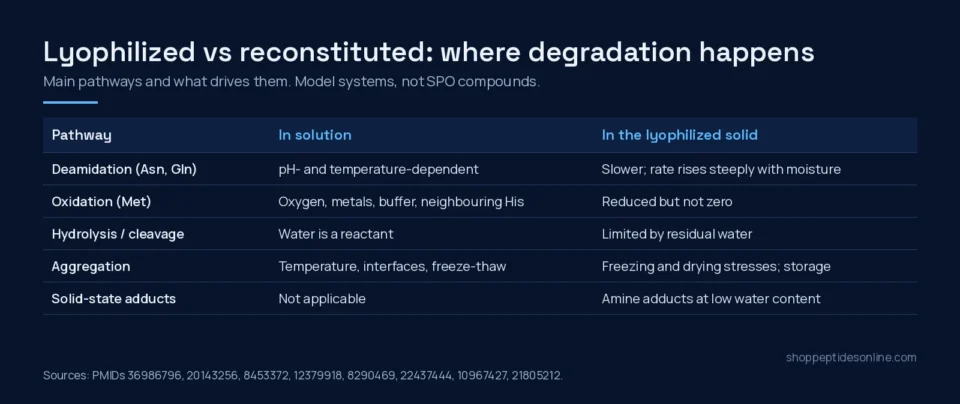
Why a freeze-dried peptide keeps longer than one in solution: the degradation pathways, what residual moisture does, and freeze-thaw, from the pharmaceutics literature.
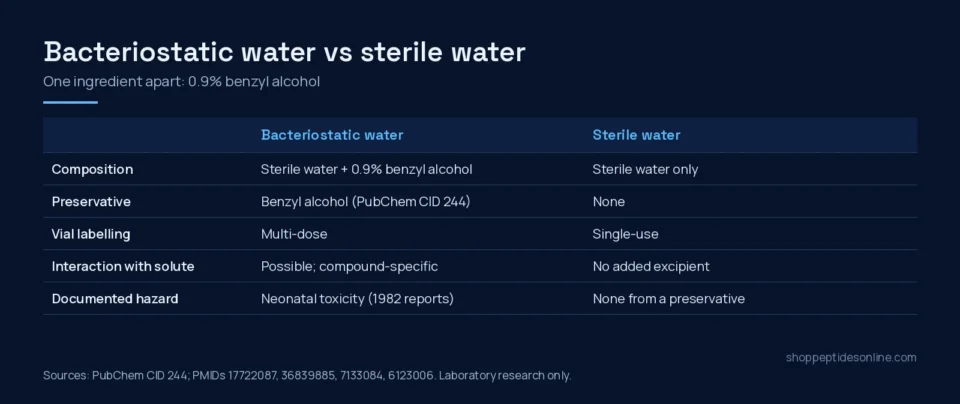
Bacteriostatic water is sterile water plus 0.9% benzyl alcohol. What that preservative changes, how each is labelled, and what the benzyl alcohol studies show.
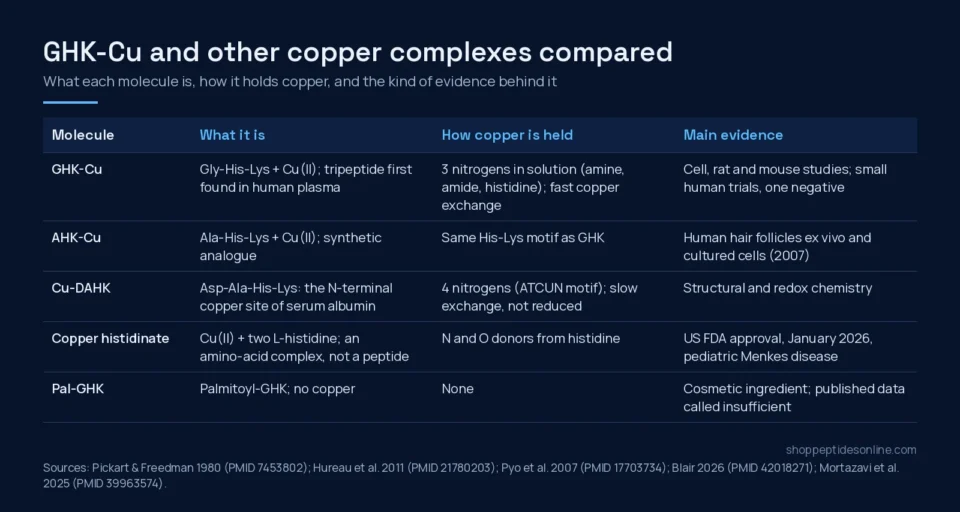
GHK-Cu is the best-studied copper peptide, not the only one. How it compares with AHK-Cu, albumin's DAHK site and copper histidinate, and what the…
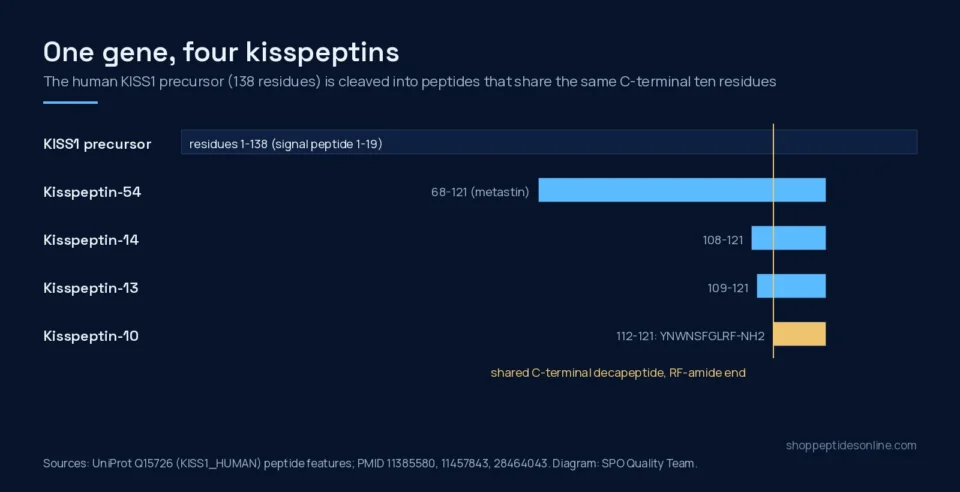
Kisspeptin-10 is the last ten residues of kisspeptin-54. How the forms are made, why length changes half-life and in vivo behaviour, and where human…
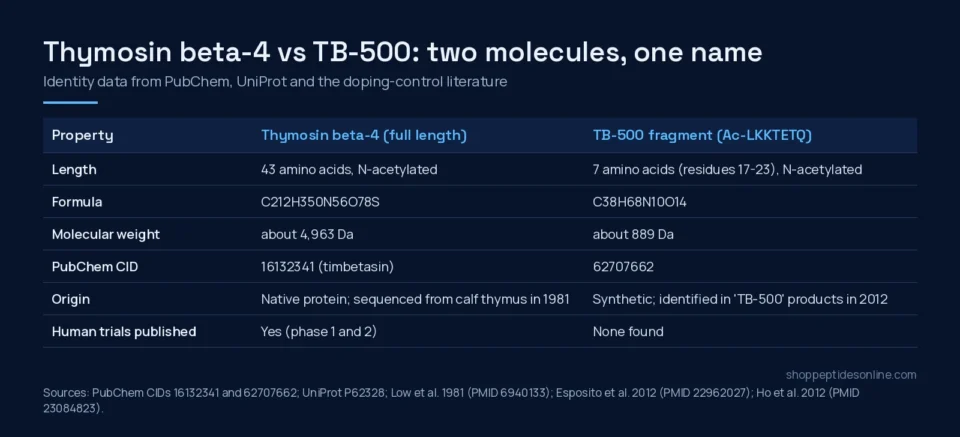
Thymosin beta-4 is a 43-residue protein; TB-500, as doping labs found it, is its 7-residue fragment Ac-LKKTETQ. How they differ, what each was studied…
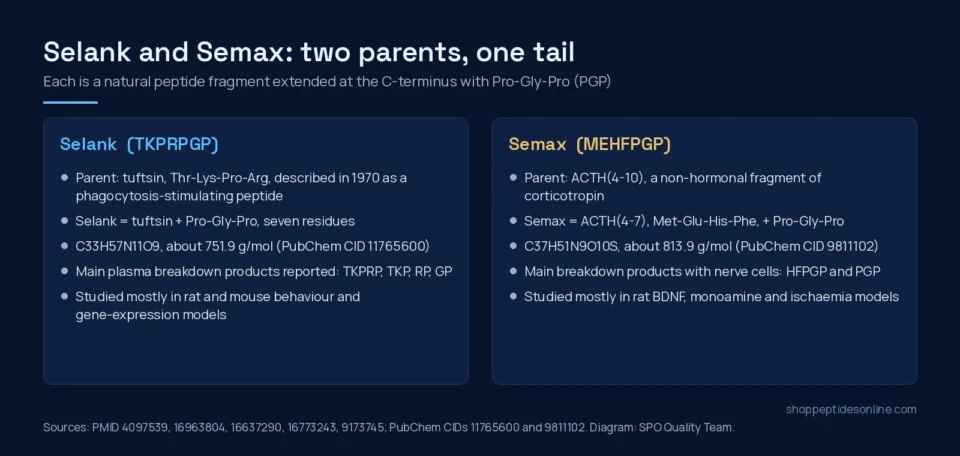
Selank and Semax share a Pro-Gly-Pro tail but come from different parent peptides. A sourced comparison of sequences, breakdown products, study models and evidence…
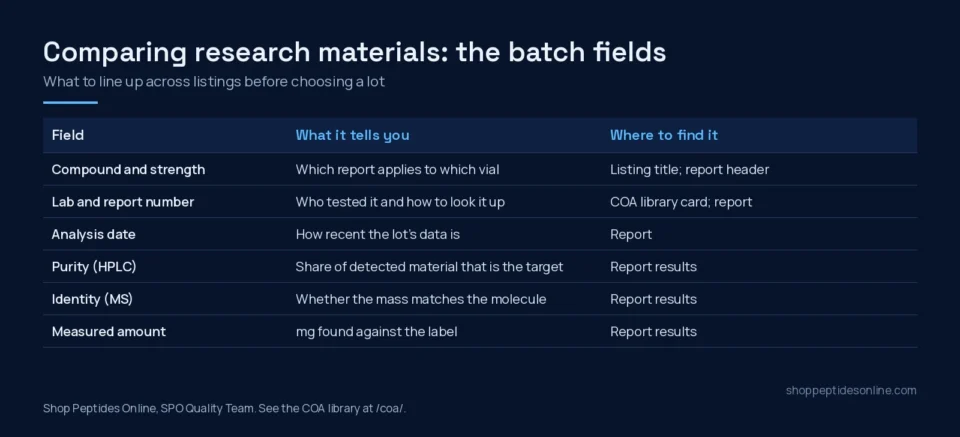
Choosing a research peptide supplier takes more than comparing a purity number or a product photo. A useful listing lets a laboratory match the…
Peptide research is often discussed alongside muscle tissue, recovery pathways and laboratory models. This guide is for comparing research materials and their documentation. It…