For laboratory research only. Not for human or animal use. This article gives no dosing, administration or therapeutic advice.
Sixty terms that come up when you read a certificate of analysis, a synthesis paper or a receptor study, each in two or three sentences. Where a definition carries a factual claim, it cites the PubMed record or PubChem entry behind it, and it states the model when a claim comes from cells or animals. Terms link to the product pages and longer posts where they matter most.
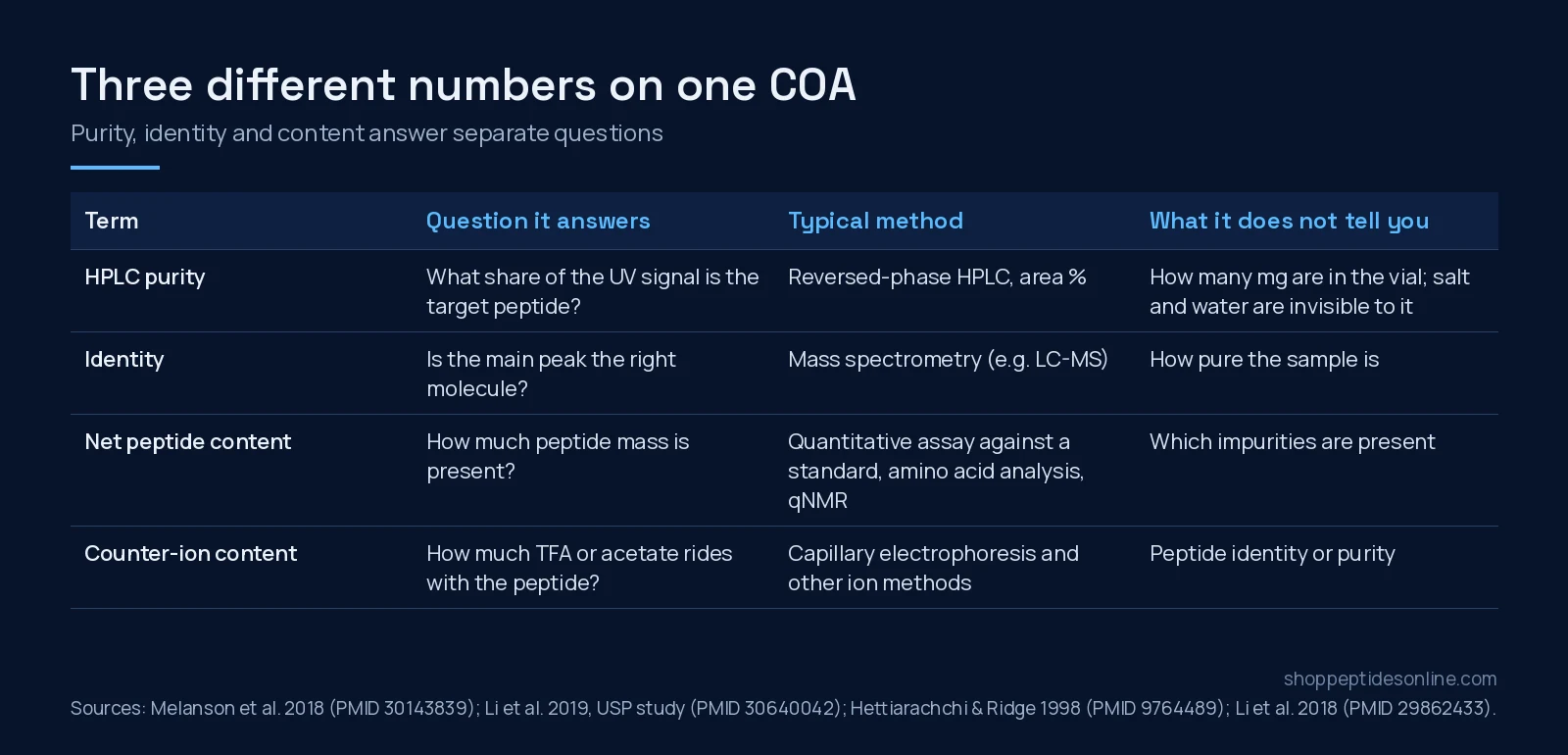
The short version for anyone reading a COA: purity, identity and net peptide content are three separate measurements, and a strong number on one says nothing about the others. The table below sets them side by side.
| Result on a COA | What it measures | Glossary entry |
|---|---|---|
| Purity (%) | Share of the chromatogram that is the target peak[1] | Purity (HPLC) |
| Identity | Whether the measured mass matches the expected molecule[2] | Identity test |
| Content (mg) | Peptide mass actually present, net of water and counter-ions[3] | Net peptide content |
A
- Acetate salt
- A peptide supplied with acetate as its counter-ion instead of trifluoroacetate. Some labs exchange TFA for acetate or chloride because residual TFA can interfere with biological assays.[4][5]
- Aggregation
- Peptide or protein molecules clumping into dimers, oligomers or visible particles. Surfaces, agitation, freezing and some preservatives can promote it.[6][7]
- Agonist
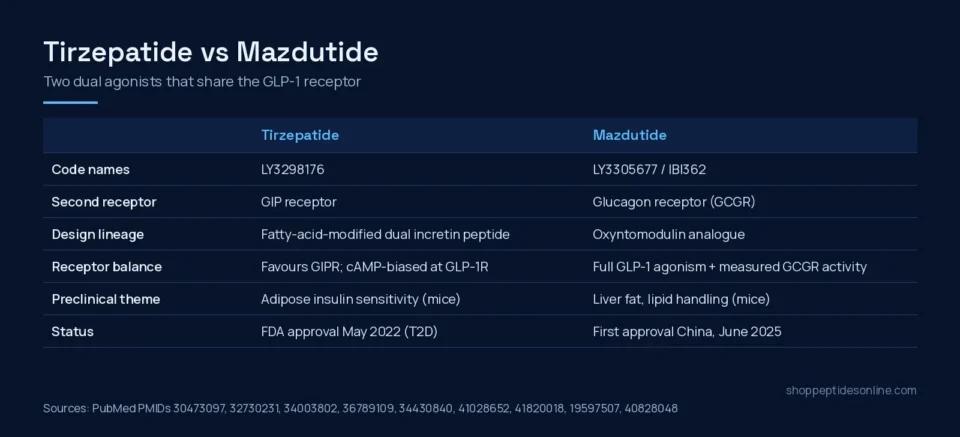
- A molecule that binds a receptor and activates it. Tirzepatide, for example, is characterised in cell assays as an agonist at two receptors, GIP and GLP-1.[8][9]
- Amidation (C-terminal)
- A C-terminal amide (-NH2) in place of the free acid. Kisspeptins share an RF-amide end, and human kisspeptin-10 is written YNWNSFGLRF-NH2.[10] See Kisspeptin-10 vs Kisspeptin-54.
- Amino acid analysis (AAA)
- The peptide is hydrolysed to free amino acids, which are then quantified. It is one of the reference routes for assigning how much peptide a sample holds.[1][3]
- Analogue
- A peptide built on a natural sequence with deliberate changes. Semaglutide is a GLP-1 analogue with two substitutions and a fatty-acid side chain.[11] Tesamorelin is a GHRH analogue (see Tesamorelin).
- Aspartimide
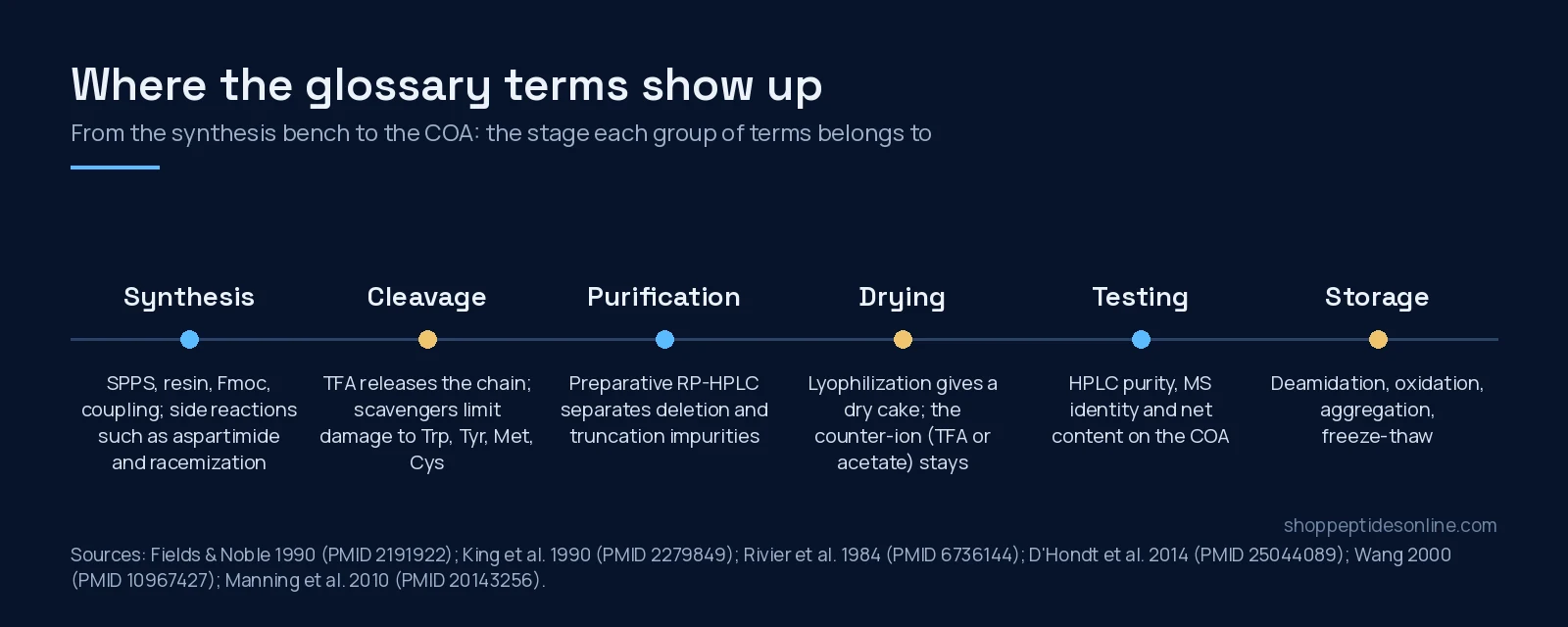
- A ring-shaped side product formed at aspartic acid residues, mostly during the base steps of Fmoc synthesis. It can lead to hard-to-separate impurities.[12][13]
B
- Bacteriostatic water
- Sterile water containing benzyl alcohol as a preservative so that a multi-use container resists microbial growth. See the bacteriostatic water listing and Bacteriostatic Water vs Sterile Water.[14]
- Batch (lot) number
- The code tying a vial to one production run. A COA is only meaningful if its batch matches the batch on the label; the COA library lists reports by product.
- Benzyl alcohol
- A common antimicrobial preservative in multi-dose formulations. In lab studies it can raise particle formation, and it made freeze-thaw aggregation of a model antibody worse.[14][15]
- Biased agonism
- When a ligand favours one signalling pathway over another at the same receptor. Tirzepatide at the GLP-1 receptor favours cAMP signalling over beta-arrestin recruitment in cell assays.[9]
- Blend
- A vial holding two or more peptides. Each component needs its own identity and content result; see Peptide Blend COAs, and the GLOW and KLOW pages.
C
- Certificate of Analysis (COA)
- The test report for a batch: typically purity, identity, measured content, the testing lab and dates. How to read one: HPLC purity vs mass spectrometry identity.
- Cleavage
- The step that releases a finished chain from the synthesis resin and removes side-chain protecting groups, usually with TFA plus scavengers that protect Trp, Tyr, Met and Cys.[16][17]
- Counter-ion
- The negatively charged ion (TFA, acetate, chloride) paired with basic residues in a peptide salt. It adds mass that is not peptide.[5][18]
- Coupling
- Forming each new peptide bond in SPPS by activating the incoming amino acid. Every cycle alternates Fmoc removal and coupling, and a cycle that falls short leaves an impurity.[17][19]
D
- Deamidation
- Loss of the side-chain amide of asparagine or glutamine, often through a succinimide intermediate. Rate depends on pH, temperature, sequence and, in dry solids, water content.[20][21]
- Deletion sequence
- An impurity missing one residue. A review of peptide impurities ties deletions to incomplete Fmoc removal during synthesis; the mass sits close to the target, so the peak can sit near the main one.[19][2]
- DOI
- Digital Object Identifier: the permanent link to a published paper. Our reference lists take each DOI from the PubMed record itself.
- Dual agonist
- One molecule active at two receptors. Tirzepatide acts at the GIP and GLP-1 receptors; see Tirzepatide.[8][9]
F
- Fmoc
- 9-fluorenylmethoxycarbonyl, the base-removable protecting group used in most modern solid-phase synthesis.[22][23]
- Fragment
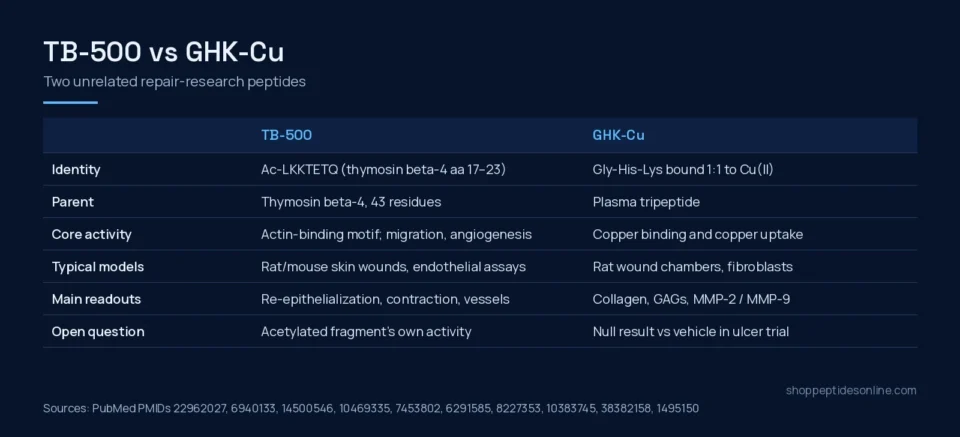
- A short piece of a larger peptide. Commercial “TB-500” can mean full thymosin beta-4 or a short fragment of it; see TB-500 and Thymosin Beta-4 vs TB-500.
- Freeze-thaw
- Repeated freezing and thawing of a solution. It is a known physical stress that can drive aggregation, and preservatives can make it worse.[15][24]
G
- Ghrelin receptor (GHS-R1a)
- The G protein-coupled receptor targeted by growth hormone secretagogues; ghrelin, an acylated stomach peptide, was later found to be its natural ligand.[25][26]
- GHRH
- Growth hormone-releasing hormone, a 44-residue amidated peptide first isolated from a pancreatic tumour, acting on its own pituitary G protein-coupled receptor.[27][28]
- GLP-1 receptor
- The receptor for glucagon-like peptide-1, the target of GLP-1 analogues and one arm of dual and triple agonists.[11][29] Compared in Tirzepatide vs Semaglutide vs Retatrutide.
- GPCR
- G protein-coupled receptor: a seven-transmembrane receptor family. The GHRH, ghrelin, GLP-1 and kisspeptin receptors all belong to it.[28][25]
- Growth hormone secretagogue
- A compound that stimulates growth hormone release. Ipamorelin, a pentapeptide, was described in 1998 as the first selective one; see Ipamorelin.[30][25]
H
- Half-life
- How long it takes for half of a compound to disappear, in a given system. Plasma half-life can be extended by design: semaglutide’s fatty-acid chain binds albumin.[11]
- HPLC (RP-HPLC)
- High-performance liquid chromatography, usually reversed-phase on C18 silica. Preparative runs purify peptides; analytical runs give the chromatogram behind a purity figure.[31][32]
I
- Identity test
- The check that the sample is the right molecule, usually by mass spectrometry matching the expected mass. Purity alone cannot confirm identity.[2][1]
- Anything in the sample that is not the target but is derived from it: deletions, truncations, oxidised or deamidated forms, diastereomers.[19][33]
- In vitro / in vivo
- In vitro means in cells or test tubes; in vivo means in a living animal or person. A cell result does not predict an animal result, and animal results do not predict human ones.
K
- KISS1R (GPR54)
- The kisspeptin receptor. Kisspeptins bind it with low-nanomolar affinity in cell assays. GPR54 mutations were found in a human family without pubertal development, and Gpr54-deficient mice showed the same hormonal pattern. See Kisspeptin.[10][34]
L
- LC-MS
- Liquid chromatography coupled to mass spectrometry: separation and mass measurement in one run, used to identify impurities and quantify peptides.[2][1]
- Lyophilization
- Freeze-drying: water is removed by sublimation to leave a dry cake that usually keeps far longer than a solution. See Lyophilized vs Reconstituted Peptides.[35][36]
M
- Mass balance
- Assigning purity by subtracting everything that is not the peptide (related impurities, water, counter-ions, residual solvents) from 100%.[37][1]
- Mass spectrometry (MS)
- Measuring molecular mass from ions. Coupled to liquid chromatography (LC-MS, LC-MS/MS) it is used both to confirm a peptide and to identify and quantify related impurities.[2][1]
- Mitochondrial-derived peptide
- A peptide encoded in mitochondrial DNA. MOTS-c is a 16-residue example encoded in the 12S rRNA region; see MOTS-c.[38]
- Molecular weight
- The mass of one molecule, in g/mol. The form matters: free GHK is 340.38 and the GHK-Cu complex 402.92 (PubChem). See GHK-Cu and GHK-Cu vs Other Copper Peptides.
N
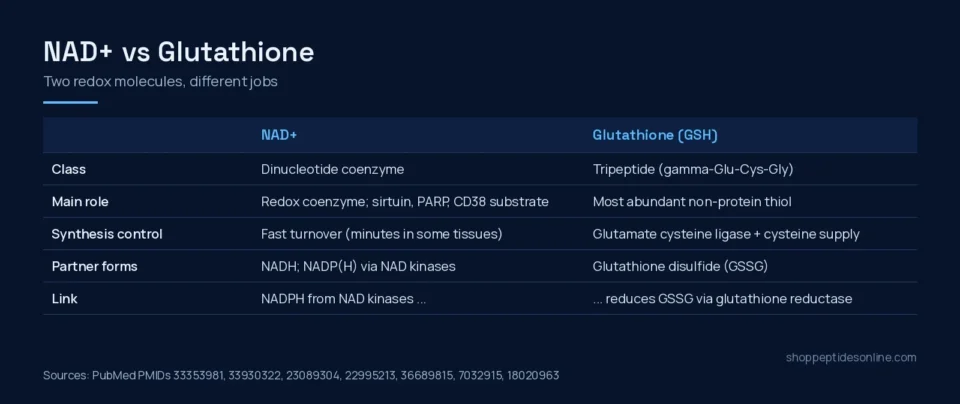
- NAD+
- Nicotinamide adenine dinucleotide, a coenzyme and not a peptide (PubChem CID 5892). See NAD+.
- Net peptide content
- The mass of actual peptide in a sample, excluding water and counter-ions. SPO’s Tesamorelin 20mg report (Janoshik #232266) measured 17.94 mg. See Why a Vial Can Test Below Its Label.[3][1]
O
- Oxidation
- Chemical change of susceptible residues, methionine to methionine sulfoxide being the classic case. Buffers, metals and pH shift the rate.[39][6]
P
- Peptide
- A chain of amino acids joined by peptide bonds, usually under about 50 residues. Selank is a seven-residue example; see Selank and Selank vs Semax.
- Peptide bond
- The amide bond linking the carboxyl group of one amino acid to the amino group of the next.[17]
- PMID
- PubMed ID: the permanent number of a record in PubMed. Every PMID cited on this site is checked against its PubMed title before publishing.
- Preclinical
- Research done before human trials, in cells or animals. Most of the literature on research peptides is preclinical, and its limits are stated in each post.
- Purity (HPLC)
- The target peak’s share of total UV absorbance in the chromatogram. It does not measure water, salt or how many milligrams are present.[1][3]
R
- Racemization
- Conversion of an L-amino acid to its D-form during synthesis. In one microwave SPPS study, cysteine, histidine and aspartic acid were the susceptible residues.[13]
- Reconstitution
- Dissolving a lyophilized peptide back into solution. In solution, most degradation routes speed up.[36][24]
- Research use only (RUO)
- A label stating that a material is supplied for laboratory research, not for human or animal use. It describes intended use; it is not an approval or a quality grade.
- Residue
- One amino acid unit within a chain. BPC-157 has 15 residues (GEPPPGKPADDAGLV); see BPC-157 and BPC-157 vs TB-500.
- Resin
- The insoluble bead the chain is built on in SPPS; the linker chemistry sets whether the product ends as an acid or an amide.[17][22]
S
- Selectivity
- How strongly a compound prefers one receptor or effect over others. In the 1998 animal and cell work, ipamorelin released growth hormone without raising ACTH or cortisol beyond the levels seen with GHRH.[30] See Ipamorelin vs Tesamorelin.
- SPPS
- Solid-phase peptide synthesis: building a chain one residue at a time on a resin, introduced by Merrifield and now mostly run with Fmoc chemistry.[40][23]
- Sterile water
- Water free of living microorganisms and with no preservative, so it offers no protection once a container is opened.[14]
T
- TFA
- Trifluoroacetic acid, used for cleavage and as an HPLC ion-pairing agent, so many peptides arrive as TFA salts.[4][16]
- Third-party testing
- Testing by a lab independent of the seller. Comparing how shops handle it: Best Peptide Shop in Canada.
- Triple agonist
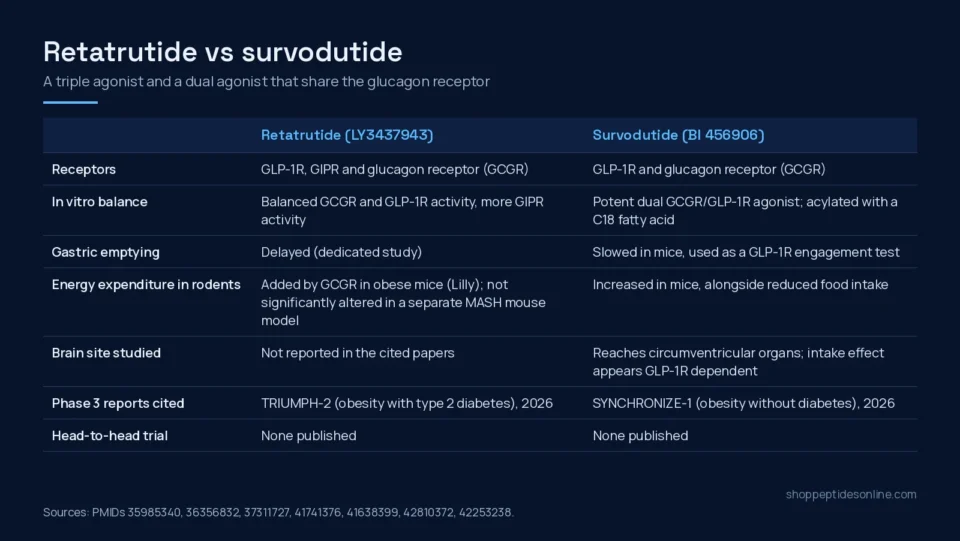
- One molecule active at the GLP-1, GIP and glucagon receptors. Retatrutide (LY3437943) is the studied example; see GLP-3 (retatrutide).[29]
- Truncation
- An impurity that is a shortened chain, from synthesis stopping early or from breakdown later.[19][33]
Using this glossary
Definitions here are short on purpose. The linked posts carry the full citations, model details and null results. If you are comparing suppliers or products, the batch COAs are on the COA page, and the full range is on the page to buy peptides online in Canada.
References
- Melanson JE, Thibeault MP, Stocks BB et al. (2018). Purity assignment for peptide certified reference materials by combining qNMR and LC-MS/MS amino acid analysis results: application to angiotensin II. Anal Bioanal Chem. PMID: 30143839. doi: 10.1007/s00216-018-1272-7.
- Li M, Josephs RD, Daireaux A et al. (2018). Identification and accurate quantification of structurally related peptide impurities in synthetic human C-peptide by liquid chromatography-high resolution mass spectrometry. Anal Bioanal Chem. PMID: 29862433. doi: 10.1007/s00216-018-1155-y.
- Li C, Bhavaraju S, Thibeault MP et al. (2019). Survey of peptide quantification methods and comparison of their reproducibility: A case study using oxytocin. J Pharm Biomed Anal. PMID: 30640042. doi: 10.1016/j.jpba.2018.12.028.
- Erckes V, Streuli A, Chamera Rendueles L et al. (2025). Towards a Consensus for the Analysis and Exchange of TFA as a Counterion in Synthetic Peptides and Its Influence on Membrane Permeation. Pharmaceuticals (Basel). PMID: 40872554. doi: 10.3390/ph18081163.
- Hettiarachchi K, Ridge S (1998). Capillary electrophoretic determination of acetic acid and trifluoroacetic acid in synthetic peptide samples. J Chromatogr A. PMID: 9764489. doi: 10.1016/s0021-9673(98)00328-8.
- Manning MC, Chou DK, Murphy BM et al. (2010). Stability of protein pharmaceuticals: an update. Pharm Res. PMID: 20143256. doi: 10.1007/s11095-009-0045-6.
- Jones LS, Kaufmann A, Middaugh CR (2005). Silicone oil induced aggregation of proteins. J Pharm Sci. PMID: 15736189. doi: 10.1002/jps.20321.
- Coskun T, Sloop KW, Loghin C et al. (2018). LY3298176, a novel dual GIP and GLP-1 receptor agonist for the treatment of type 2 diabetes mellitus: From discovery to clinical proof of concept. Mol Metab. PMID: 30473097. doi: 10.1016/j.molmet.2018.09.009.
- Willard FS, Douros JD, Gabe MB et al. (2020). Tirzepatide is an imbalanced and biased dual GIP and GLP-1 receptor agonist. JCI Insight. PMID: 32730231. doi: 10.1172/jci.insight.140532.
- Kotani M, Detheux M, Vandenbogaerde A et al. (2001). The metastasis suppressor gene KiSS-1 encodes kisspeptins, the natural ligands of the orphan G protein-coupled receptor GPR54. J Biol Chem. PMID: 11457843. doi: 10.1074/jbc.M104847200.
- Lau J, Bloch P, Schäffer L et al. (2015). Discovery of the Once-Weekly Glucagon-Like Peptide-1 (GLP-1) Analogue Semaglutide. J Med Chem. PMID: 26308095. doi: 10.1021/acs.jmedchem.5b00726.
- Kong MJW, van den Braak TJHP, Neumann K (2025). Aspartimide Formation and Its Prevention in Fmoc Chemistry Solid Phase Peptide Synthesis. Chembiochem. PMID: 40857621. doi: 10.1002/cbic.202500490.
- Palasek SA, Cox ZJ, Collins JM (2007). Limiting racemization and aspartimide formation in microwave-enhanced Fmoc solid phase peptide synthesis. J Pept Sci. PMID: 17121420. doi: 10.1002/psc.804.
- Stroppel L, Schultz-Fademrecht T, Cebulla M et al. (2023). Antimicrobial Preservatives for Protein and Peptide Formulations: An Overview. Pharmaceutics. PMID: 36839885. doi: 10.3390/pharmaceutics15020563.
- Xu ZT, Yang CH, Liu W et al. (2026). Benzyl alcohol exacerbates freeze-thaw-induced aggregation of trastuzumab: elucidating mechanisms and formulation implications for clinical practice. Int J Pharm. PMID: 41325828. doi: 10.1016/j.ijpharm.2025.126433.
- King DS, Fields CG, Fields GB (1990). A cleavage method which minimizes side reactions following Fmoc solid phase peptide synthesis. Int J Pept Protein Res. PMID: 2279849. doi: 10.1111/j.1399-3011.1990.tb00976.x.
- Jaradat DMM (2018). Thirteen decades of peptide synthesis: key developments in solid phase peptide synthesis and amide bond formation utilized in peptide ligation. Amino Acids. PMID: 29185032. doi: 10.1007/s00726-017-2516-0.
- Sázelová P, Kasicka V, Solínová V et al. (2006). Determination of purity degree and counter-ion content in lecirelin by capillary zone electrophoresis and capillary isotachophoresis. J Chromatogr B Analyt Technol Biomed Life Sci. PMID: 16687256. doi: 10.1016/j.jchromb.2006.04.006.
- D’Hondt M, Bracke N, Taevernier L et al. (2014). Related impurities in peptide medicines. J Pharm Biomed Anal. PMID: 25044089. doi: 10.1016/j.jpba.2014.06.012.
- Joshi AB, Kirsch LE (2002). The relative rates of glutamine and asparagine deamidation in glucagon fragment 22-29 under acidic conditions. J Pharm Sci. PMID: 12379918. doi: 10.1002/jps.10213.
- DeHart MP, Anderson BD (2012). Effects of water and polymer content on covalent amide-linked adduct formation in peptide-containing amorphous lyophiles. J Pharm Sci. PMID: 22437444. doi: 10.1002/jps.23092.
- Fields GB, Noble RL (1990). Solid phase peptide synthesis utilizing 9-fluorenylmethoxycarbonyl amino acids. Int J Pept Protein Res. PMID: 2191922. doi: 10.1111/j.1399-3011.1990.tb00939.x.
- Behrendt R, White P, Offer J (2016). Advances in Fmoc solid-phase peptide synthesis. J Pept Sci. PMID: 26785684. doi: 10.1002/psc.2836.
- Wang W (1999). Instability, stabilization, and formulation of liquid protein pharmaceuticals. Int J Pharm. PMID: 10460913. doi: 10.1016/s0378-5173(99)00152-0.
- Howard AD, Feighner SD, Cully DF et al. (1996). A receptor in pituitary and hypothalamus that functions in growth hormone release. Science. PMID: 8688086. doi: 10.1126/science.273.5277.974.
- Kojima M, Hosoda H, Date Y et al. (1999). Ghrelin is a growth-hormone-releasing acylated peptide from stomach. Nature. PMID: 10604470. doi: 10.1038/45230.
- Guillemin R, Brazeau P, Böhlen P et al. (1982). Growth hormone-releasing factor from a human pancreatic tumor that caused acromegaly. Science. PMID: 6812220. doi: 10.1126/science.6812220.
- Mayo KE (1992). Molecular cloning and expression of a pituitary-specific receptor for growth hormone-releasing hormone. Mol Endocrinol. PMID: 1333056. doi: 10.1210/mend.6.10.1333056.
- Coskun T, Urva S, Roell WC et al. (2022). LY3437943, a novel triple glucagon, GIP, and GLP-1 receptor agonist for glycemic control and weight loss: From discovery to clinical proof of concept. Cell Metab. PMID: 35985340. doi: 10.1016/j.cmet.2022.07.013.
- Raun K, Hansen BS, Johansen NL et al. (1998). Ipamorelin, the first selective growth hormone secretagogue. Eur J Endocrinol. PMID: 9849822. doi: 10.1530/eje.0.1390552.
- Rivier J, McClintock R, Galyean R et al. (1984). Reversed-phase high-performance liquid chromatography: preparative purification of synthetic peptides. J Chromatogr. PMID: 6736144. doi: 10.1016/s0021-9673(01)93709-4.
- Sørensen KK, Mishra NK, Paprocki MP et al. (2021). High-Performance Reversed-Phase Flash Chromatography Purification of Peptides and Chemically Modified Insulins. Chembiochem. PMID: 33443297. doi: 10.1002/cbic.202000826.
- Colalto C (2024). Aspects of complexity in quality and safety assessment of peptide therapeutics and peptide-related impurities. A regulatory perspective. Regul Toxicol Pharmacol. PMID: 39243929. doi: 10.1016/j.yrtph.2024.105699.
- Seminara SB, Messager S, Chatzidaki EE et al. (2003). The GPR54 gene as a regulator of puberty. N Engl J Med. PMID: 14573733. doi: 10.1056/NEJMoa035322.
- Wang W (2000). Lyophilization and development of solid protein pharmaceuticals. Int J Pharm. PMID: 10967427. doi: 10.1016/s0378-5173(00)00423-3.
- Nugrahadi PP, Hinrichs WLJ, Frijlink HW et al. (2023). Designing Formulation Strategies for Enhanced Stability of Therapeutic Peptides in Aqueous Solutions: A Review. Pharmaceutics. PMID: 36986796. doi: 10.3390/pharmaceutics15030935.
- Wang S, Wu P, Li M et al. (2022). Mass balance method for SI-traceable purity assignment of synthetic oxytocin. J Pharm Biomed Anal. PMID: 34656934. doi: 10.1016/j.jpba.2021.114401.
- Lee C, Zeng J, Drew BG et al. (2015). The mitochondrial-derived peptide MOTS-c promotes metabolic homeostasis and reduces obesity and insulin resistance. Cell Metab. PMID: 25738459. doi: 10.1016/j.cmet.2015.02.009.
- Li S, Schöneich C, Wilson GS et al. (1993). Chemical pathways of peptide degradation. V. Ascorbic acid promotes rather than inhibits the oxidation of methionine to methionine sulfoxide in small model peptides. Pharm Res. PMID: 8290469. doi: 10.1023/a:1018960300769.
- Merrifield B (1986). Solid phase synthesis. Science. PMID: 3961484. doi: 10.1126/science.3961484.